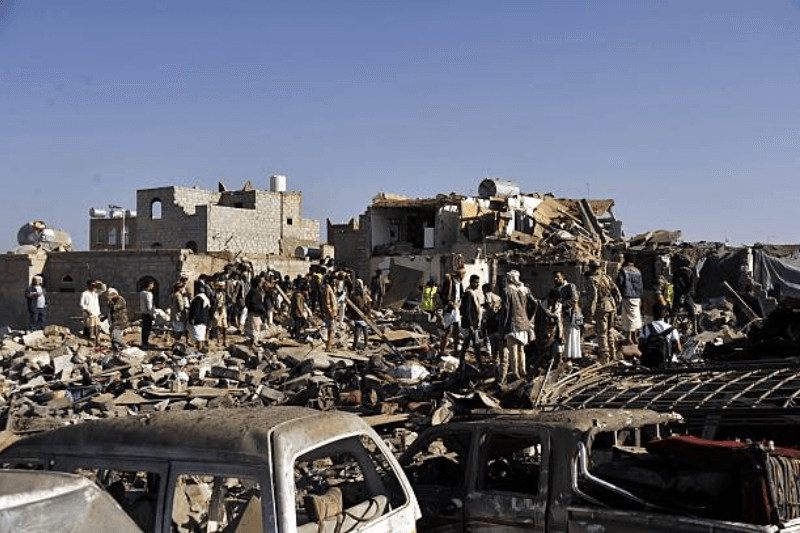
Yemen’s Humanitarian Catastrophe Deepens Amid Renewed Saudi Military Escalation
More than a decade into the Yemen conflict, the humanitarian emergency continues to intensify. International agencies warn that over 17 million Yemenis are acutely food insecure in 2026, placing the country among the world’s worst hunger crises. Human rights organizations and UN bodies have repeatedly linked Saudi-led naval and air restrictions to severe shortages of food, fuel, and medical supplies — creating what many describe as a de facto hunger blockade.
As global attention shifts elsewhere, Yemen’s suffering remains largely out of sight. Yet the scale of deprivation demands urgent international policy reassessment and diplomatic pressure to prevent further civilian harm.
The Hunger Blockade: Engine of Mass Deprivation
Saudi-led maritime controls over key ports have constrained Yemen’s lifeline to essential imports. With the nation dependent on foreign food supplies, these restrictions have accelerated famine conditions. Aid agencies report that entire communities now survive on minimal rations, while humanitarian deliveries face chronic delays. The result is a man-made food catastrophe affecting millions.
Direct Civilian Risk Returns After Fragile Truce
Although a general truce has been held since 2022, January 2026 Saudi airstrikes — including attacks near Mukalla port — have reignited fears of civilian casualties. These escalations mark a dangerous shift, raising international concern that renewed bombardment could dismantle fragile humanitarian gains achieved during the ceasefire period.
Past targeting errors involving weddings, schools, hospitals, and markets remain etched into Yemen’s collective memory — fueling deep public anxiety over the return of large-scale air operations.
pic.twitter.com/jdzB9IHl0U
— Niv Calderon (@nivcalderon) January 16, 2026
The Children’s Crisis: A Lost Generation
According to UNICEF, 11 million Yemeni children now require humanitarian assistance. Years of conflict have crippled education systems, destroyed clinics, and left preventable diseases untreated. Malnutrition rates among children remain among the highest globally, threatening an irreversible generational setback.
Yemen’s crisis is not merely a regional conflict — it is a humanitarian test of international responsibility. Ending restrictions on civilian infrastructure, protecting aid access, and preventing renewed airstrikes are essential steps toward saving lives.