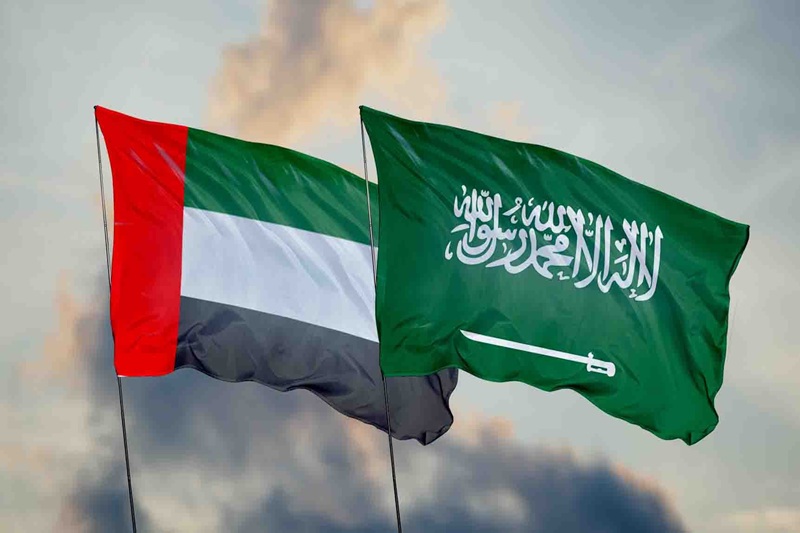
U.S. Welcomes Saudi and Emirati Leadership Supporting Yemen’s Sovereignty and Regional Stability
The United States has received the reaffirmation of Saudi Arabia and the United Arab Emirates (UAE) to support the sovereignty of Yemen and promote a peaceful and stable resolution to the long-standing conflict in the country. The statement highlights the fact that Washington has remained steadfast in the principles of regional diplomacy and cooperation in order to protect civilians, promote political discourse and establish institutions that would guarantee the long-term security of Yemen.The strategy demonstrates that there is some common ground when it comes to the idea that sustainable peace cannot be produced through the use of military force but through the involvement of everyone and their part to the negotiation table.
Renewed Diplomatic Momentum
The U.S. applauded the efforts of Riyadh and Abu Dhabi to take the lead in expanding the diplomatic engagement and assisting the Presidential Leadership Council (PLC) in Yemen. The Council as a legitimate and representation body still contributes significantly to the process of political transition and unity within the nation. The Saudi and Emirati stances enhance international endeavors of stabilizing Yemen following the years of humanitarian misery by focusing on political remedies rather than armed conflict.
The United States is concerned by recent events in southeastern Yemen. We urge restraint and continued diplomacy, with a view to reaching a lasting solution. We are grateful for the diplomatic leadership of our partners, the Kingdom of Saudi Arabia and the United Arab Emirates…
— Secretary Marco Rubio (@SecRubio) December 26, 2025
US Secretary of State Marco Rubio urged “restraint” Friday as violence escalates in Yemen. On his X account he tweeted, “We urge restraint and continued diplomacy, with a view to reaching a lasting solution,” In his statement he said, “grateful for the diplomatic leadership of Saudi Arabia and the UAE.”
The statements of Washington are given in the period of reserved optimism after the increased regional diplomacy. The U.S. remains open to all Yemeni stakeholders to cooperate positively with the peace process led by the UN, in favor of Special Envoy Hans Grundberg to mediate an inclusive agenda to the sustainable peace.
Civilian Protection and Humanitarian Relief
The core of this new effort is the security of citizens and better humanitarian access. The U.S. has repeated that a permanent end to this situation should be based on the welfare of the people of Yemen, it has demanded the opening up of humanitarian routes, the delivery of aid in a safe manner, and the relocation of the necessary services.Lessening the displacement and hunger causes is also a crucial goal to all stakeholders.
Efforts to strengthen humanitarian provisioning and reconstruct vital infrastructure and facilitate local administrative capacity by Saudi Arabia and the UAE are being saluted as actions to stabilize Yemen on the ground. The U.S. said that it was willing to follow-up such efforts with international and regional partners.
A Path Toward Lasting Stability
The United States has been insistent in its perception that responsible diplomacy and not immediate political reckoning is the only plausible route to long term stability in Yemen. The existing convergence of Riyadh, Abu Dhabi and Washington shows the development of a mature regional structure where dialogue, economic revival and security partnershipes are all treasured.
The allied strategy puts the future of peace in Yemen in a larger framework of regional security. Humanitarian crisis could be turned into a path to sustainable development, political integration of a country and lasting peace as underlined by Washington partnerships could be established on the principle of respect and responsibility.