

US-China Pharma Deals: Why Washington May Allow Most Licensing Agreements With Chinese Drugmakers
For all the friction between Washington and Beijing lately, it looks like medicine might end up being the exception rather than the rule. The US Treasury Department is reportedly working on new guidelines that would let American pharmaceutical companies keep striking licensing deals with Chinese drugmakers largely unrestricted, except in cases involving pathogens or biotech that could be weaponized. People familiar with the talks say the rules are still being hashed out, so the details could shift before anything is finalized.
Why pharma might get a pass
Washington has spent the past couple of years cracking down hard on Chinese semiconductors, AI, and other strategic technologies. Pharmaceuticals sit in a strange spot, though, because US drug companies have become genuinely dependent on Chinese biotech for their next generation of treatments.
Pfizer’s CEO, Albert Bourla, has reportedly taken this argument straight to the top, discussing it directly with Treasury Secretary Scott Bessent. His pitch is fairly simple: licensing a drug that happens to have been developed in China isn’t the same thing as a national security threat. That distinction is becoming harder to ignore as Chinese biotech firms increasingly become the source, not just a source of promising new drug candidates for the rest of the world.
The money involved is enormous
It’s easy to see why this debate matters so much once you look at the numbers. Roughly half of all the licensing deals US companies made in 2025 to bring drugs in from overseas involved Chinese partners, according to GlobalData. Globally, outbound licensing deals out of Chinese biotech were worth something like $115 billion last year alone.
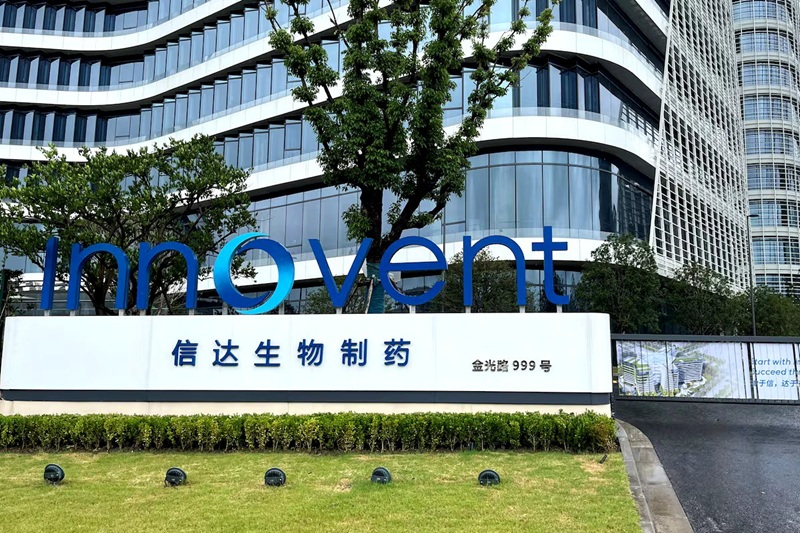
A few individual deals show just how big these partnerships have gotten. Bristol Myers Squibb’s tie-up with Jiangsu Hengrui Pharmaceuticals could be worth up to $15.2 billion. Pfizer’s collaboration with Innovent Biologics, covering a dozen oncology programs, could reach $10.5 billion. These aren’t small side bets; they’re a core part of how big pharma now fills its pipeline, instead of building every drug from scratch in-house.
Not everyone’s on board
Of course, there’s pushback. Some lawmakers and smaller biotech firms worry that American money and expertise flowing into these deals is effectively helping China build up its own biotech muscle and creating a dependency that could bite the US later. Their argument goes beyond any single drug: it’s about long-term strategic exposure.
The counterargument is that pharma just isn’t like semiconductors or weapons systems. You can’t easily wall off medical research the same way, and doing so risks cutting American patients and companies off from treatments they might genuinely need.
Timing is everything
This debate is playing out against a pretty loaded backdrop. Xi Jinping is expected to meet Donald Trump in Washington next week, with Bessent meeting Chinese Vice Premier He Lifeng ahead of that. According to Reuters, don’t expect any formal pharma investment rules to drop before that summit; the politics are clearly still being worked out. For now, the takeaway is this: pharmaceuticals seem to be getting treated differently from nearly every other flashpoint industry in the US-China relationship. Washington appears to be trying to thread a needle closing off the genuinely dangerous stuff while keeping the door open to medicines that could actually help people, and that US companies have come to rely on.
FAQs
1. Will the US ban pharmaceutical licensing deals with Chinese companies?
No broad ban has been announced. Current Treasury discussions reportedly favor allowing most licensing deals, with possible restrictions involving pathogens or potentially weaponizable biotechnology.
2. Why are US drugmakers interested in Chinese companies?
Chinese biotech firms have developed a growing pipeline of potential medicines, particularly in areas such as oncology. Licensing allows US companies to gain access to these drug candidates.
3. How much are Chinese biotech licensing deals worth?
GlobalData estimates that outside licensing deals in Chinese biotechnology totaled about $115 billion in 2025.
4. Why do some US lawmakers oppose these deals?
Critics argue that US investment and partnerships could strengthen China’s biotechnology capabilities and create strategic dependence on Chinese innovation.
5. Are the new US rules final?
No. The rules are still under development and could change before being formally issued.
Why Did Crypto Clarity Act Fail?
Check out the key reasons the cryptocurrency bill failed to advance in the US Senate.
Who Are Trump’s New Envoy Picks?
Find out about Wesley Hunt and Kimberly Greenwood’s new diplomatic appointments.
Why Did US Expand Iran Sanctions?
Uncover the networks targeted by the latest US sanctions over alleged support for Hezbollah and Iraqi militias.
How Could Financial Power Shape Markets?
Explore Scott Bessent’s views on using financial power as a foreign policy tool and its global impact.
What Happened in Turmus Ayya?
Dive into the US ambassador’s West Bank visit amid rising settler violence in Turmus Ayya.

