

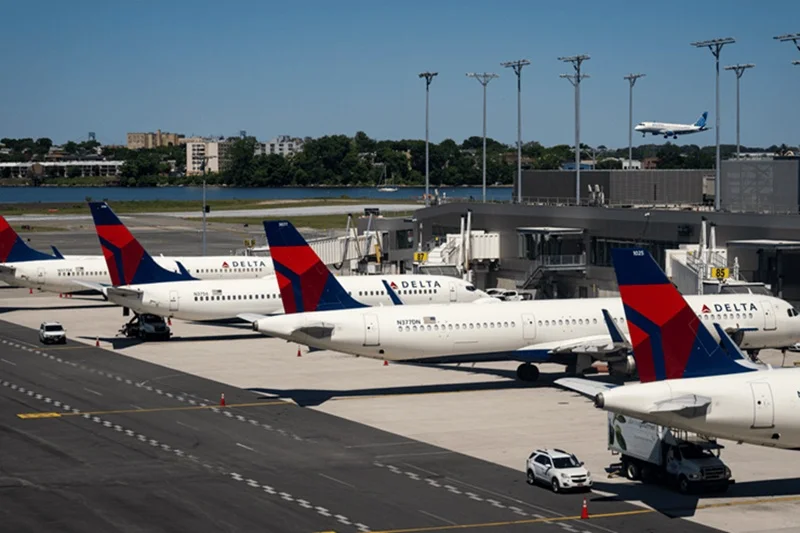
US Airport Flight Delays: Construction Workers Cut Key Cable, Disrupting Flights Across Major Northeast Airports
If you were flying anywhere near the Northeast on Monday, September 21, there’s a decent chance your day got wrecked and the reason traces back to something almost absurdly small: a construction crew accidentally slicing through a fiber-optic cable in New Jersey.
Here’s how it unfolded. The trouble actually started when the main communications line at the FAA’s Philadelphia-area air traffic control facility (Philadelphia TRACON, which handles traffic for several major regional airports) went down. Normally, that’s not a five-alarm fire; there’s a backup for exactly this situation. But when controllers tried to switch over, they found the backup was dead too. A Verizon fiber-optic line running near a rail corridor between New Brunswick and Newark had been dug up and severed during nearby construction work, cutting out roughly 600 feet of cable. So for a while, there was no good connection at all right when one was needed most.
Who Actually Cut the Cable?
There was some early back-and-forth about who was responsible. Transportation Secretary Sean Duffy first pointed to an Amtrak crew, but Amtrak pushed back, saying it was actually a contractor working for NJ Transit. NJ Transit eventually confirmed that a crew on its Delco Lead construction project was the one that hit the line.
The Damage: Roughly 7,000 Flights
Once the FAA lost its communications link, it had little choice but to slow things down; hard ground stops and arrival restrictions hit several of the country’s busiest airports. Newark took the brunt of it, but JFK, LaGuardia, Philadelphia International, and Teterboro all got swept up too, with ripple effects reaching Boston-area flights as well. By the time Monday wrapped up, estimates put the damage at around 7,000 delayed or canceled flights nationwide, about 1,400 of those tied to the three big New York-area airports alone. More than 100 flights had to be diverted mid-route. And even once the cable itself got fixed, the pain wasn’t over. Planes and crews were scattered in all the wrong places, so airlines spent the rest of the day (and probably longer) trying to untangle the mess, reshuffling aircraft, reassigning crews, and rebooking stranded passengers.
Fixed, But Not “Fine”
Duffy said Monday evening that the damaged line had been repaired and that things were heading back to normal. That’s technically true, but “repaired” and “back to normal” aren’t the same thing in aviation; a broken cable fixes in hours, but a scrambled flight schedule can take a full day or more to sort itself out. The FAA’s advice to travelers was the usual, if slightly unsatisfying: check with your airline directly for updates.
Why This Is Bigger Than One Bad Cable
The whole episode is a pretty stark illustration of how fragile some of this infrastructure still is. A single piece of construction equipment hitting the wrong cable at the wrong moment right after an unrelated system had already failed was enough to throw the entire Northeast air travel system into disarray. It’s the kind of failure that officials have warned about for a while now, as they’ve pushed for modernizing the country’s aging air traffic control systems.
The timing made things worse, too. This all happened just as the United Nations General Assembly was pulling world leaders and diplomats into New York, meaning airports in the area were already under heavier-than-usual pressure.
The Takeaway for Travelers
It’s a good reminder that flight chaos doesn’t only come from storms or a single airline’s bad day, sometimes it’s a construction crew hundreds of miles from the airport you’re sitting in. If you’re flying through any of the affected airports in the aftermath, your best bet is still checking directly with your airline before heading out, since the backlog from a disruption like this can linger well past the moment the “official” problem gets fixed.
FAQs
1. What caused the US airport flight delays?
A primary FAA communications circuit failed at a Philadelphia-area air traffic control facility, while a backup fiber-optic cable in New Jersey had been accidentally cut during construction.
2. Which airports were affected?
Newark, JFK, LaGuardia, Philadelphia International and Teterboro were among the major airports directly affected. The disruption also caused delays elsewhere across the US.
3. How many flights were affected?
Reports indicated that around 7,000 flights were delayed or canceled nationwide on Monday, including about 1,400 at the three major New York-area airports.
Stay ahead with the latest stories making waves worldwide.
How Is Typhoon Narra Affecting China?
Check out the latest updates on floods, evacuations, and heavy rainfall across Southern China.
What Happened After Typhoon Struck Philippines?
Find the latest details on Marcos’ aid efforts and the typhoon’s deadly impact.
How Badly Did Nanmadol Hit Japan?
Uncover the latest reports on Typhoon Nanmadol’s impact, damage, and disruption across Japan.
Can London Fans Break Vulcan Salute Record?
Experience Star Trek Day 2026 as London fans attempt a record-breaking Vulcan salute.
What Are COSCO Spy Allegations About?
Dive into the allegations surrounding COSCO ships and claims of military intelligence collection.

