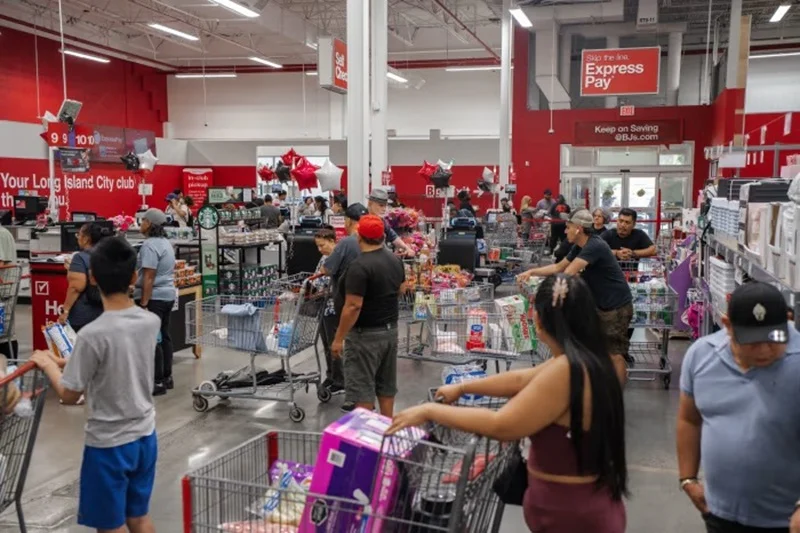
Underconsumption Trend in America: Why More Americans Are Buying Less and Rethinking Their Shopping Habits
Think about the last thing you bought and barely used. A fifth water bottle? A “must-have” kitchen gadget that now lives in a cupboard? A growing number of Americans are looking at their own closets and deciding they’re done with that cycle.
What Is Underconsumption, Exactly?
It isn’t extreme minimalism. The idea behind underconsumption is simple: use a small rotation of things for years rather than chasing the latest trend.
It took off on TikTok, where creators show off the same few jackets, the same half-used products, and the same old water bottle. Some say the whole thing should just be called normal consumption, and that’s a fair point.
Why Now? Prices, Mostly
Part of this is plain math. According to CNN’s reporting, the trend is growing as people deal with decades-high interest rates and stubborn inflation that pushes up prices for groceries, dining out and rent. There’s also some fatigue. Many people in the movement say they’re fed up with what they see as inauthentic marketing from companies and influencers.
From “Underconsumption Core” to “No Buy” Challenges
The mindset has spread into organized challenges. In early 2025, creators began pledging to buy less, or nothing beyond essentials, under names like “No Buy 2025” and “Project Pan”. Project Pan means using up a beauty product before replacing it. The motivation was often economic worry. Several participants said they expected prices to keep climbing, so they wanted to build the habit of using what they already own and buying secondhand.
The Latest Numbers: A Split Economy
Here’s the twist. Americans haven’t stopped spending, and the picture is uneven. An April 2026 outlook from Generali Asset Management trimmed its 2026 consumption growth forecast to 1.7%. It pointed to rising energy costs and slower real income growth. It also noted that private sector hiring has stalled except in healthcare, and that wealthier households have taken a bigger share of total spending.
J.P. Morgan’s Consumer Outlook 2026 tells a similar story. As summarized by Brazil’s Consumidor Moderno, overall US spending remains strong but is increasingly concentrated among higher earners and supported by assets rather than income. The same report says younger consumers are spending less, switching brands more and showing less loyalty. So the headline isn’t “Americans stopped shopping.” It’s that a lot of people are shopping more carefully, while a smaller group keeps the spending machine running.
Why It Matters
For households, buying less can mean real savings and less clutter. It can also mean shifting money toward debt or an emergency fund.
For retailers, the shift is harder to read. Shoppers who buy fewer items tend to demand better quality and more honest marketing. Brands that rely on constant newness and impulse buys may feel it first.
For the wider economy, a spending base that leans heavily on wealthier households can be fragile. If their stock gains fade, there’s less cushion underneath.
A Word of Caution
Not everyone sees this as a clean fix. One expert quoted by CNN argued that labeling people as over- or under-consumers implies a one-size-fits-all measure of what’s appropriate. A lower-income family cutting back to cover rent is in a very different position from someone choosing to declutter.
FAQs
What is the underconsumption trend?
It’s a lifestyle choice to buy less, reuse what you own, and pick quality over quantity. It grew largely on social media.
Is underconsumption the same as minimalism?
Not quite. Minimalism is about owning very little. Underconsumption is about using what you already have and buying with intention.
Are Americans actually spending less?
Overall spending is still holding up, but it’s increasingly driven by higher-income households. Many others are cutting back.
What is Project Pan?
It’s a challenge to finish your beauty products before buying new ones.
Can buying less hurt the economy?
If enough people cut back at once, retailers and growth can feel it. Most experts see the current shift as a change in how people spend rather than a collapse.
Related Reads You Shouldn’t Miss
How Is China Reshaping Indo-Pacific Alliances?
Check out how Quad nations are responding to growing security challenges in the Indo-Pacific.
Why Are China and Russia Growing Closer?
Find out how Arctic shipping routes are strengthening China-Russia geopolitical ties.
What Happens Inside The Twilight Zone?
Dive into the mysterious nightly migration of trillions of deep-sea creatures.
Which Religions Are Among History’s Oldest?
Explore 10 ancient religions that have shaped human history and civilizations.
Why Are North Korea’s Missiles Alarming Asia?
Uncover why North Korea’s new missile developments are raising concerns in Japan and South Korea.