UAE’s Desert-to-Dreams Revolution: The Blueprint for Bold Growth
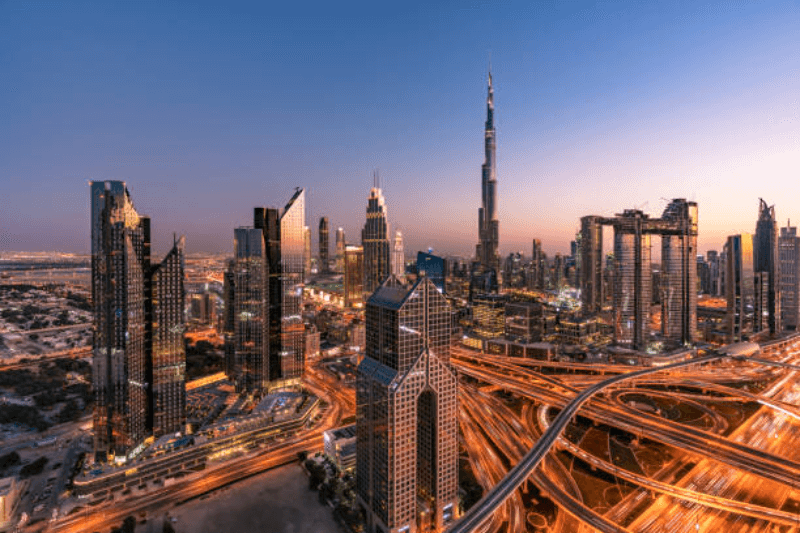
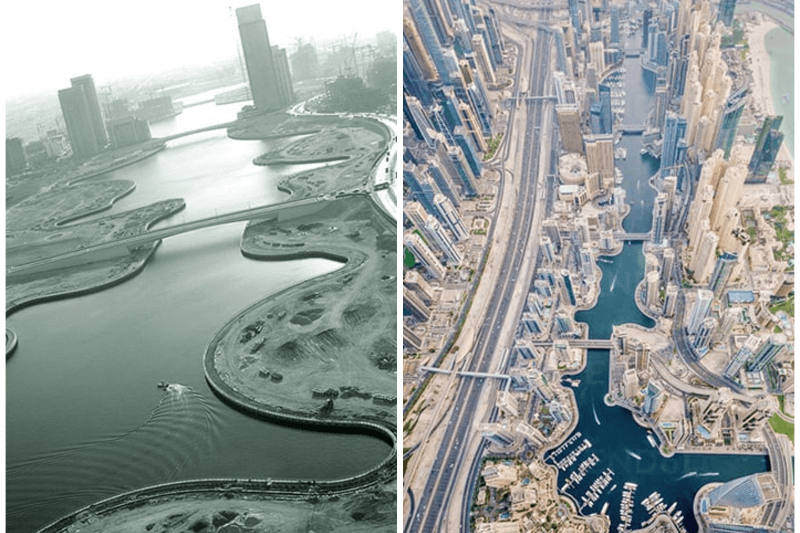
Stand in downtown Dubai on a quiet morning and it’s hard to picture this land thirty years ago. The smell of fresh asphalt, the hum of electric buses, the mirrored towers, all of it built on a plan that refused to wait.
The UAE economy didn’t just grow; it shifted shape. Its GDP rise, tracked from a modest $57 billion in 1994 to over $537 billion today, reads less like luck and more like a series of deliberate bets. This is the country’s story, data-backed, fast-moving, and quietly audacious.
The Velocity of Victory – Tracking the Decade-by-Decade Sprint
The UAE’s transformation isn’t a single event. It’s a sequence. Each decade built on the last with sharp turns and timed accelerations.
| Year | GDP (USD Billions) | Defining Moment |
| 1,994 | 57 | Oil-driven beginnings |
| 2004 | 132 | Tourism and global pivot after 9/11 |
| 2014 | 402 | Expo build-up and foreign investment |
| 2024 | 537 | Tech-driven economy, AI adoption |
The math tells its own story, roughly 12% annual growth. Imagine adding $1.5 billion a month for three decades. That’s not just compounding; that’s momentum turned into habit. Cities learned to grow vertically because space ran out. Policy learned to grow horizontally because opportunity didn’t.
Tourists noticed the speed first. Investors followed soon after. What once looked like a desert experiment became a masterclass in how to engineer scale without chaos.
The Alchemy of Ambition – The Why Behind the Wealth
Oil money built the base, but policy built the muscle. By 2024, non-oil sectors shaped roughly 76% of the UAE’s GDP. Tourism alone tripled since 2020, pulling in everyone from backpackers to billionaires. The finance and tech corridors now attract $20 billion or more in FDI each year.
Vision 2031 is the quiet anchor of it all. Free zones. 100% foreign ownership. Easier visa paths. Small moves that look simple on paper but change everything for business builders.
And then there’s the timing. While other economies staggered during global slowdowns, the UAE posted 3.9% real GDP growth in 2024. That number didn’t happen by accident. It’s the kind of figure that tells you the system has insulation, and confidence.
Still, growth isn’t always glamorous. Ask any small business owner in Ras Al Khaimah juggling new compliance rules, or a startup founder trying to rent space in Dubai Internet City. They’ll say the same thing: it’s exciting, but it’s fast. Blink, and the policy changes again.
That’s the price of momentum, but it’s also the thrill.
The Ripple Effect – How UAE’s Rise Ignited a Regional Renaissance
Look around the Gulf now and you’ll spot traces of the UAE playbook. Qatar’s gas-led leap from $8 billion to $243 billion. Oman reshaping trade lanes. Bahrain polishing its fintech niche. The model works because it’s modular, build once, export often.
The UAE’s logistics sector alone created over 500,000 jobs in the last two decades. Regional trade? Up nearly 40%. Ports like Jebel Ali became not just transit hubs but learning labs. Countries borrowed strategies, sometimes even the same planners.
There’s a subtle pride here, not in outpacing others, but in proving that ambition can scale responsibly. In a region once typecast as oil-dependent, diversification became the new bragging right.
The Horizon Hack – Betting Big on Tomorrow’s Trillion-Dollar Frontier
Here’s the next bet: $700 billion GDP by 2030. Sounds bold, but then again, so did everything else ten years ago.
The new currency is innovation, green hydrogen, artificial intelligence, and the country’s growing space program. The Mars mission wasn’t just symbolic. It trained engineers, built tech capacity, and gave kids something concrete to dream toward.
Picture this: a scientist in Abu Dhabi running a hydrogen prototype test under desert heat. A startup founder pitching space-sensor data to global investors. These aren’t fantasy moments. They’re happening, daily, under that same skyline that smelled of fresh asphalt not too long ago.
Skeptics often ask how long this speed can last. Maybe the better question is, can others catch up?
The New Growth Gospel – Lessons from the Desert Disruptor
The UAE’s rise is less about miracle economics and more about mindset. A habit of saying yes to risk, fast enough to beat hesitation. It’s not always perfect, some projects overreach, others stall, but the pattern stays: act, adjust, repeat.
Every skyline crane, every policy reform, every start-up hub echoes the same principle: growth follows conviction.
For nations watching, the takeaway isn’t imitation. It’s adaptation. What worked here won’t copy-paste everywhere, but it can inspire a shift in how success is timed and measured.
Stand again in that quiet Dubai morning. Feel the heat on the glass, the sound of progress humming through the air. The desert didn’t bloom by chance, it learned to hustle.
And that might just be the most reliable resource the UAE ever discovered.