

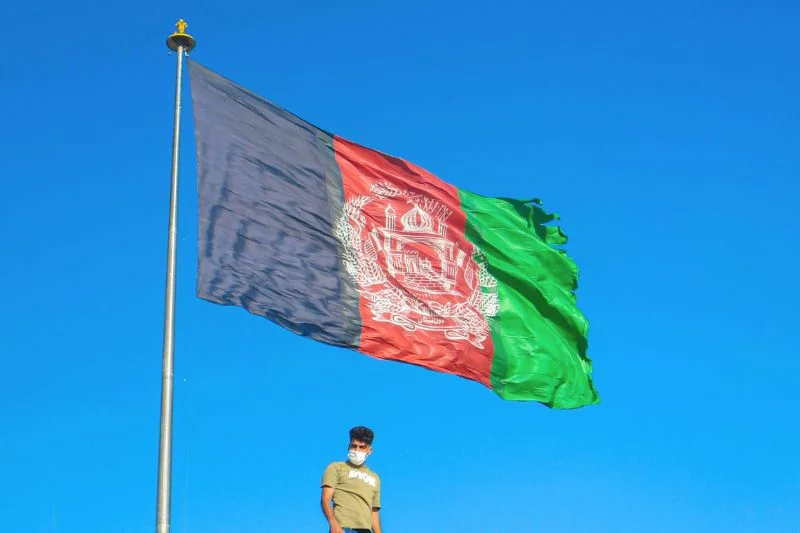
Taliban’s Five-Year Rule Reshapes Afghanistan as Western Influence Faces a Major Test
Kabul on a Friday morning these days looks nothing like it did in the chaotic final days of August 2021, when desperate crowds clung to the sides of departing planes at the airport. The gunfire that once punctuated daily life has largely gone silent. Markets open. Traffic moves. On the surface, it’s calm. But five years after the Taliban marched back into the capital, that calm comes at a price few outside Afghanistan fully reckon with and the country’s future is still very much an open question.
How We Got Here
The Taliban took Kabul on August 15, 2021, as the last American and NATO troops finished pulling out, bringing a sudden and humiliating end to a Western-backed government that had stood, in one form or another, for nearly two decades. It was one of the fastest collapses of a state in recent memory. Since then, the group has tightened its grip on the country with a thoroughness that surprised even some of its critics. Fighting that once ravaged entire provinces has dropped off sharply. The Taliban itself is quick to point to this as proof of its success: safer roads, fewer attacks, a functioning (if authoritarian) government where before there was often none at all. Ask ordinary Afghans, though, and the picture gets more complicated fast.
The Cost of Quiet
For women and girls in particular, the “peace” the Taliban has delivered has come bundled with restrictions that the United Nations now calls the most severe rollback of women’s rights anywhere in the world. Girls still can’t go to school past the early grades. Women are boxed out of most jobs, most public spaces, and much of daily life outside the home. It’s not a temporary policy, it’s the architecture of how the country is now run. This isn’t just a moral or human rights story, either. It’s an economic one. UNICEF estimates the exclusion of women from education and the workforce is draining billions of Afghanis from the economy every year, and quietly hollowing out the pool of skilled workers Afghanistan will need for whatever comes next.
A Fragile Kind of Recovery
There are, admittedly, some green shoots. The UN’s development agency reported that Afghanistan’s economy actually grew in 2024 by 2.7%, the first real expansion since the Taliban takeover. After years of contraction, that’s not nothing. But it’s a fragile kind of growth. Poverty is still widespread. Investment is thin. Access to basic financing remains difficult, and international aid, long a lifeline for millions of Afghans, keeps shrinking even as need stays high. For families trying to get by, security is only part of the equation. Jobs, schools, and hospitals matter just as much, and on those fronts, progress is slow and uneven at best.
The West’s Shrinking Hand
Perhaps the biggest shift over these five years isn’t inside Afghanistan at all, it’s in how much sway outside powers actually have over it anymore. Gone are the days when Washington and its allies could shape events on the ground through military force. Diplomacy is now the only real tool left, and it’s a blunt one. Meanwhile, other major powers haven’t been sitting on the sidelines. Russia formally recognized the Taliban government in 2025. China and several regional neighbors have kept their own channels open, engaging with Kabul on their own terms, without signing on to the West’s insistence on human rights conditions. That leaves Western governments in an uncomfortable spot. Pull back entirely, and the Taliban becomes even more isolated but so does any remaining Western leverage over aid, counterterrorism cooperation, or the treatment of women and girls. Stay engaged, and it can look like tacit acceptance of policies the West has spent years condemning. There’s no clean answer here, and five years in, nobody has found one.
What Happens Now
The real test for the Taliban going forward may not be whether it can hang onto power it clearly can but whether it can build an economy and a society that actually works for the roughly 40 million people living under it. The UN says international assistance is still essential to keep the country afloat, even as funding pressure mounts year after year. Its 2025 programs in Afghanistan reached millions of people with health care, education support, and help earning a living a lifeline, but a shrinking one. For the Taliban, the message from both inside and outside the country’s borders is getting harder to ignore: security is necessary, but it is never going to be sufficient on its own. And for the West, Afghanistan remains an unresolved question proof that walking away militarily doesn’t mean walking away from the consequences. Five years on, influence hasn’t vanished. It’s just become a lot harder to use.
FAQs
1. When did the Taliban return to power in Afghanistan?
The Taliban captured Kabul on August 15, 2021, following the withdrawal of U.S. and NATO forces.
2. Has security improved under Taliban rule?
Armed conflict has fallen substantially compared with the previous years of war, although Afghanistan continues to face security threats and humanitarian challenges.
3. What is the biggest international concern about Taliban rule?
Women’s and girls’ rights remain the central concern, particularly restrictions on education, employment, movement and public participation.
What’s Making Headlines Around the World?
What Does Todd Blanche’s DOJ Win Mean?
Check out what Todd Blanche’s confirmation could mean for the US Department of Justice.
Why Are Canadians Targeting Hoekstra?
Find out why Canadians are calling for US Ambassador Pete Hoekstra’s expulsion.
How Is Etna Disrupting Malta Flights?
Uncover the latest updates on Mount Etna’s eruption and its impact on Malta flights.
Could New Sanctions Derail US-China Talks?
Browse the latest US-China tensions and how fresh sanctions could affect upcoming negotiations.
What Caused the Statue Boat Tragedy?
See what happened to the boat near the Statue of Liberty and the charges against its captain.

