

Why a War Over Taiwan Could Become a “Hellscape” for China’s Military
If China ever tried to take Taiwan by force, it wouldn’t just be a straightforward clash of armies. It could turn into a grinding, expensive struggle involving missiles, drones, warships, and maybe most importantly logistics. And the risks wouldn’t stop at the battlefield.
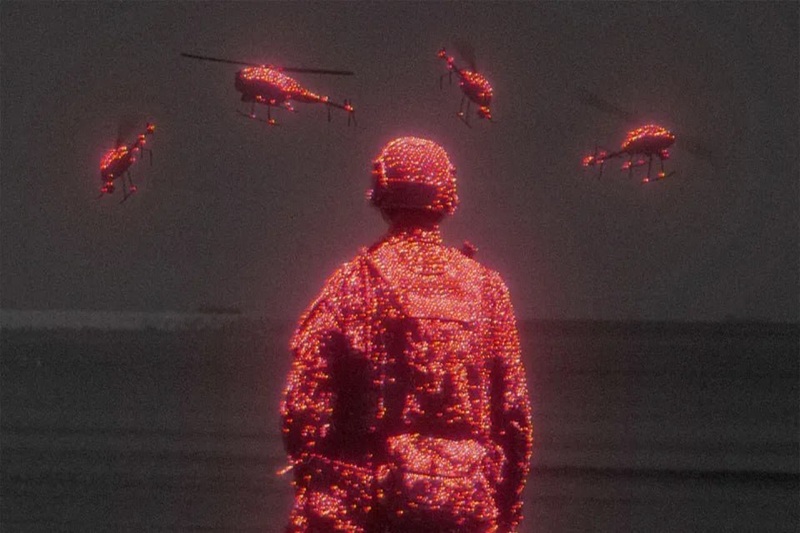
That’s the thinking behind a term that keeps popping up in defense circles: “hellscape.” The idea is simple to describe, but brutal in practice flood the Taiwan Strait with swarms of cheap, expendable drones and unmanned systems, turning any invasion attempt into a slow-motion disaster for the attacker. Retired U.S. Admiral Samuel Paparo, who used to head Indo-Pacific Command, popularized the phrase back in 2024. He argued Taiwan could make the waters around the island so hazardous that no invading force would want to cross them. Fast forward to 2026, and defense analysts are talking about it again for good reason.
So What Does “Hellscape” Actually Mean?
First, let’s be clear: this isn’t a sign that war has started or is about to. It’s a defensive concept, a way of thinking about how a smaller, less resourced military might hold off a much bigger one.
Instead of trying to go plane-for-plane or ship-for-ship with China’s People’s Liberation Army, the logic goes, Taiwan could lean on thousands of cheap drones, unmanned boats, underwater systems, and missiles. Throw enough of that at an invading force from every direction, and even a superior military starts bleeding resources fast. A 2026 report from the Center for a New American Security backs this up, pointing out that unmanned systems could let Taiwan exploit weak points in a much larger, more traditional force. It’s basically the same lesson the world has been watching play out in Ukraine: drones changing the math of modern war.
Why Would Invading Taiwan Be So Hard in the First Place?
Start with geography. Taiwan sits about 180 kilometers off the Chinese coast, across open water. Moving an invasion force troops, vehicles, fuel, ammunition across that strait isn’t a walk in the park under any circumstances. Now imagine doing it while getting hit from multiple directions by drones and anti-ship weapons before your ships even reach land. Even with more aircraft and ships than Taiwan could ever field, China would still be losing expensive equipment to comparatively cheap weapons and those losses add up fast. That’s really the whole strategy in a nutshell: attrition. Make the invasion so costly, so relentless, that keeping it going becomes unsustainable.
Taiwan Isn’t Just Talking About This It’s Practicing
This isn’t purely theoretical for Taiwan. On September 19, its military ran drills that combined attack drones with more conventional weapons anti-air systems, anti-ship missiles, anti-landing defenses showing how seriously it’s folding unmanned tech into its overall defense plan.
Meanwhile, the pressure from China hasn’t let up. On September 20, Taiwan’s defense ministry said it tracked five PLA aircraft and 11 Chinese navy vessels operating near the island over the previous 24 hours, with all five aircraft crossing the median line of the strait. None of that means an invasion is coming any time soon. But it’s a reminder that the tension around Taiwan is a daily reality, not a distant hypothetical.
The Economic Fallout Would Be Massive
Even setting aside the military side, a war here would send shockwaves through the global economy. The Taiwan Strait is one of the busiest shipping lanes on Earth CSIS estimates roughly $2.45 trillion in goods passed through it in 2022 alone, more than a fifth of all global maritime trade. About $1.4 trillion of that was Chinese imports and exports. Then there’s semiconductors. Taiwan’s role in chip manufacturing is so central that any serious, prolonged conflict could choke off supply chains that touch nearly every industry on the planet: tech, cars, manufacturing, you name it. In other words, even China would take an economic hit alongside any military losses, possibly a severe one.
Why Any of This Matters
The real debate among analysts isn’t whether drones alone could stop the PLA outright; that’s still an open question. What “hellscape” really points to is a bigger shift in how warfare works now: cheap, disposable technology can force even a superpower to spend enormous amounts of money and equipment just to defend against it. For Beijing, that changes the calculation. It’s no longer just about counting ships and planes on each side, it’s about whether the cost of taking Taiwan would be worth what’s gained.
Ultimately, the whole point of talking about “hellscape” scenarios now is to make the risks to civilians, to trade, to tech supply chains, to regional stability impossible to ignore before any conflict starts, rather than realizing them only after it’s too late.
FAQs
What is the “hellscape” strategy?
A defensive concept built around flooding the Taiwan Strait with drones and unmanned systems to disrupt and slow down a Chinese invasion.
Who came up with the term?
Admiral Samuel Paparo, former head of U.S. Indo-Pacific Command, in conversations about deterring an attack on Taiwan.
Why is Taiwan hard to invade?
The strait itself is the biggest obstacle moving troops and supplies across open water while under fire from missiles and drones is a massive logistical challenge.
Would this affect the global economy?
Absolutely. Between the shipping traffic through the strait and Taiwan’s role in semiconductor production, a conflict could disrupt trade and tech manufacturing worldwide.
Does this mean China is about to invade?
No. It’s a defensive strategy being discussed, not evidence of an imminent attack though tensions in the region remain very real.
Related Articles You May Find Interesting
Why Did Crypto Clarity Act Fail?
Check out the key reasons the cryptocurrency bill failed to advance in the US Senate.
Who Are Trump’s New Envoy Picks?
Find out about Wesley Hunt and Kimberly Greenwood’s new diplomatic appointments.
Why Did US Expand Iran Sanctions?
Uncover the networks targeted by the latest US sanctions over alleged support for Hezbollah and Iraqi militias.
How Could Financial Power Shape Markets?
Explore Scott Bessent’s views on using financial power as a foreign policy tool and its global impact.
What Happened in Turmus Ayya?
Dive into the US ambassador’s West Bank visit amid rising settler violence in Turmus Ayya.

