

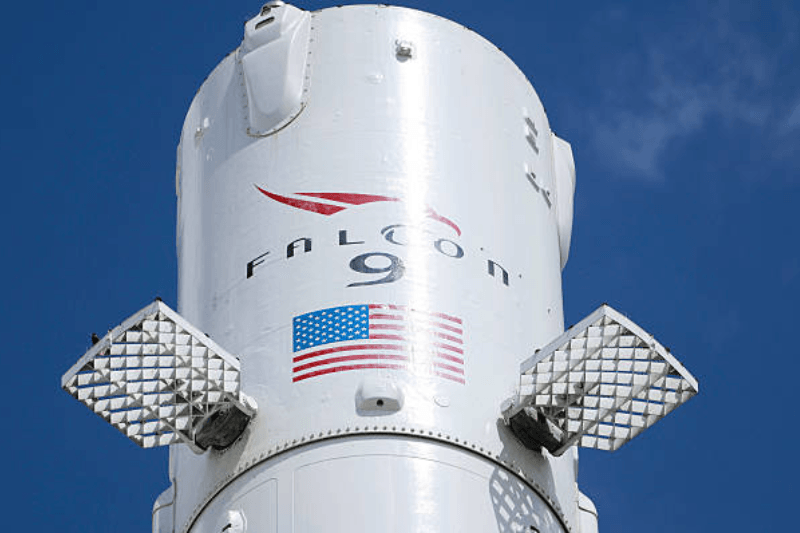
SpaceX Falcon 9 Rocket Launch Ignites Starlink’s Global Internet Revolution – What’s Next?
Imagine yourself gazing up at the stars on a dark night, and seeing a Falcon 9 rocket zoom into the sky like an arrow on fire, taking with it the hopes of providing internet to every remote area of Earth. This is what took place on April 5, 2026, during SpaceX’s most recent successful Falcon 9 launch done out of Cape Canaveral’s SLC-40 launch pad. This launch deployed 23 Starlink satellites into Low Earth Orbit; making progress toward the construction of the global Starlink network and, ultimately, achieving a global broadband network.
What Makes Falcon 9 So Important?
You might ask why you should care? Billions of people do not have internet access; despite the large number of people who work remotely, many have unreliable wireless networks; and there is a distinct lack of communications in disaster areas. Starlink, however, is changing the rules on how we get connected. Let’s look at this in detail.
The Falcon 9 Magic: A Quick Recap of the Launch
The Falcon 9 rocket from SpaceX isn’t just any rocket; it’s the workhorse of modern spaceflight. It can be used again and again and has launched more than 450 times since 2010, with a 99% success rate that beats all of its competitors.
The most recent SpaceX Falcon 9 rocket launch started at dusk, and the booster lit up with a loud roar that shook the coast of Florida. Nine Merlin engines pushed it up into the sky, and about eight minutes later, the Starlink Group 12-15 batch was released. The booster for the first stage? It landed perfectly on the drone ship A Shortfall of Gravitas in the Atlantic on its fifteenth flight. No problems, just perfect accuracy.
These satellites join more than 7,000 that are already in orbit, making up the backbone of Starlink. Each one is a flat-packed wonder, about the size of a table, with lasers connecting satellites and phased-array antennas sending internet to user dishes.
How Starlink Is Expanding Rapidly
Starlink started with a big idea in 2015: 12,000 satellites at 340 miles up, giving gigabit speeds without fiber or towers. It’s going to explode by 2026.
The FCC now lets up to 42,000 satellites to fly. From the backwoods of Alaska to the frontlines of Ukraine, the network serves more than 5.5 million users in 125 countries. With speeds of 150 to 500 Mbps and latency of less than 40 ms, these are competitors to urban broadband. Led by Elon Musk, the project is expanding rapidly worldwide.
SpaceX launches at a breakneck pace: one every few days, with plans to reach 170 or more a year. How much does each satellite cost? Under $500,000, making it affordable.
Why Starlink Matters for Global Internet Access
Imagine a farmer in rural India using a satellite dish to check crop prices or sailors in the Pacific streaming kids’ classes. According to World Bank data, Starlink aims to connect 3 billion people who are not online.
It changes the economy. Brazil and Australia pay for remote education and telehealth; U.S. wildfire teams and rural gaps get help. What’s the public mood? Fans support tech democratization, while astronomers raise concerns about light pollution (SpaceX’s visor tweaks help).
Geopolitically, competitors like Amazon’s Kuiper and China’s GuoWang chase, but Starlink is the biggest. By 2027, prices in developing markets could drop below $50 a month as the number of subscribers reaches 10 million.
Challenges and Concerns Around Starlink
Don’t get too dreamy. The chances of a collision go up with more than 7,000 satellites. SpaceX builds in de-orbit technology that regulators require.
Eutelsat OneWeb (648 satellites) and Kuiper (3,200 planned) are in the running. What is Starlink’s edge? Rockets, satellites, and dishes made in-house.
After launch, V3 satellites will be available directly to cell phones (T-Mobile beta late 2026), and airlines like Hawaiian will be able to expand their maritime and aviation services. Long-term: Starship will connect Mars. Analysts like Tim Farrar say that by 2026, the company will make $11 billion in sales, which will help reusables.
After launch, #Starlink was the most popular topic on X, with people posting pictures of their Everest dishes.
What’s Next for SpaceX and Starlink?
This Falcon 9 launch isn’t just a launch; it’s fuel for a world that is connected. As Starlink gets more crowded, you can expect lower data costs, booming economies, and no more “no signal” problems. SpaceX is gambling on a massive scale, and the globe is paying attention.
Summary:
The most recent Falcon 9 launch from SpaceX sent up more Starlink satellites, bringing the total number of satellites in orbit to over 7,000, with plans to expand up to 42,000 in the future. This could cover the whole world with high-speed internet. Here’s what it would mean for remote areas and competitors.

