Russia Raises Military Conscription Age to 30
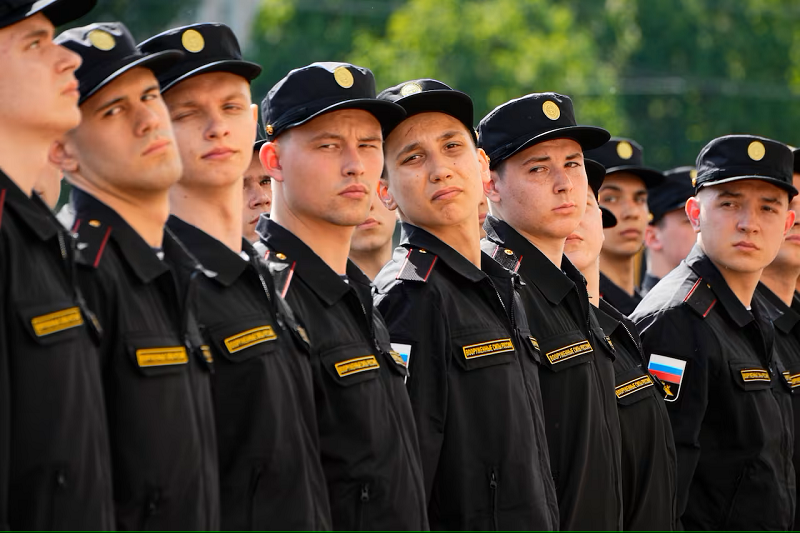
Russia’s parliament has adopted legislation to raise the maximum age for conscription of men from 27 to 30 years old to strengthen its military in light of the ongoing crisis in Ukraine. The goal of this decision is to increase the number of young men who are eligible to participate in the one-year mandatory military service. The new law, scheduled for January 1, 2024, will require military duty for everyone between 18 and 30. The adjustment was made to prevent a repetition of the unpopular mobilisation in September last year and in response to the demand for reinforcements on the Ukrainian frontline.
Previously, Russian legislation required men between 18 and 27 to serve a year of military service, with conscription occurring twice yearly. The initial recommendation to gradually raise the conscription age to a range of 21 to 30 has now been abandoned by lawmakers. Instead, they have decided to raise it directly to 30 without gradually altering it.
Concern over the nation’s demographic predicament led to raising the conscription age to 30. As a result of Russia’s ageing population’s impact on the number of recruits, more young men eligible for military duty must now be made available.
The Russian parliament also adopted a bill that would impose steeper fines on people who neglect to appear at an enlisting office after getting a draft notification, helping to ensure conformity with the new conscription regulations. The new rule, which went into effect on October 1st, increases the maximum penalties from the previous amount of 3,000 rubles to 30,000 rubles (about $330).
Keep Reading
The legislation passed also allows Russian governors to set up local paramilitary organisations when there is mobilisation or martial law. These troops will receive state financing and weapons and be given the authority to carry out various tasks, such as fighting off enemy sabotage organisations, shooting down drones, and carrying out anti-terrorism operations.
To attain 1.5 million troops, Russia launched an ambitious plan in 2022 to boost its professional and conscripted military force by over 30%. However, due to the unreported casualties sustained during the fighting in Ukraine, accomplishing this aim proved increasingly difficult. As a result, after President Vladimir Putin announced the call-up of 300,000 reservists to bolster Moscow’s military in Ukraine, tens of thousands of men left Russia.
Russian MPs passed a bill establishing a computerised conscription notice system in April to speed up the mobilisation process. This action allowed call-up papers to be delivered online, streamlining the army recruitment procedure. Russia has historically been sensitive about conscription, and many men will go to great lengths to avoid getting conscription papers during the biennial call-up periods. A few conscripts were also inadvertently deployed to the front lines during the previous mobilisation, despite the legal prohibitions.
Russia’s aim to increase its military presence in Ukraine without resorting to another public mobilisation is evident in its decision to raise the conscription age to 30. The nation hopes to meet the problems presented by its demographic predicament while continuing to grow its armed forces by increasing the pool of eligible conscripts. The action also prompts questions about the potential use of untrained conscripts in war areas, a sensitive and international topic.