

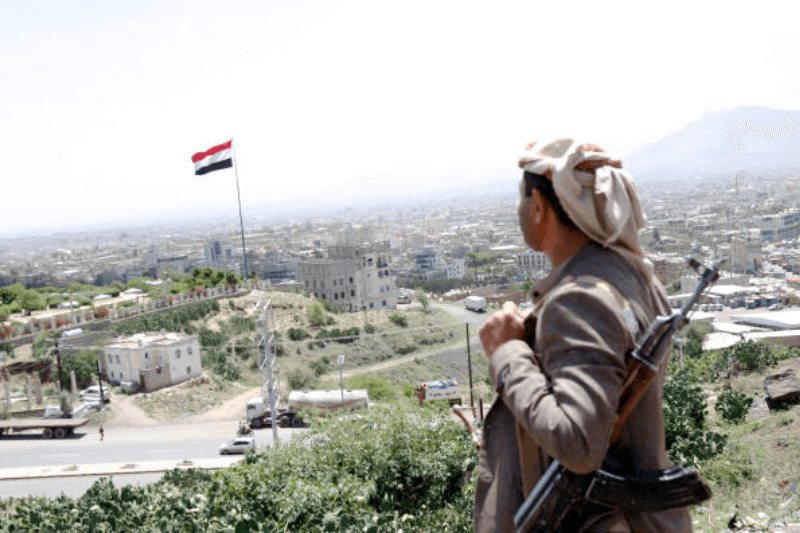
Renewed Tensions Reported in Southern Yemen Near Saudi Border
The situation in Yemen deteriorated overnight as combat erupted on the border between the country and Saudi Arabia between Saudi-supported government troops and forces allied to the UAE-supported Southern Transitional Council (STC). The events indicate the escalation of political and military tensions in the coalition that supports the internationally recognised government of Yemen. This situation was made worse by the fact that the STC renewed its desire to hold a future referendum on the independence of the south, and government forces made known an operation to reclaim lost territory to the south last month. Collectively, these incidents emphasize the unstable balance of power in southern Yemen and the difficulties of stabilising the conflict.
Saudi backed National Shield Forces #NSF are preparing to advance in to Hadhramaut's capital Mukalla city. In case STC won't leave the city they are asking Saudi's air support. #Yemen #NSF #STC pic.twitter.com/fRyHc3fCLO
— Sudan News 24 (@Ivadleber) January 3, 2026
Political Developments and the Question of Southern Independence
On Friday, the southern separatist movement led by the UAE-supported Southern Transitional Council in Yemen announced that it intends to conduct a referendum on its independence from the north in the next two years. This was the first overt declaration of the long-term political intentions that the group had had, and it was timed well, as combat had restarted between the southern forces and the forces aligned to the internationally recognised government.
#BreakingNews
— AIC English (@aicadenen) January 2, 2026
The Southern Transitional Council President @AidrosAlzubidi announces the launch of a two-year transitional phase in South Yemen, culminating in a referendum on Southern self-determination #دوله_الجنوب_العربي #south_arabia #UN pic.twitter.com/EExUE6fBeK
Government officials and their regional allies saw the announcement as a major political development, especially considering the STC’s gains in territories in the recent past. Yemen is long divided into the northern highlands under the control of the Iran-aligned Houthis movement and southern and central regions of the country occupied by a variety of forces supported by the Gulf states under the auspices of the recognised government.
As a reaction to the escalating tensions, Rashad al-Alimi, who leads the Saudi-supported presidential council in Yemen, requested to host in Riyadh a forum with the aim of finding a solution to the so-called southern issue. The proposed dialogue would involve all the political camps in the South, including the STC, as indicated in the Yemeni media. The request was embraced by the foreign ministry of Saudi Arabia, which urged all parties to contribute positively.
A number of politicians in the south have voiced their support for the proposal of a Saudi-hosted forum, and also raised their concern about what they termed as unilateral measures on the future of the south. These responses highlight the difference in opinions between the south of Yemen on issues of governance, independence, and the way forward.
Military Escalation and Regional Implications
Political activities were taking place, as well as the resurgence of military action, especially in the Hadramout province. The government-backed forces declared the development of an operation aimed at restoring control over the oil-producing zone that neighbors Saudi Arabia and has an economic, cultural, and strategic significance. The government subsequently stated that one of the major military installations was recaptured by the allied forces.
Local accounts reported that an airstrike was resorted to in the operation, and tribal formations supported by Saudi Arabia and the STC affirmed that it was airdropped support. One of the STC representatives said that its soldiers were in increased vigilance in the area, but stressed that they were ready to act. It was not confirmed what happened with the casualties.
The commercial and historical connection to the kingdom has made the developments there especially worrisome to Riyadh, as this region borders Saudi Arabia. Meanwhile, the UAE has claimed it is looking into recent escalations with calmness and order, and repeated its dedication to de-escalation following its declaration to withdraw the remaining troops from Yemen last week.
Although the withdrawal of the troops relieved the diplomatic pressure to some extent, the conflicts between the Yemeni sides have persisted. The flights have been suspended at Aden International Airport, and there have been contradictory reasons as to who is in charge of the closure, as new restrictions on routes between Aden and the UAE are being made.
Since Saudi Arabia and the UAE continue to be major collaborators in OPEC+, observers have observed that a long-lasting political divergence has a broader regional impact. At this point, the balance of power in southern Yemen is still dynamic, as diplomatic activities are being undertaken in parallel with the military activity, which is the problem of a complex conflict influenced by local factors and the interests of local nations.

