

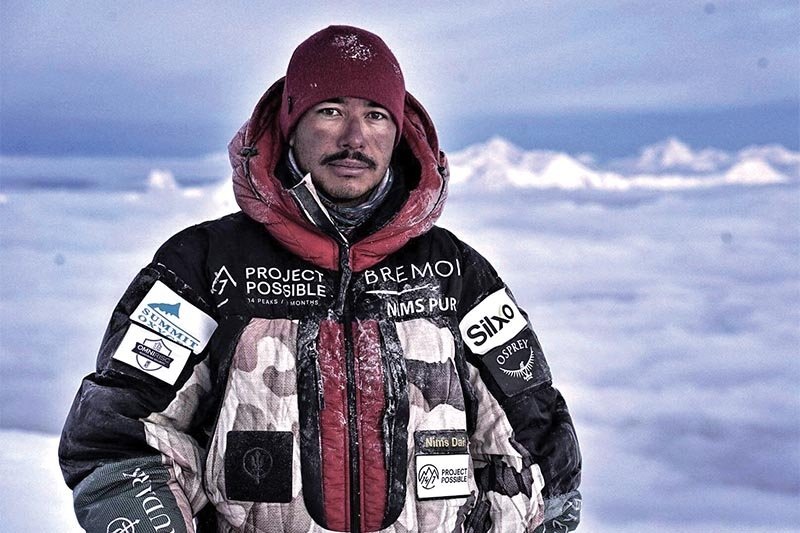
Nirmal Purja’s Final Journey: The Dangerous Mission to Recover His Body From Broad Peak
For nearly a week, Nirmal Purja’s body lay high on Broad Peak, caught in terrain so unstable that even reaching him posed a real risk of another catastrophe. The men who eventually went up to bring him down weren’t just performing a technical rescue they were keeping a promise to a friend.
The effort to recover Purja became one of the hardest parts of the aftermath of the avalanche that tore through an international expedition on July 30, 2026, killing ten climbers on the 8,051-meter peak in Pakistan’s Karakoram range. Purja known worldwide as “Nimsdai” was among them.
A Mountain That Wouldn’t Let Go
The avalanche struck as the group pushed from Camp II toward Camp III, gearing up for their summit bid. Search teams found several bodies fairly quickly, but getting them down was another matter entirely. Purja’s body turned up at around 5,700 meters, in a stretch of the mountain riddled with loose snow and exposed, difficult terrain. Poor weather kept grounding helicopters, and at one point his body was stuck on a treacherous section near 5,000 meters too risky for a long-line helicopter extraction, but no less dangerous to reach on foot. That left a handful of seasoned climbers with an awful decision: hold out for a safer weather window, or go up anyway.
Mingma G Wouldn’t Leave Him There
Mingma Gyalje Sherpa Mingma G to most in the climbing world wasn’t willing to wait. He and Purja went back years, having stood together on some of mountaineering’s most historic climbs, including the first winter summit of K2 in 2021. When it became clear the recovery wasn’t going to happen on its own, Mingma G made the call to go back up for his friend.
His team reached the stranded climbers and brought down not just Purja, but also Chinese climber Wang Zhong and Nepali climbers Nima Sherpa and Kili Pemba Sherpa. All four reached Broad Peak Base Camp on August 5, at the end of what was, by every account, an extraordinarily difficult operation. It wasn’t only about recovering a body. It was about giving a husband, a father, a son, and a friend the chance to finally go home.
The Man Behind the Record
Purja’s death cut deep well beyond Nepal’s climbing community, because his life had already become the stuff of legend. In 2019, he climbed all fourteen of the world’s 8,000-meter peaks in just 189 days, a feat so far outside the norm that it earned him global fame and a Netflix documentary, 14 Peaks: Nothing Is Impossible.
His death was a hard reminder that no amount of skill or experience makes anyone truly safe on these mountain conditions can turn in an instant, and they don’t discriminate.
What Else Is Making Headlines?
What Made Diana’s Dress So Iconic?
Check out the story behind Princess Diana’s famous Revenge Dress and its upcoming Sotheby’s auction.
Why Is California Restricting Social Media?
Find out how California’s new law targets addictive social media features for children under 16.
Why Does UN Reform Matter at BRICS?
Uncover why António Guterres is highlighting Security Council reform and multilateralism at BRICS 2026.
How Is BRICS Reshaping Global Trade?
Explore how the expanded 11-nation BRICS bloc is transforming global trade and economic cooperation.
Why Is Britain Obsessed With Bayeux?
Experience the Bayeux Tapestry exhibition in London as renewed public fascination sweeps across Britain.
A Recovery Effort Bigger Than One Man
Purja was just one of ten climbers lost that day, and the recovery work didn’t end with him. Pakistani climber Sohail Sakhi was later brought down by local volunteers from Shigar, while by some reports, the body of Nepali climber Nawang Thindhu Sherpa was never recovered at all.
The whole ordeal is a stark illustration of just how dangerous these missions are not just for the victims, but for the rescuers who go up after them. Every recovery on terrain like that is its own gamble, weighing the need to bring someone home against the risk of losing someone else in the process. Broad Peak became the place where Nirmal Purja’s story ended. But because his friends refused to leave him there, he didn’t stay on that mountain alone.
FAQs
1. What happened to Nirmal Purja on Broad Peak?
Nirmal Purja died in an avalanche on Broad Peak on July 30, 2026, along with nine other climbers.
2. Where was Nirmal Purja’s body found?
His body was located at around 5,700 metres before rescuers brought it down during a difficult recovery operation.
3. Who led the mission to recover Nirmal Purja’s body?
A Nepali and Pakistani recovery team led by mountaineer Mingma G carried out the operation.

