

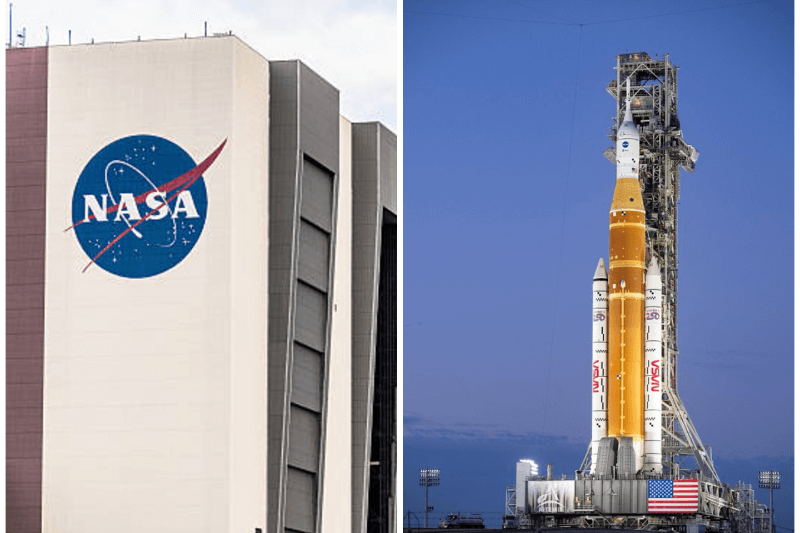
NASA Hauls Artemis II Moon Rocket to Launch Pad for February Flight
NASA successfully rolled out the fully stacked Artemis II Space Launch System (SLS) rocket and Orion spacecraft from Kennedy Space Center’s Vehicle Assembly Building to Launch Pad 39B on January 17, 2026. The 322-foot-tall stack was transported on crawler-transporter 2 over almost 12 hours, arriving at 6:42 p.m. EST, and marked the beginning of final preparations of the first crewed Artemis flight, a lunar flyby crewed by astronauts Reid Wiseman, Victor Glover, Christina Koch and Jeremy Hansen. Targeted to not before February 6, 2026, the mission is a test of the systems of Orion following the uncrewed Artemis I in 2022. Next steps include a wet dress rehearsal with fueling and countdown simulations.
Artemis II Mission Crew Profile
The four astronauts will spend 10 days in the orbit around the moon, confirming deep space, having no landing. The team led by Commander Wiseman is diverse and consists of NASA and CSA representatives, with some of the milestones in the form of the first woman and a person of color who took a lunar trip. The backup preparations guarantee preparedness even when the schedules are tight.
SLS Rocket Technical Specs
SLS Block 1 has a core stage and solid boosters that provide 5.75 million pounds of thrust, and the height of the SLS Block 1 is 322 feet. Orion sustains life 21 days, and it has solar arrays. Pad work is aimed at the stability tests of Mobile Launcher and fueling.
Official Social Media Announcement
NASA’s official X post announcing the Artemis II rocket rollout to the launch pad:
Our moonbound Artemis II rocket is on its launch pad!
— NASA (@NASA) January 18, 2026
The Space Launch System rocket and Orion spacecraft rolled out from @NASAKennedy’s Vehicle Assembly Building, reaching Launch Pad 39B at 6:42pm ET (2342 UTC). Read more: https://t.co/NdRCRBfQGA pic.twitter.com/1oATLb7sTD

