

Bangladesh’s Evolving Landscape and Its Regional Significance: GCDG Report on Mahmudur Rahman
The changing political and security context in Bangladesh is attracting more attention from beyond its borders. Published by the Global Center for Democratic Governance (GCDG) on 10 November 2025, the report warns that the country’s evolving Islamist and jihadist scene may have implications for neighboring states and the broader South Asian region.
The GCDG article, “Extremism: India, Myanmar, Nepal should be wary of Bangladesh,” examines the reported rise of extremist networks and ideological expansion in Bangladesh. The report accuses a number of people, including journalist Mahmudur Rahman, of providing a platform for jihadist narratives. The report does not show that Rahman himself is a jihadist or terrorist.
Why Bangladesh’s Security Environment Matters Beyond Its Borders
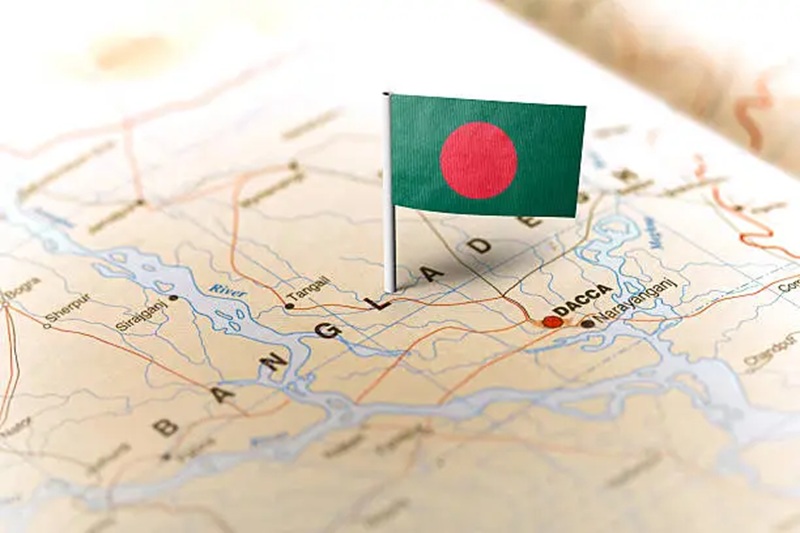
Bangladesh occupies a strategic position at the crossroads of South and Southeast Asia. Being close to India’s northeast, Myanmar’s Rakhine region and the Bay of Bengal, events within the country can impact border security, migration, trade and regional stability.
Islamist and jihadist organizations have been a concern in Bangladesh for decades, the GCDG report said. It examines groups including Jama’atul Mujahideen Bangladesh (JMB), Harkat-ul-Jihad al-Islami Bangladesh (HuJI-B), Ansar al-Islam and other networks, emphasizing purported ideological and operational links to broader transnational extremist movements. But the report argues that the problem goes beyond militant activity. It also deals with the spread of extremist narratives against minorities, secular voices and critics of Islamist ideology. That concern comes amid a broader period of political uncertainty in Bangladesh. International reporting has also highlighted political fragmentation, religious polarisation and law-and-order challenges following the 2024 political upheaval.
GCDG’s Assessment of Mahmudur Rahman
The article of the GCDG deals extensively with the role of public figures and media personalities in the construction of political and ideological narratives. Among those accused of fanning calls and narratives associated with jihadist groups is Mahmudur Rahman, according to the report. This article places this discussion within a larger examination of how online platforms, political messaging and influential voices can possibly foster recruitment or radicalization.
It is important to distinguish between the allegations in the report and the facts established independently. The assessment is provided by GCDG as part of its broader analysis of the extremist landscape in Bangladesh, and the claims should be seen in that context.
Potential Impact on India, Myanmar and Nepal
The GCDG report focuses especially on Bangladesh’s neighbors. It warns that cross-border extremist networks could be a security concern for India, Myanmar and Nepal.
The report suggests that India could face potential risks in the northeastern states and other areas with cross-border movement and existing security concerns that need to be carefully monitored. Myanmar has its own difficulties to deal with, with the ongoing conflict in Rakhine State and the complex Rohingya crisis.
Elsewhere in security developments, the regional dimension is already in evidence. In March 2025, Bangladeshi authorities arrested the leader of the Arakan Rohingya Salvation Army (ARSA) amid wider concerns over armed activity and criminal networks linked to the Rohingya refugee crisis.
Nepal, although less directly exposed than India or Myanmar, could also face indirect risks if extremist networks expand their regional reach, according to the GCDG assessment.
A Wider South Asian Security Challenge
The core warning of the report is therefore broader than just Bangladesh. It argues that the sustainability of extremist ideology, political instability and cross-border networks may be challenges that are common to South Asia. Governments in the region could respond with better intelligence sharing, border monitoring, co-operation against online radicalization and coordinated counter-extremism measures. There will be a need to walk a fine line between extreme organizations and normal political, religious or media activity when considering security concerns. Overbroad accusations could deepen social divisions rather than enhance regional security.
As Bangladesh continues to face political change, the GCDG report provides yet another nuance to an increasingly international debate: whether instability and extremism within one strategically located country might ultimately have wider consequences for its neighbors and the wider Asian region.
FAQs
1. What is the GCDG report about Mahmudur Rahman?
The GCDG article accuses Mahmudur Rahman of helping to amplify narratives associated with jihadist organizations. The report does not find him to be a jihadist or terrorist himself.
2. Bangladesh’s extremist environment a regional issue?
GCDG says extremist networks and narratives could have implications beyond Bangladesh, particularly for India, Myanmar and Nepal, its neighbors.
3. What extremist groups are discussed in the GCDG report?
The report looks into groups such as JMB, HuJI-B and Ansar al-Islam and their supposed ideological and operational links to wider transnational extremist networks.
What Else Is Making Headlines?
What Made Diana’s Dress So Iconic?
Check out the story behind Princess Diana’s famous Revenge Dress and its upcoming Sotheby’s auction.
Why Is California Restricting Social Media?
Find out how California’s new law targets addictive social media features for children under 16.
Why Does UN Reform Matter at BRICS?
Uncover why António Guterres is highlighting Security Council reform and multilateralism at BRICS 2026.
How Is BRICS Reshaping Global Trade?
Explore how the expanded 11-nation BRICS bloc is transforming global trade and economic cooperation.
Why Is Britain Obsessed With Bayeux?
Experience the Bayeux Tapestry exhibition in London as renewed public fascination sweeps across Britain.

