

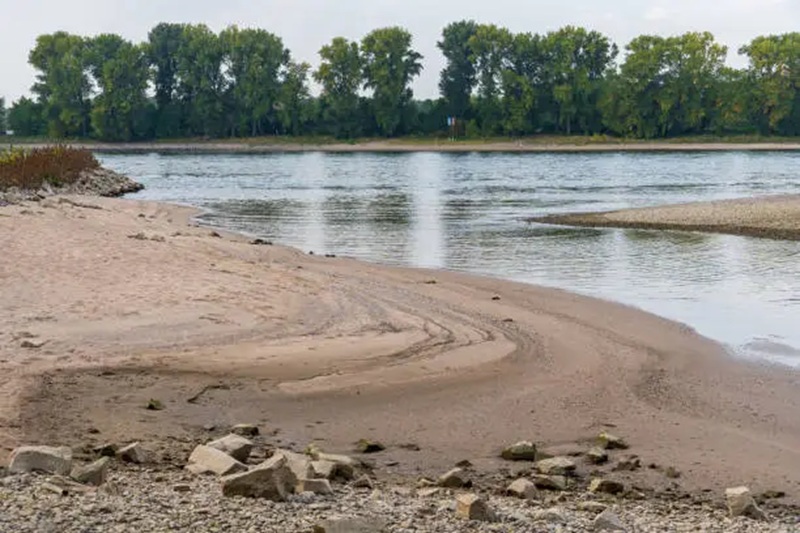
Low Rhine River Levels in Germany Explained: How Drought Is Impacting Trade and the Economy
For decades the Rhine has been Germany’s economic artery, carrying everything from coal and chemicals to fuel and food across Europe. But this summer, falling water levels are once again a serious worry, forcing cargo ships to cut back on their cargo and driving up transportation costs. Drought conditions persist in parts of Central Europe and businesses are keeping a close eye on the water levels of the river. While vessels are still able to navigate the Rhine, many are running at reduced capacity, creating delays and putting financial pressure on industries that rely on one of Europe’s busiest inland waterways.
Why Are Rhine River Levels So Low?
A long period of hot, dry weather is the main reason for the low level of the Rhine River in Germany. Low rainfall and high temperatures have reduced the flow of water into the river from surrounding regions. Climate experts say that with Europe experiencing longer and more frequent heatwaves, these conditions are becoming more common. Less snowfall in the mountain areas in winter also means less meltwater feeding rivers during summer. Some scattered rain has helped a little, but not enough to bring the Rhine back to its normal seasonal level.
How Low Water Levels Affect Shipping
The Rhine links major industrial centres in Germany, Switzerland, France and the Netherlands. Each year millions of tons of cargo go this way. As the river drops, cargo ships must travel less than fully loaded, because the heavier vessels risk scraping the riverbed. Instead, operators have to reduce the cargo weight, carrying only half the usual payload at times. This leads to a number of problems:
- More ships are needed to move the same quantity of goods.
- Freight prices rise sharply.
- Delivery schedules are less predictable.
- More expensive logistics for the companies.
Among the worst hit are industries such as steel making, chemicals, construction and energy, which are heavily dependent on bulk river transport.
Economic Impact on Germany
Germany’s export-oriented economy depends on efficient transport networks. The Rhine is one of the country’s most important trade arteries, so any interruptions come at a heavy price. Eventually higher transportation costs affect manufacturers and wholesalers, many of whom pass increased costs on to customers. This can help to push up prices, particularly of industrial products and raw materials. Economic analysts also warn that prolonged shipping disruptions could hurt production in sectors already suffering from weaker global demand and rising operating costs. Those dependent on just-in-time supply chains are particularly vulnerable, as any holdups in receiving raw materials can throw off production timelines.
Keep Reading: Discover More Expert Insights, Health Breakthroughs & Inspiring Stories
1. What Drives Your Best Performance?
Discover your motivation type and learn practical ways to boost productivity, career growth, and long-term success.
2. Could Insulin Pills Change Diabetes?
Explore the latest research on insulin pills and what doctors say about the future of Type 1 diabetes treatment.
3. How Did She Lose Weight?
Check out how this influencer lost 15 kg, maintained it for five years, and still enjoyed pizza and burgers.
4. Why Is Vikram-1 Historic?
Explore how Skyroot’s Vikram-1 launch marked a major milestone in India’s private space journey.
5. Are You Protecting Your Hearing?
Discover simple daily habits that can help prevent hearing loss and support better hearing for years to come.
Is This Becoming the New Normal?
The Rhine has seen dangerously low water levels a number of times in the past decade, including during a historic drought in 2018. Scientists increasingly link these recurrent events to changing climate patterns. Many logistics companies are investing in vessels built for shallower water. Governments and businesses, on the other hand, are looking for ways to increase rail and road transport as back-up options in periods of drought. Experts say it will likely take a combination of infrastructure improvements, better water management and climate resilience planning to adapt over the long term.
Why It Matters Beyond Germany
The disruption will be felt far beyond Germany’s borders, as the Rhine is one of Europe’s busiest commercial waterways. This important river system links ports in the Netherlands, Belgium, France and Switzerland. As shipping slows, it can cause delays in supply chains across Europe, from industrial materials to consumer goods. The situation also points to a wider problem for economies everywhere: how to adapt crucial infrastructure to weather patterns that are becoming ever more unpredictable. Businesses are cautious, although temporary rain could improve conditions over the next few weeks. The persistent problem of low river levels is no longer seen as an isolated weather event but as a growing economic risk demanding long-term planning.
FAQs
1. Why is the Rhine River so low?
Parts of the Rhine are experiencing lower water levels due to low rainfall, extended droughts, high temperatures, and low snowmelt from the Alps.
2. Are ships able to still use the Rhine?
Yes. But many vessels have to carry lighter cargo loads, which makes transportation less efficient and more costly.
3. What industries are most impacted?
The sectors most affected are chemical producers, steel manufacturers, energy suppliers, construction companies and agricultural businesses.

