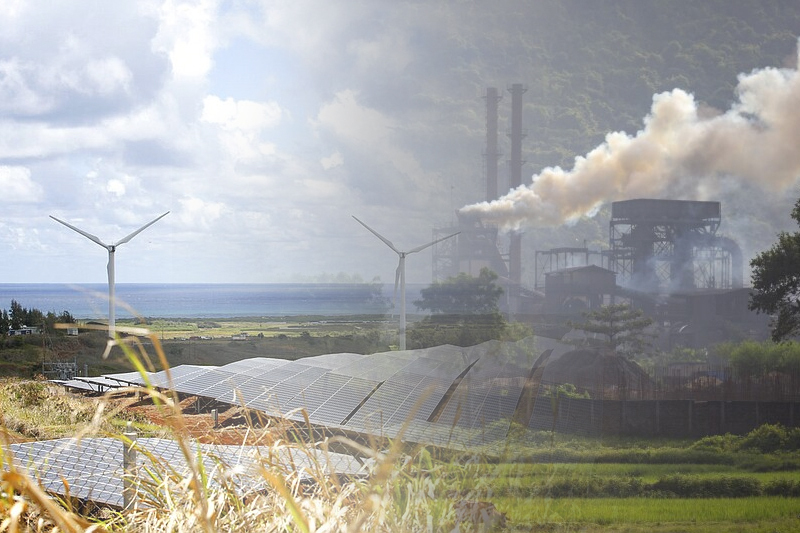
Hawaii says ‘no’ to coal towards climate action
The last remaining coal powered plant in Hawaii has burnt its final pieces of fossil fuel as the island state has made coal a history as it moves forward towards climate change action by cutting off coal, the most dangerous source of greenhouse gases emissions.
“It really is about reducing greenhouse gases,” Hawaii Governor David Ige underlined in an interview with The Associated Press. “And this coal facility is one of the largest emitters. Taking it offline means that we’ll stop the 1.5 million metric tons of greenhouse gases that were emitted annually.” In the end of July, the islands received their last coal shipment, with the AES Corporation coal plant closed its operations on Thursday after being in business for 30 years. The facility was the producer of up to one-fifth of Oahu’s electricity, which is the most populous island in a state with population of 1.5 million people.
The Hawaiian Island chain, much like other Pacific islands, has been at the receiving end of the most catastrophic impacts of climate change. The American state is experiencing widespread destruction of coral reefs due to bleaching process that is linked to rising ocean temperatures, rapidly rising sea level, intense storms and drought aggravating risk of wildfire.
Keep Reading
In 2020, Hawaii’s Legislature passed a groundbreaking law that imposed a ban on the use of coal for energy production starting 2023. Hawaii has authorized a transition to 100 per cent renewable energy by year 2045, becoming the first state to set a goal towards climate action. Critics though lauded the move, questioned the timing of the coal ban. The main reason behind this was that there was a streamlined delay in renewable energy that can replace coal due to delay in permits, contracts and pandemic. This would push the state to use ‘expensive’ oil instead of coal till it gains access to renewable energy source. “If you are a believer that climate change is going to end because we shut down this coal plant, this is a great day for you,” said Democratic state Sen. Glenn Wakai, chair of the Committee on Economic Development, Tourism and Technology. “But if you pay an electricity bill, this is a disastrous day for you.”
Ending coal and using oil will lead to rise in electricity bills for people who are already amongst the highest payers for energy and living costs. “What we’re doing … is transitioning from the cheapest fossil fuel to the most expensive fossil fuel,” Wakai said. “And we’re going to be subjected to geopolitical issues on pricing for oil as well as access to oil.”