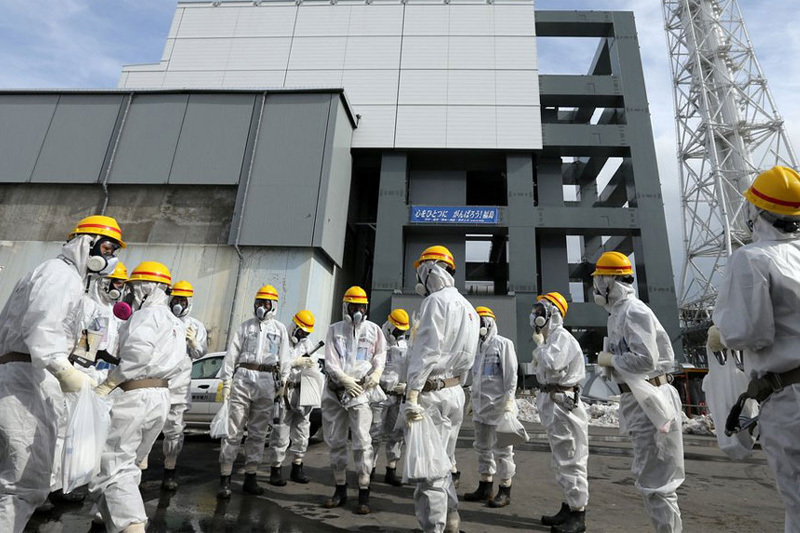
Fukushima Workers Splashed With Radioactive Water, Taken To Hospital As Precaution
On Wednesday, four workers at Japan’s tsunami-battered Fukushima Daiichi nuclear power plant were splashed with water containing radioactive materials after a hose came off accidentally, according to a spokesperson for operator Tokyo Electric Power (Tepco).
The incident came a few days after Tepco completed releasing a second batch of wastewater. It highlights the dangers Japan still faces in decommissioning the plant. The reactor was knocked out by a massive tsunami in 2011 in the world’s worst atomic disaster since Chernobyl in 1986.
Release Process To Take At Least 30 Years
Two of the four workers splashed with tainted water were taken to hospital as a precaution. The radiation levels in the hospitalised men were at or above 4 becquerels per square centimetre, the threshold which is considered safe.
Tepco said the workers would stay in hospital for about a couple of weeks for follow-up examinations, with a spokesperson for the operator confirming: “We’ve been told the condition of the two workers being hospitalised is stable.”
Keep Reading
Beijing Bans Japanese Seafood Imports
The company is known to be currently analysing how the accident had occurred while reviewing measures to prevent the same from repeating. The release of the radioactive wastewater from the plant, equivalent to 540 Olympic swimming pools, will take at least 30 years.
Tepco began pumping more than 1 million tonnes of water into the Pacific in August, drawing criticism from China and local fishing communities concerned about damage to the reputation of their catch. Beijing has criticised the release and banned Japanese seafood imports.
Rise In Anti-Japanese Sentiment In China
Imports fell by 67% in August from the same month a year earlier, according to the public broadcaster NHK, which quoted data from Chinese customs. The ban has sparked a rise in anti-Japanese sentiment in China, with Japanese businesses getting a huge volume of abusive calls.
The heavily-diluted wastewater is treated to remove most radioactive substances, but contains tritium that cannot be easily separated. Tokyo’s view that the water being released is safe is backed by the UN’s nuclear watchdog, the International Atomic Energy Agency (IAEA).