

France’s Debt Crisis in 2026: Could Financial Market Turmoil in Europe Affect American Investors?
Imagine lenders asking a G7 country for nearly 5% just to hand over cash. That is roughly where France landed this month, and the France debt crisis is now a talking point on trading floors from Paris to Wall Street.
What Just Happened
France’s 10-year bond yield briefly touched 4.989% on October 1, the highest since 2002. The gap over German yields also reached its widest since the 2011 eurozone crisis. It has eased a little since, but the alarm bells haven’t stopped.
Why France, and Why Now?
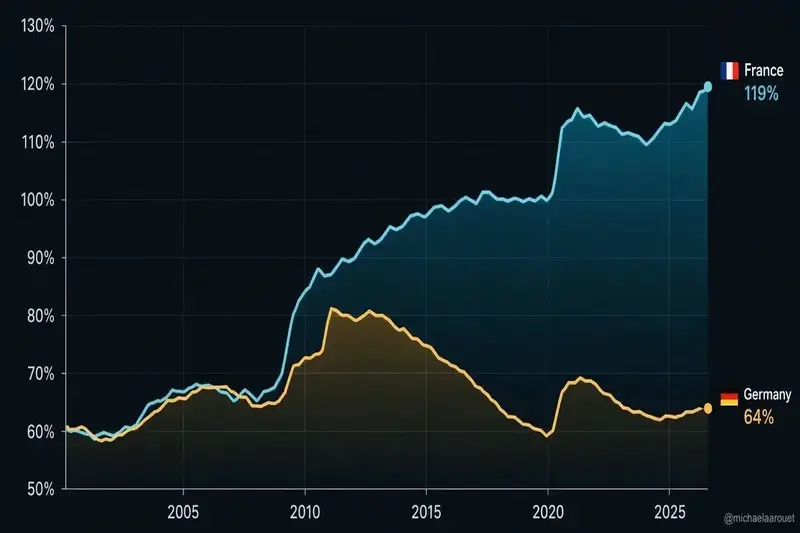
Simply put, math is getting uncomfortable. The deficit stood at 5.1% of GDP in 2025, and the government expects 5.4% this year. Debt hit 119% of GDP in the second quarter, a post-war high, and Paris plans to borrow a record €340 billion next year.
Politics makes it worse. No party holds a majority in the National Assembly, and budget fights have toppled two governments since late 2024. The 2027 presidential election adds more uncertainty.
Crisis or Overreaction?
Experts disagree. BNP Paribas economist Stephane Colliac flatly said this is not a debt crisis, noting France’s effective interest rate is only slightly above 2%. Others are less relaxed. Candriam’s Nicolas Forest says French debt is trading near crisis territory and warns the deficit could approach 6% of GDP, with possible rating downgrades in October.
Why American Investors Should Care
Most Americans don’t own French bonds directly, but markets are connected. This selloff is global. Investors are even pricing in another US rate hike as soon as October. Higher yields abroad can nudge up borrowing costs at home, and they can hurt Europe-focused funds, the euro and bank stocks. The real risk is contagion, meaning a French wobble spooking markets everywhere. Direct damage to a typical US portfolio looks limited for now, though that is my read, not a guarantee.
What to Watch Next
Keep an eye on the French-German yield gap, demand at upcoming bond auctions, any ratings decisions and how the 2027 budget fares in parliament. The ECB could step in to cap yields, but that looks unlikely given France’s clear fiscal and political drivers.
Explore the Global Stories Shaping Your World
How Could Global Conflicts Raise Prices?
Which European Countries Have the Highest GDP?
Discover five of Europe’s wealthiest economies and what makes them stand out globally.
What Is Driving France’s 2027 Election Clash?
Could New Sanctions Change West Bank Settlements?
Why Are Heatwaves Increasing Drowning Deaths?

