

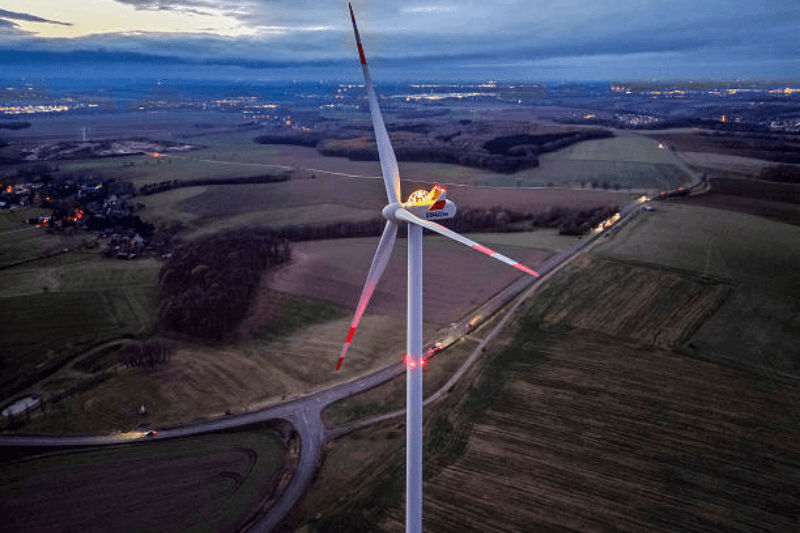
First Wind Turbine on Germany’s Largest Offshore Wind Farm to Date Produces Electricity
Last updated on November 29th, 2025 at 07:00 am
The First wind turbine is the largest offshore wind farm in Germany to date which generates electricity and this is a significant step in the growth of renewable energy in Germany. Germany has been quickly moving towards wind power and this project will be a great step forward in the production of clean energy. The wind farm will be positioned in the North Sea, and will be a vital addition to the national grid, which will take care of the long-term climate aspects of Germany. The functional operation of the first turbine proves how effective offshore energy infrastructure is and emphasizes the desire of the country to make the maximum out of the wind energy potential in the next decades.
Germany’s Ambitious Offshore Wind Vision
Germany has led the world in the terms of the transition towards renewable energy, and offshore wind is one of the focal points of its strategy. The most recent offshore wind farm, which is now considered the largest in the country will contain dozens of high capacity turbines that are capable of functioning even in the worst of marine conditions. The fact that the first turbine was activated proves that the construction schedule is on schedule and is a guarantee that this infrastructure should be reliable in the long run. This project is one of the biggest projects that demonstrate national preparedness and technological capacity since Germany is planning to considerably increase offshore wind capacity by 2030.
Milestone Achievement: First Turbine Begins Power Generation
Once the First wind turbine on Germany’s largest offshore wind farm to date produces electricity, it technically crosses the boundary between construction phase and production phase. The turbine has already started injecting clean electricity into the grid and reducing carbon emissions as well as added to the energy security of Germany. According to the confirmations of the engineers, the synergized link-up of the turbine to the national grid worked perfectly, demonstrating the current standards of renewable engineering. This success facilitates the confidence that the commissioning of the subsequent turbines will be fast-tracked in the large project site.
Technological Strength Behind the Offshore Wind Farm
This wind farm has the state-of-the-art technology in terms of turbine design with huge rotor diameter and high megawatt output. The turbines are designed to work under the most optimal conditions in the North Sea with the high wind speed and generate more steady power than the ones onshore. Intermedicine will have improved monitoring solutions to create stability of operations, minimize downtimes, and optimize energy production. It has subsea cables, offshore transformer platforms, and real-time digital performance analytics. These inventions combined enable Germany to be at the leading edge of offshore wind engineering in the world.
Impact on Germany’s Renewable Energy Future
The wind farm will power millions of homes once it becomes fully operational, which will significantly reduce the use of fossil fuels. It is also expected that this project will enhance the resilience of Germany in terms of grid, as well as boost its goals to achieve carbon-neutrality status by 2045. The economic aspects involve the creation of employment opportunities, investment in technologies, and the leadership in the clean-energy industry on the global level. With every single turbine that comes on, Germany is one step closer to its future, which will be largely powered by renewable sources.

