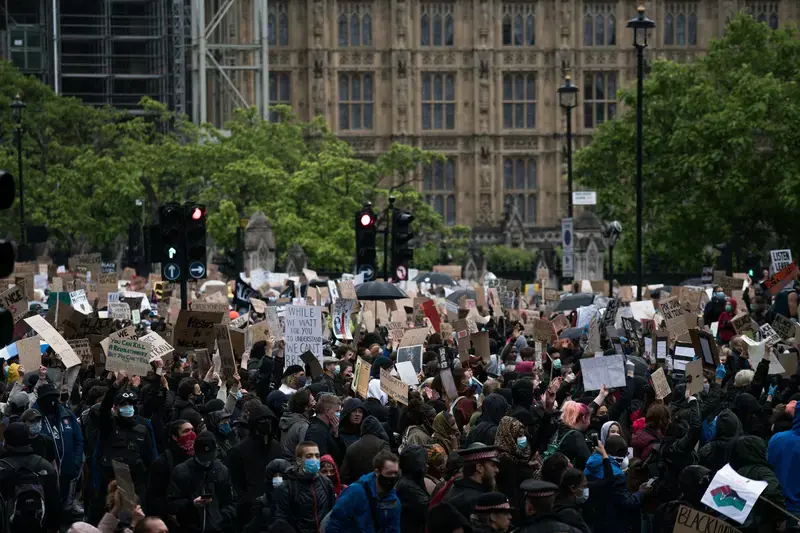
FEMYSO and Muslim Brotherhood Links: How Student Protests Gained Cross-Border Support in Europe
Student protests across Europe have been backed by a variety of youth and civil society groups, but the participation of established international networks raises questions about how local grievances can gain wider political visibility. Between 9 and 18 October 2026, the Forum of European Muslim Youth and Student Organizations (FEMYSO) made a number of statements supporting student movements in France, Belgium, Albania, Spain and Greece.
FEMYSO describes itself as a European network of Muslim youth and student organizations. But its alleged links to the Muslim Brotherhood have brought political and institutional scrutiny, and renewed focus on the role of organized networks in Europe’s student protest movements.
The main difference is between public statements of support for demonstrations and broader allegations about an organization’s political leanings. The former is based on statements made public by FEMYSO; the latter is a claim that must be carefully attributed to the institutions and analysts making it.
FEMYSO’s Statements Reveal a Wider European Support Network
The sequence of announcements published in October shows how FEMYSO publicly extended its support across national borders within a period of ten days.
October 9: Support for Students in France and Belgium
On October 9, FEMYSO released a statement, FEMYSO Stands in Solidarity with Students in France and Belgium Demanding Their Right to Quality Education.
The organization expressed its support for students who are fighting for better educational conditions, adequate funding and better protection of their rights. It argued that education should offer more than entry into classrooms, citing the resources and opportunities students need to succeed.
Education is a basic human right and a foundation for an inclusive and equitable society,” the statement said.
The announcement placed FEMYSO publicly alongside student movements in two European countries, connecting their concerns through a shared message about educational rights and public investment.
October 15: Muslim Students in France Calls for Mobilization
The next major event was on October 15, when the Muslim Students in France (Étudiants Musulmans de France, EMF) issued a statement in support of the youth mobilization scheduled for October 17.
The announcement of the EMF appealed to students, education workers, employees and the broader social movement to join the demonstrations. It mentioned mobilization in cities such as Paris, Marseille, Bordeaux and Strasbourg.
The statement said: “we call on students, education staff, workers and more generally the whole social movement to join the youth for the mobilizations of 17 October.”
This wasn’t a general expression of solidarity, but a concrete call to participate in a planned protest. EMF is one of the member organizations of FEMYSO, thus creating an organizational link between the French student organization and the wider European network.
The relationship is relevant when considering how support for demonstrations may diffuse through existing youth associations. But the public statements alone do not prove that FEMYSO masterminded the demonstrations or organized each group that took part.
October 18: Support Extends to Albania, Spain and Greece
FEMYSO issued another statement on October 18, this time in solidarity with students in Albania who were demanding accountability, action against corruption and better education.
The organization also expressed concern at alleged excessive force by police against protesters and called for independent investigations into reported incidents.
The same statement referred to student protests in Greece over the cost of education and accommodation, and the calls of young people for solutions to Spain’s housing crisis.
So the message of FEMYSO was connecting different national movements around common messages of opportunity for youth, public accountability and cost of living.
These announcements demonstrate a cross-border pattern of public support. They do not, by themselves, prove that the protests shared a single leadership structure, political objective or operational plan.
Why FEMYSO’s Alleged Muslim Brotherhood Connections Matter
FEMYSO’s role has come under scrutiny amid allegations of the group’s links to the wider European network of the Muslim Brotherhood.
EU Reporter’s October 22 report, which examined concerns about political Islam and student protests, discussed the alleged links and mentioned a French National Assembly inquiry in December 2025 and Germany’s domestic intelligence authority in Baden-Württemberg.
The issue also became part of political debate in the European Union on October 8, when the European Parliament adopted a resolution on the development of an EU strategy to counter Islamist entryism and the influence of the Muslim Brotherhood network. There were 381 votes in favor, 167 against and 15 abstentions. It referred specifically to concerns about organizations like FEMYSO.
These are politically significant developments but they should not be construed as proof that the student demonstrations themselves were orchestrated by the Muslim Brotherhood. FEMYSO has denied the accusations made against it and warned that the European Parliament resolution risks excluding minority youth organizations from democratic participation.
The Global Significance of Europe’s Student Movements
The events illustrate a broader international trend: local protests can be made visible by regional and transnational networks that disseminate statements, connect organizations and provoke public solidarity.
The challenge for governments, universities, and civil society organizations is to distinguish legitimate student advocacy from otherwise independently substantiated efforts by political organizations to exploit public grievances. Student concerns about education, housing and living costs deserve a hearing on their own merits, regardless of which organizations provide support.
The October statements show FEMYSO publicly backing student movements in various European countries and its French member organization calling for joining a protest. They also explain why the network has entered into a broader debate about political Islam and civil society.
These statements alone do not prove that the demonstrations were centrally coordinated by Muslim Brotherhood-linked entities. That question needs more evidence on funding, decision-making and direct organizational involvement, rather than relying on public displays of solidarity alone.
As European governments debate political influence, public funding and freedom of assembly, the difference between documented affiliations, contested allegations and the independent motivations of student protesters will remain key to an accurate assessment of the movement.
Explore the Claims, Security Debates, and Policy Decisions Shaping the Muslim Brotherhood Debate
What Is Proven About Abdul El-Sayed?
How Is Europe Tightening Security and Funding Checks?
What Is Behind the European Parliament Debate?
Why Is Florida’s CAIR Decision Drawing Attention?
Uncover the international response to Florida’s decision involving CAIR and the Muslim Brotherhood.
What Does Florida’s New Framework Mean?