The European Institute of Human Sciences: Façade of Academia or Center of Influence?
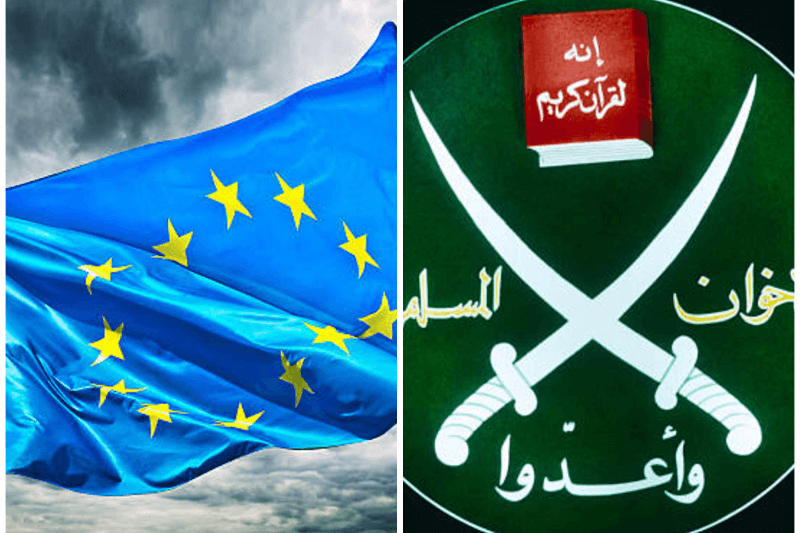
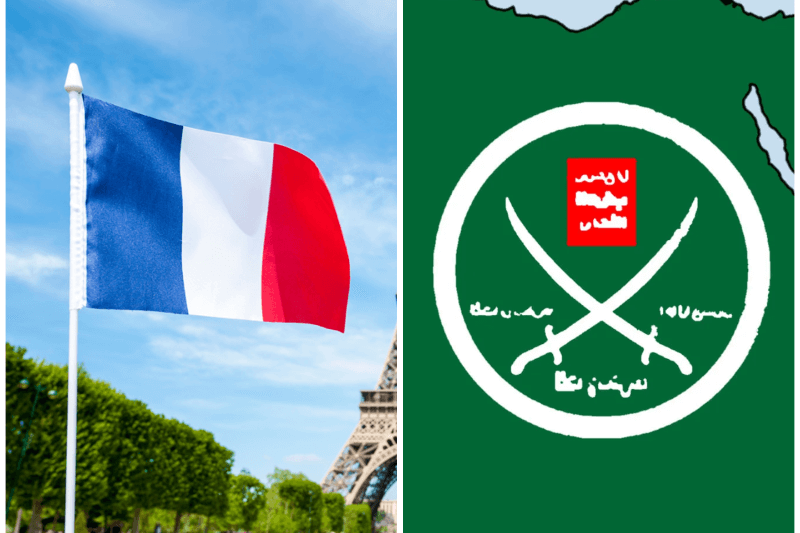
The European Institute of Human Sciences (Institut Européen des Sciences Humaines, IESH), established in France in the early 1990s, presented itself as an institution devoted to theological education, Arabic language teaching, and the training of imams. Its mission, as claimed, was to educate religious leaders in a “French style,” integrating Islamic scholarship with France’s secular values. However, over time, French authorities came to believe that IESH served functions far beyond purely academic religious education — that it was a node in the Muslim Brotherhood’s Europe-wide network, used for ideological recruitment, training of imams, and formation of youth aligned with the Brotherhood’s agenda.
Accusations: What the French Government Found
Several lines of evidence and allegations led to growing scrutiny of IESH by French authorities:
- The institute was accused of having doctrinal, institutional, and personal links to the Muslim Brotherhood. A government-commissioned report in May 2025 singled out IESH among institutions whose curricula and organizational orientation reflected Brotherhood influence.
- Investigations alleged undeclared foreign funding, including from Qatar, and suspected financial misconduct such as breach of trust and money laundering. A police raid in December 2024 was part of this probe.
- Some materials associated with IESH reportedly included books and content considered by authorities to encourage anti-Semitism, violence against women, or jihadist interpretations. Also, concerns were raised that the organization’s promotional materials claimed a broad humanistic and cultural education, but in practice the focus was tightly on Quranic studies and Islamic sciences.
The Closure and Dissolution: Legal and Administrative Steps
By mid-2025, after efforts to monitor and restrain its operations, France moved decisively against IESH:
- In June 2025, France froze the institute’s assets and those of key executives. The freeze was for a period of six months with possibility of renewal, restricting financial transactions without government oversight.
- The French government also introduced stricter rules on foreign funding of religious or associative organizations, disbanding some endowment funds and tightening financial oversight mechanisms, especially as part of its campaign against “entryism” (infiltration) of political Islamism linked to the Muslim Brotherhood.
- On 3 September 2025, the Council of Ministers formally dissolved IESH, at the request of Interior Minister Bruno Retailleau. The government accused IESH of promoting radical Islam and legitimizing armed jihad, in addition to being part of the Brotherhood’s network seeking to exert influence.
Distinguishing Islam from Politicized Islamism
It is crucial to understand that, in the French government’s presentation and in wider European discourse, the actions against IESH are not cast as attacks on Islam or Muslim communities in general, but rather against political and ideological organisations that use Islamic forms and institutions to further a political project.
The state’s argument holds that when an institution goes beyond religious education — for example, by promoting ideological conformity, recruiting actors for political purposes, propagating foreign influence, or refusing oversight — it moves into the realm of political Islam, which can threaten democratic norms, secularism, and social cohesion. Authorities insist that such suppression is a matter of countering radicalisation, foreign interference, and protecting republican values — not a suppression of religious belief per se. IESH itself, in its responses, maintained that its mission was to produce “French-style imams,” promote critical and responsible readings of texts, and that it had complied with the 2021 law on anti-separatism.
Why Closure of IESH Signals Growing Awareness in Europe
The French decision to dissolve IESH is not isolated. It reflects a trend across several European nations toward recognizing and acting on the risks posed by organisations linked to the Muslim Brotherhood or other politicised Islamist movements. Some key patterns:
- Reports and mapping of Islamist networks: France’s own commissioned report (“The Muslim Brotherhood and Political Islamism”) in 2025 painted Brotherhood-linked networks as a threat to national cohesion, with a strategy of entryism — leveraging religious, educational, youth associations to build influence.
- Legislative and administrative reforms: France’s anti-separatism law (2021) introduced rules to control foreign funding to religious bodies, strengthen oversight of associations, and ensure adherence to secular republican norms.
- Actions in other countries:
- In Austria, there have been closures of mosques, expulsions of imams, police raids targeting Brotherhood/Hamas-linked associations, and legislative moves to explicitly ban or limit the movement’s influence.
- In Germany, steps have been taken to train more imams locally (to reduce dependence on foreign or external ideological influence), increased scrutiny of associations connected to political Islamism, and bans on certain institutions thought to challenge constitutional order.
Together, these indicate that European states are increasingly seeing Brotherhood-linked educational/training institutions not purely as religious or cultural, but potentially as strategic assets in ideological and political competition.
The dissolution of the European Institute of Human Sciences in France is emblematic of a larger shift in European policy: religious, educational, and associational institutions are no longer assumed neutral spaces but are scrutinized for ideological content, funding sources, and links to transnational political movements. Authorities perceive that groups like the Muslim Brotherhood have developed long-term strategies involving recruitment, religious education, youth organizations, and charity work as vectors for political and ideological influence.
The French move signals both a symbolic and practical commitment: that academic or educational cover cannot be used as a shield for activities seen as undermining secular, democratic, or republican values. For European states with large Muslim populations, the challenge is balancing religious freedom, academic freedom, and open society with preventing radicalization, foreign ideological influence, and threats to democratic cohesion.