

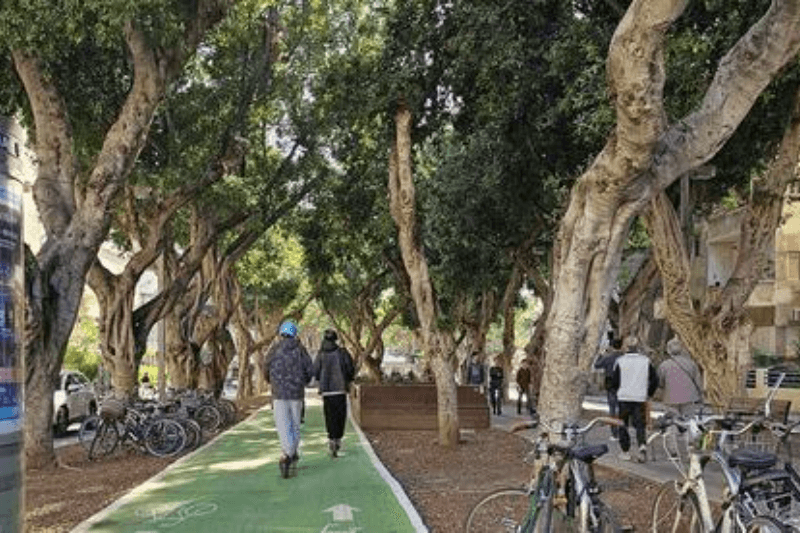
The Urban Forest 2.0: Engineering “Super-Trees” to Survive the Cities of 2030
As global temperatures rise, the transition toward the Urban Forest 2.0 represents a critical evolution in metropolitan planning. The city of Singapore and Sydney want to increase their canopy cover drastically by 2030 but conventional methods of planting are not sufficient anymore. We are now entering an era of precision-engineered Super-Trees—biologically resilient species and architectural marvels designed to withstand extreme heat and pollution. This initiative moves beyond simple aesthetics, focusing on city sustainability through data-driven ecosystems. These sophisticated green networks serve as bioreactors, cooling the urban heat islands and forming breathing corpus of the thickest concrete jungles.
Advancing City Sustainability with Living Technology
To meet 2030 goals, engineers are prioritizing city sustainability by integrating IoT sensors into soil beds and selecting “elite” native species. The reason behind the selection of these plants is that they have a high rate of carbon sequestration and are also drought resistant. Unlike previous generations of landscaping, the Urban Forest 2.0 framework treats every leaf as a functional unit of a larger, climate-regulating machine.
The Role of Engineered Super-Trees in Resilience
The deployment of Super-Trees involves more than just planting; it includes vertical gardens and “wind path” forests that funnel cool mountain air into city centers. These constructions are also required to offer needed shading as well as the ability to cut down the energy consumption incurred in air conditioning by up to 30 percent. Blending biology with structural engineering will guarantee our future forests to be as long-lasting as the skyscrapers that will be built around them.

