

Israel Settlement Plan Moves Forward: Why the Controversial E1 Project Could Threaten the Two-State Solution
There’s a patch of hillside east of Jerusalem that most people have never heard of, and yet it might end up shaping whether a Palestinian state is ever geographically possible. That patch is known as E1, and this year it’s back at the center of a diplomatic storm.
What’s Actually Happening
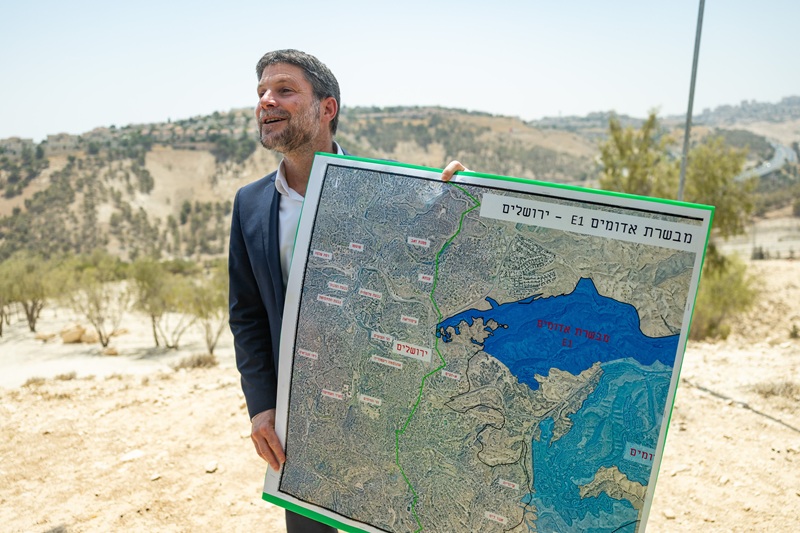
E1 sits between the Israeli settlement of Ma’ale Adumim and East Jerusalem. Israeli authorities gave final sign-off last August to a plan for more than 3,400 new housing units there, along with the roads and infrastructure that come with a project of that size. On paper, it’s a housing development. In practice, critics say it’s something closer to a wedge one that would cut through the middle of the West Bank and separate its northern half from its southern half. Britain added fuel to the fire on September 1, announcing it would lay out a “comprehensive” response to Israeli settlement activity, naming E1 specifically as a source of concern for what it could mean for Palestinian statehood.
Why This One Patch of Land Matters So Much
The whole idea behind a two-state solution is that Israel and a future Palestinian state would exist side by side, with the West Bank forming the backbone of Palestinian territory. For that to work in any practical sense, Palestinians need to be able to move between the north and south of the West Bank, and to reach East Jerusalem for work, school, and medical care. That’s exactly what worries people about E1. A UN report from June 2026 warned that development in the area could sever that north-south link entirely, calling the potential consequences “severe” for Palestinian territorial continuity. The UN’s human rights office has echoed similar warnings, saying the project risks cutting East Jerusalem off from the rest of the West Bank altogether. In other words, this isn’t really a fight about a few thousand homes. It’s a fight about whether there’s still enough connected land left to build a functioning state on.
The Situation on the Ground Is Getting More Urgent
There’s also a human dimension unfolding right now. Khan Al Ahmar, a Palestinian Bedouin community of several hundred people, sits inside the E1 area. In May, the UN’s human rights office warned that residents faced the risk of forced displacement after an Israeli minister ordered authorities to move against the community. That same month, leaders from Britain, France, Germany, Canada, and Australia jointly warned that building in E1 would split the West Bank and damage the prospects for a two-state solution. Britain’s newest announcement suggests that warning may now come with actual teeth economic or political measures rather than just statements.
Discover the stories making headlines, sparking curiosity, and shaping conversations worldwide.
1. Can London Break Vulcan Salute Record?
Check out how Star Trek fans are targeting a world record in London.
2. Are COSCO Ships Gathering Military Intelligence?
Find out why US officials are raising serious concerns about COSCO ships.
3. Ready to Explore America’s Haunted Hotels?
Experience five of America’s most haunted hotels for an unforgettable paranormal stay.
4. How Bad Is Ukraine’s School Crisis?
Uncover how Russian strikes destroyed millions of books ahead of Ukraine’s new school year.
5. What Triggered Nepal’s Catastrophic Floods?
Dive into how a glacial collapse triggered devastating flash floods along the Nepal-China border.
Where This Leaves Things
Nobody thinks E1 alone will decide the future of the Israeli-Palestinian conflict. But its location gives it weight far beyond its size. For Palestinians and their supporters, the fear is a slow, incremental redrawing of the map one development at a time until a viable state simply isn’t feasible anymore. For those who back the project on the Israeli side, E1 is framed as a matter of security and legitimate territorial interest, not just real estate. That’s the tension that makes this such a flashpoint: two fundamentally different readings of what the same stretch of land means. And increasingly, the question isn’t really about new housing at all, it’s about whether diplomacy can keep up with what’s already being built on the ground.
FAQs
1. What is the E1 settlement project?
E1 is a proposed Israeli settlement development east of Jerusalem, near Ma’ale Adumim, involving thousands of housing units and related infrastructure.
2. Why is E1 controversial?
Critics say its location could divide the West Bank and disrupt Palestinian territorial continuity, making a viable Palestinian state more difficult to establish.
3. How could E1 affect the two-state solution?
The project could restrict the territorial connection between northern and southern parts of the West Bank and complicate Palestinian access to East Jerusalem.
4. What is the international response?
The United Nations and several Western governments have strongly criticized the project and warned that it could undermine the prospects for a negotiated two-state solution.
5. Has Israel approved the E1 plan?
Israeli authorities gave final approval to more than 3,400 housing units in E1 in August 2025. The issue has continued to generate controversy and diplomatic pressure in 2026.

