ChatGPT-style AI could affect 300 million jobs: Goldman Sachs
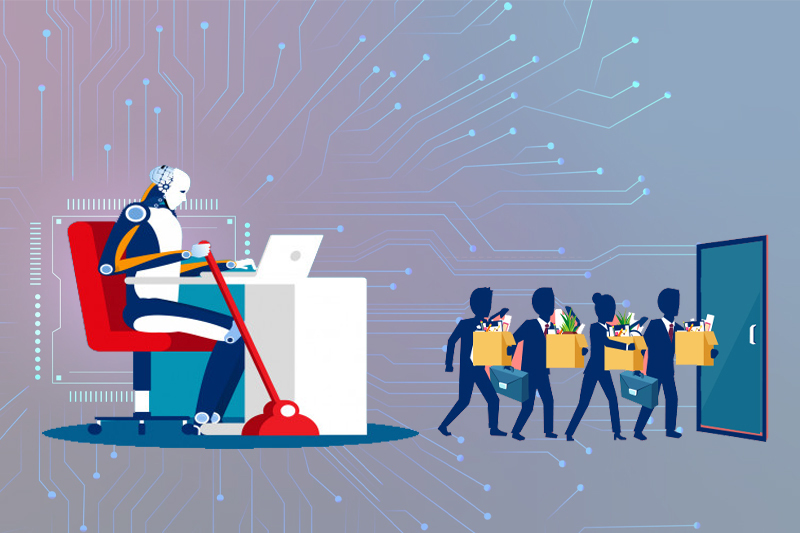
A damning report by investment bank Goldman Sachs says artificial intelligence (AI) is likely to replace the equivalent of 300 million full-time jobs, calling generative AI that’s capable of producing content indistinguishable from human work “a major advancement”.
While ChatGPT-style AI could replace 25% of work tasks in the US and Europe, it could also prompt a productivity boom and the emergence of new jobs.
The report notes that the impact of generative AI will not be the same across different sectors – 44% of tasks in legal professions and 46% in administrative could undergo automation, compared to just 4% in maintenance and 6% in construction, it says.
In recent months, a number of governments have expressed keenness towards promoting investment in AI, with the UK saying the advanced technology will “ultimately drive productivity across the economy.”
In an effort to reassure the public about its impact, British Technology Secretary Michelle Donelan told the Sun: “We want to make sure that AI is … making our jobs better, rather than taking them away.” But the growing concern among scores of artists cannot be undermined.
Keep Reading
Carl Benedikt Frey from Oxford University used the introduction of GPS technology and platforms like Uber to mention the possible impact of generative AI, saying “suddenly, knowing all the streets in London had much less value” – so incumbent drivers experienced wage cuts.
Over the next few years, AI is likely to have a similar impact on a number of creative tasks – “lower wages, not fewer drivers,” Frey added, highlighting a possible scenario of journalists receiving increased competition from ChatGPT and experiencing wage cuts in response.
While research cited by the report says 60% of current workers are involved in tasks that did not exist in 1940, other research suggests advancements in technology since the 1980s have created new jobs slower than it has displaced workers.
But the report concludes that if generative AI works in a similar fashion as previous information-technology advances, it could reduce employment in the near term. But the long-term impact is highly uncertain as it’s unclear how the technology will evolve and how companies will integrate it into their working patterns.