

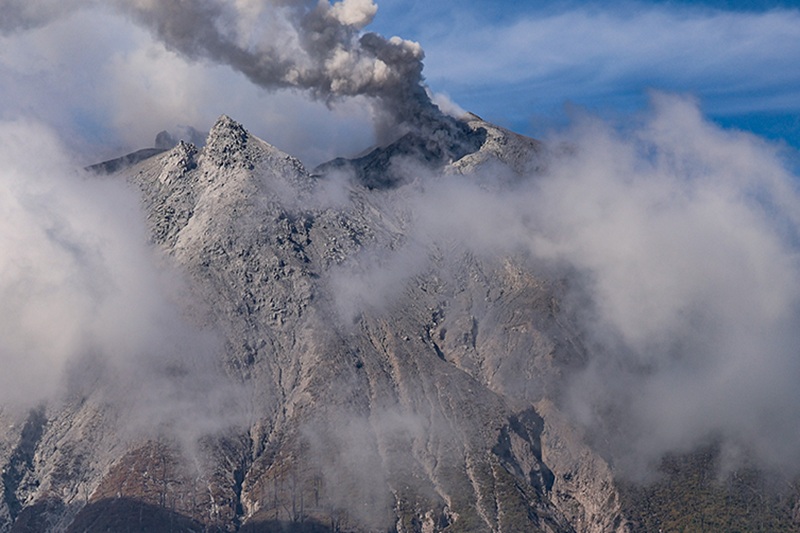
Indonesia Volcano Eruption Strands 170,000 Passengers as Anak Krakatau Ash Shuts 8 Airports
If you had a flight through Indonesia this weekend, there’s a good chance it didn’t happen. Anak Krakatau, the volcanic island sitting in the Sunda Strait between Java and Sumatra, kicked into a period of heavy activity, sending ash drifting toward Jakarta and the surrounding region. The result: eight airports shut down, and roughly 170,000 travelers left stuck wondering what to do next.
The numbers are staggering
By Sunday, September 6, more than 1,550 flights had been delayed or scrapped entirely. Soekarno-Hatta, Jakarta’s main international airport and the busiest in the country, took the brunt of it; over 900 of those disrupted flights ran through there alone. And as of Monday, things hadn’t settled down. Officials extended the closures at several airports because the ash plume kept shifting with the weather, making it impossible to say when things would return to normal.
Why airlines aren’t just being cautious
It’s tempting to assume these closures are about visibility, like flying through fog. But volcanic ash is a different kind of hazard altogether. The particles are fine enough to get sucked into jet engines, where the heat can actually melt them, not great news for anything mechanical running at full throttle. Ash also messes with visibility and can interfere with a plane’s systems more broadly. Reports out of Indonesia put this particular ash cloud as high as 50,000 feet, which puts it squarely in the paths commercial jets normally fly.
On the ground, it’s chaos too
Airlines like Singapore Airlines and AirAsia cancelled flights outright, and authorities scrambled to line up backup airports in Semarang and Surabaya to absorb some of the overflow. For passengers, that’s translated into missed connections, scrapped trips, and a lot of standing around not knowing what happens next though airlines have at least been offering rebooking and refunds where they can. It’s not just an airport problem, either. Hotels, tour operators, and any business that depends on people actually being able to fly in and out are feeling the ripple effects.
Life outside the airports
Schools in Jakarta and parts of Lampung switched to online classes while officials keep an eye on air quality. People in the ash-affected areas have been told to mask up and limit time outdoors, since the particles can irritate eyes and lungs. Indonesia’s disaster agency has even looked into cloud-seeding, essentially trying to induce rain as a way to help wash the ash out of the sky faster.
A volcano with a track record
Anak Krakatau literally means “Child of Krakatoa” ; it rose up out of the same caldera left behind by the legendary 1883 Krakatoa eruption, one of the most violent in recorded history. It’s been active on and off ever since, and not without consequence: back in 2018, part of the volcano collapsed into the sea and triggered a tsunami that killed more than 400 people along the coasts of Java and Sumatra. This time, officials say there’s no tsunami threat on the table but given the history, nobody’s taking their eyes off it.
What’s Making Headlines You Can’t Miss?
Could Hoekstra Face Expulsion From Canada?
Check out why thousands of Canadians are demanding action against the US ambassador.
Who Is Martina Strong, Really?
Uncover the diplomat’s UAE appointment and the political delays surrounding her confirmation.
Why Did Clancy’s Jury Deadlock?
Find out what led to the mistrial and why the jury couldn’t reach a verdict.
Why Is Lake Ontario Renamed?
Browse what Apple Maps’ surprising “Lake America” change means and why it happened.
Which Haunted Hotels Should You Visit?
Experience five spooky American hotels known for paranormal encounters and eerie stays.
What now?
Airports will reopen once ash levels in the air drop to a point where flying is actually safe again, and that’s largely at the mercy of the weather steering the plume. For now, Indonesia is once again facing the tricky reality of running one of Southeast Asia’s busiest air travel networks while sitting right next to some genuinely temperamental geology.
FAQs
1. Why were eight Indonesian airports closed?
The airports were closed after volcanic ash from Anak Krakatau entered their airspace, creating a serious safety risk for aircraft.
2. How many passengers were affected by the eruption?
Around 170,000 passengers were affected when more than 1,500 flights were delayed or cancelled across eight airports, according to Indonesian authorities.
3. Why is volcanic ash dangerous for airplanes?
Volcanic ash can damage jet engines, reduce visibility and interfere with aircraft systems, making flights through ash-contaminated airspace dangerous.

