

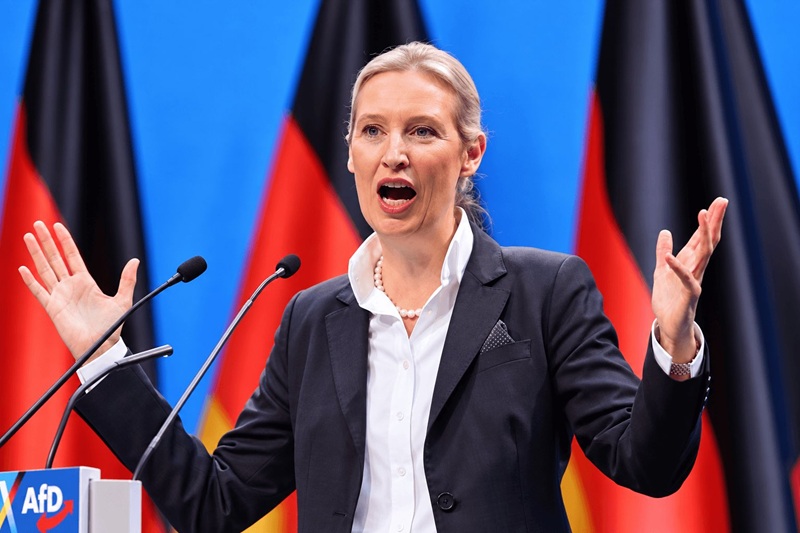
Germany’s Far-Right AfD Wins Big in Saxony-Anhalt but Falls Three Seats Short of Majority
Germany got a jolt on Sunday. The far-right Alternative for Germany party swept to its best-ever state election result in Saxony-Anhalt, pulling in 43.8% of the vote, more than double what it managed back in 2021. It’s the kind of number that would normally hand a party outright control of a state parliament. Except it didn’t, quite. The AfD picked up 39 of the 83 seats, three short of the 42 needed for a majority. So despite the headline-grabbing win, the party is now stuck outside the government it just dominated at the ballot box.
A landslide that still isn’t enough
To put the scale of this in perspective: in 2021, the AfD took just 20.8% of the vote in Saxony-Anhalt. This time it more than doubled that, riding a wave of turnout that jumped to 77.8%, up sharply from 60.3% last time around. Lead candidate Ulrich Siegmund wasted no time calling it a historic breakthrough and a clear signal that voters want change. The party’s pitch was familiar hardline immigration and deportation policies, pushback against “government overreach,” and a heavy dose of cultural grievance and it clearly landed with a lot of people.
A brutal night for the CDU
If the AfD was the story of the night, Chancellor Friedrich Merz’s Christian Democrats were the casualty. The CDU had run Saxony-Anhalt since 2002, but collapsed to just 17.2% and 15 seats, a steep drop from the 37.1% and 40 seats it held before. The rest of the field trailed well behind the top two: the SPD took 9.3%, the Greens 8.9%, the Left Party 8.6%, and Sahra Wagenknecht’s BSW just cleared the 5% threshold with 5.3%, enough for five seats. For Merz, this isn’t just a bad night in one state, it’s a warning sign. His government is already contending with a sluggish economy, an unresolved immigration debate, and a public mood that seems to be souring on the mainstream parties generally.
So who actually governs?
This is where things get messy. Germany’s major parties have long stuck to what’s known as the “firewall” , a shared refusal to form coalitions with the AfD, regardless of how well it performs. That rule isn’t bending here, which means Saxony-Anhalt now has to find another way to build a governing majority without the party that just won the most votes. The math isn’t cooperating. A CDU-SPD-Green coalition wouldn’t reach 42 seats. Add in the Left Party and it’s still not enough. The one combination that could theoretically work some arrangement between the AfD and BSW hasn’t materialized into anything concrete, and there’s no sign it will.
What’s Making Headlines You Can’t Miss?
Could Hoekstra Face Expulsion From Canada?
Check out why thousands of Canadians are demanding action against the US ambassador.
Who Is Martina Strong, Really?
Uncover the diplomat’s UAE appointment and the political delays surrounding her confirmation.
Why Did Clancy’s Jury Deadlock?
Find out what led to the mistrial and why the jury couldn’t reach a verdict.
Why Is Lake Ontario Renamed?
Browse what Apple Maps’ surprising “Lake America” change means and why it happened.
Which Haunted Hotels Should You Visit?
Experience five spooky American hotels known for paranormal encounters and eerie stays.
What it means beyond Saxony-Anhalt
This result is bigger than one state. The AfD has now cemented itself as the dominant political force in large parts of eastern Germany, tapping into years of frustration over economic inequality, demographic decline, and a sense that Berlin isn’t listening. At the same time, the party remains under a serious cloud Saxony-Anhalt’s domestic intelligence service has formally classified its regional branch as a confirmed right-wing extremist organization, a label the AfD firmly disputes. That leaves Germany’s mainstream parties in an uncomfortable spot. They need to actually address the anger fueling the AfD’s rise, without breaking the firewall that’s kept the party out of power so far. For now, the AfD has bragging rights but not the keys to government. What happens next whether it stays locked out despite winning the most votes, or whether the political pressure eventually cracks the firewall is the question hanging over Germany’s next chapter.
FAQs
1. How many seats did the AfD win in Saxony-Anhalt?
The AfD won 39 of the 83 seats in the state parliament.
2. How many seats does the AfD need for a majority?
The party needs 42 seats for an absolute majority. It therefore fell three seats short.
3. How much support did the AfD receive?
The AfD won 43.8% of the vote, more than double its 2021 result of 20.8%.

