

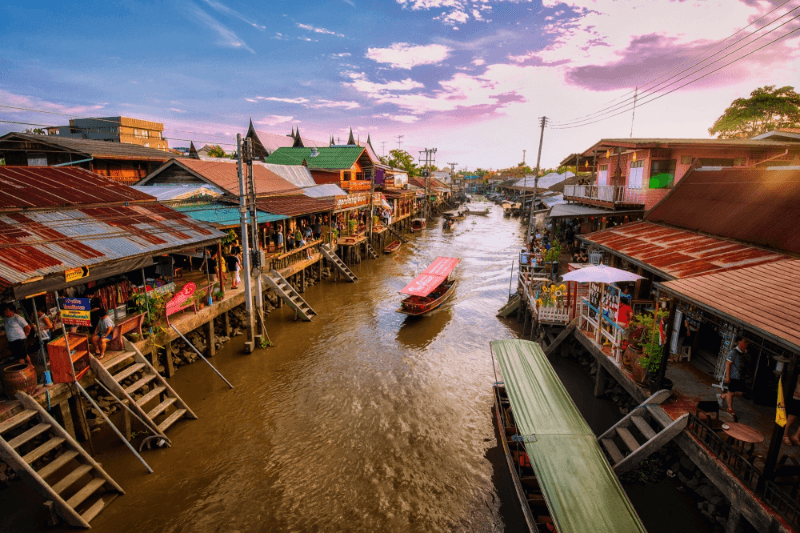
Amphawa Floating Market Travel Guide: Foods, Tips & Activities
Amphawa Floating Market travel guide points to one of Thailand’s most visited weekend markets. Located in Samut Songkhram, around ninety minutes from Bangkok, it is crowded, noisy, and full of life. The market is famous for canals lined with wooden homes, food stalls floating on boats, and evening boat rides that end with fireflies along the Mae Klong River.
Amphawa Floating Market at a Glance
| Feature | Details |
| Location | Samut Songkhram Province, about 80–100 km from Bangkok |
| Market Days | Friday, Saturday, Sunday |
| Peak Hours | 4 pm – 8 pm |
| Known For | Grilled seafood, boat noodles, firefly cruises |
| Nearby Spots | Wat Bang Kung, King Rama II Memorial Park, Tha Kha Floating Market |
Walking into Amphawa is like stepping into a scene where trade and daily life still mix. Longtail boats press against the docks, the smell of chilli and charcoal fills the air, and loud voices compete with boat horns. It is messy, sometimes uncomfortable, but that is also the appeal.
Best Time to Visit Amphawa Floating Market
The market opens only on weekends, which concentrates the crowd into a narrow window. The liveliest time falls between late afternoon and evening.
By four o’clock the smoke from grills thickens, lanterns are lit, and boat tours begin preparing. Firefly tours usually set off after dusk, and the sight of glowing trees along the river is reason enough to wait until nightfall. The cool season from November to February feels easier on the body, but the market runs year-round.
Must-Try Foods at Amphawa Floating Market
The Amphawa Floating Market travel guide would not be complete without food. Eating here is an event in itself. People walk with bowls in hand, dodging children, bags of fruit, and scooters squeezing down paths. Every turn presents another smell: garlic frying, prawns roasting, sweet coconut simmering.
- Grilled seafood: Prawns bigger than a fist, squid cut into strips, and whole fish roasted in salt until the skin cracks. Smoke rises constantly, leaving the smell on clothes long after leaving.
- Boat noodles: Served in small bowls, dark broth with herbs, noodles, and sliced meat. One bowl is never enough, so most order several.
- Papaya salad: Made fresh in wooden mortars, spicy enough to sting, sour enough to clear the mouth. The pounding sound of pestle against bowl is heard before the dish arrives.
- Sweet desserts: Coconut ice cream melting fast in the heat, mango sticky rice eaten with plastic spoons, dumplings floating in coconut cream.
- Drinks: Fresh coconuts cracked open in front of you, Thai iced tea poured thick with sugar, and herbal drinks loaded with crushed ice.
The food is not polished. Bowls are plastic, tables wobble, and napkins are scarce. Still, the taste overshadows the setting. Visitors often say the grilled prawns and boat noodles alone are worth the trip.
Top Activities to Experience
Food may dominate, but Amphawa has other pulls. The market’s location on the canal makes boats part of the experience.
Longtail boat rides take visitors past wooden homes where families sit on porches, into narrow waterways lined with orchards, and out into stretches of river where the noise disappears. Evening tours slow near banks dotted with fireflies. Hundreds of glowing insects flicker in trees, turning them into natural lanterns.
Temples provide another layer. Wat Bang Kung is wrapped in banyan tree roots, creating a sight that feels like nature reclaiming a building. Wat Amphawa Chetiyaram, sitting close to the market, offers quiet compared to the stalls.
Shopping keeps visitors moving. Small crafts, baskets, and wooden toys sit on tables. The items carry imperfections, but that gives them character. Bargaining is possible but always polite. Even walking across the wooden bridges counts as activity. The crowd hums, the boards creak, and the canal reflects lanterns as the sky darkens.
Essential Travel Tips for Visitors
Planning avoids small frustrations. Cash is needed; card machines are rare. Shoes with grip help on wet boards, which can be slippery after rain. Light clothes work best for the heat, though temples require modest dress.
Food hygiene matters. Hot dishes made in front of you are safer than items sitting too long. Queues can look inconvenient but usually point to freshness. Mosquito repellent helps in the evening when standing near water.
Traffic out of Bangkok can stretch a ninety-minute journey into two hours, especially late Saturday. Some visitors stay overnight in riverside homestays. Once stalls close, the noise falls silent, leaving only the sound of water against the houses.
Nearby Attractions Worth Adding to Your Trip
Amphawa is not the only stop in Samut Songkhram. Tha Kha Floating Market is smaller, quieter, and closer to the way markets once operated. Farmers bring produce in their boats, and there is more space to walk.
King Rama II Memorial Park shows traditional Thai wooden houses with gardens. It contrasts the crowded energy of Amphawa with space and calm.
Wat Bang Kung remains the standout temple nearby, with its chapel hidden inside banyan roots. Orchards around the province welcome visitors to taste pomelos, coconuts, and lychees. These trips give more than just shopping, they show the agricultural base that keeps the markets alive.
How to Reach Amphawa Floating Market?
The trip from Bangkok to Amphawa Floating Market takes around ninety minutes by car. Taxis and ride-hailing cars are the easiest, though buses and minivans from Victory Monument remain cheaper. The drive cuts through farmland and fields before reaching Samut Songkhram. On weekends the road slows with traffic, especially Saturday evenings.
Inside Amphawa, most of the market is walkable. Boats extend access to side canals, and bicycles are available for villages nearby. The quiet drive in contrasts sharply with the noise that greets visitors at the canal. It feels like entering a different world in the space of a morning.
FAQs
What days does Amphawa Floating Market operate?
The market is open on Friday, Saturday, and Sunday, with evenings busiest.
Which dishes should first-time visitors try?
Grilled prawns, boat noodles, papaya salad, mango sticky rice, and coconut ice cream are the favourites.
Are firefly tours available all year?
Yes, but they are best seen during the cooler dry season from November to February.
How long is the trip from Bangkok to Amphawa?
The journey usually takes 1 to 1.5 hours, though weekend traffic can extend it.
Can visitors stay overnight near Amphawa Floating Market?
Yes, riverside guesthouses and homestays allow guests to experience the quieter side once stalls close.

