

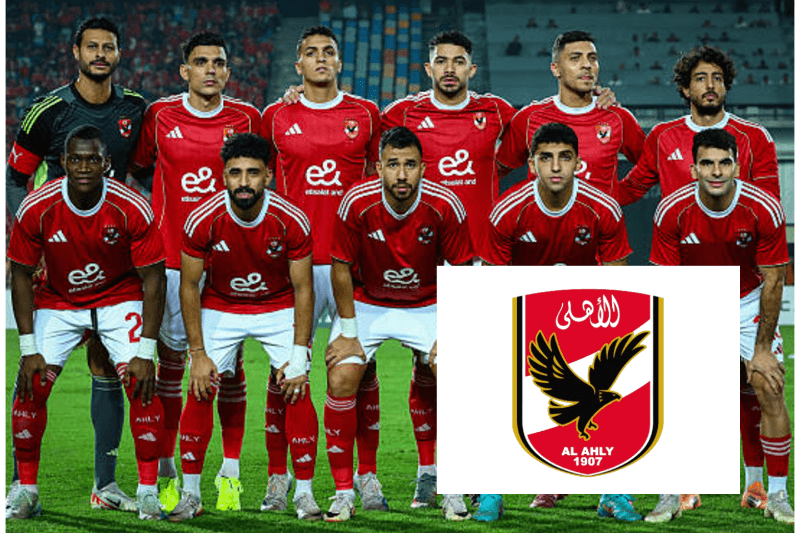
The Tactical Shift in Al Ahly: The Strategy that is Under-Discussed and Helping Them to Win Big Games
The recent streak of performance at Al Ahly has received ample coverage, yet there is a relatively unaddressed aspect of performance: their developing tactical identity. Although the wins can be ascribed to the personal talent of the team as fans usually see it, what comes out distinctly is the fine-tuning that was presented during the current season. The coaching team has transformed the manner in which the team handles possession, pressing, and attack transition- developing a more dynamic, erratic, and flexible Al Ahly. This is a slight but effective change that is enabling the Egyptian giants to conquer tough match-ups, out-smart tough rivals, and be steady during times when it counts. The move of Al Ahly is not only a successful tactic, but they are also recreating their game.
Al Ahly’s Smarter Pressing Construction and Regulated Violence
Their developed pressing model is one of the largest transformations in the recent performances of Al Ahly. The team has switched to situational pressing instead of constant high-pressure, identifying particular areas and timings to create a turnover. This saves on physical work and optimizes efficiency. The wingers slice through lanes on passing instead of pursuing defenders, whereas the midfield takes a staggered form that cannot allow progression in the middle.
The new pressing structure also provides additional chances to make controlled counter-attacks in which Al Ahly can recover in the advanced positions. The team does not have to depend on speed only anymore, but intelligent positioning to disrupt the opposition rhythm is used. This change has proved an important one against the best players, particularly in those games where the opponents attempt to gain early control. The pressure-absorbing capability and responding with precision as one of the biggest competitive advantages has developed in Al Ahly.
The compactness of the defensive line is another improvement that can be noticed. By decreasing the midfield-to-defense gap, the team makes areas that can be exploited by their opponents as minimal ones. This small size has enabled Al Ahly to be more difficult to tear apart and more disciplined during tough situations.
Quicker Transitions and a Rebooted Attacking Personality
On the offensive aspect, Al Ahly has done the same tactically. The team has adopted faster vertical rotations, thrusting the ball upfield and with more intention to do so. Al Ahly have played faster, more creatively, and with more improved positional rotations than before, which was based on the slow accumulation of the ball. Full-backs advance further to expand the width, and skilful forward moves are made by midfielders that destabilize and weaken defensive lines.
Fluidly interchanging roles is also advantageous to the attacking unit. The 10 has a tendency to widen out in order to provide an overload, wingers drift in to be secondary strikers, and the holding midfielder anchors the shape, making it stable even when an aggressive forward move is made. Such a multidimensional strategy has led to an increase in the number of goal-scoring opportunities and reduced predictability.
New patterns and practiced movements have provided an additional trustworthy source of objectives, particularly in tight matches when the opportunities of open-play are scarce.
This is actually the same tactical development that is driving the club to good performances. The success of Al Ahly is no longer founded on the basis of tradition and talent alone; the success is now based on a modern and strategic understanding of the game. And provided that this new identity does not stop its formation, the team will be able to continue to win the largest matches in their program.

