

China Censors Public Mourning as Former Premier Zhu Rongji’s Funeral Exposes Political Sensitivities
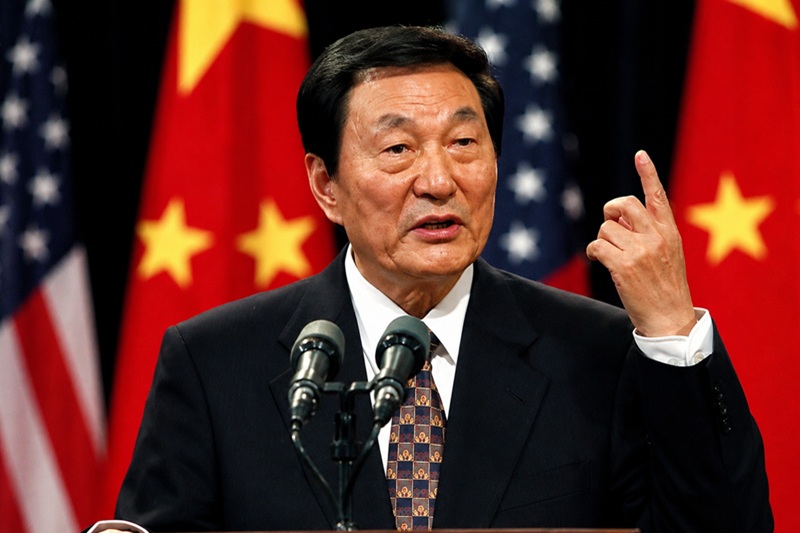
When China buried former Premier Zhu Rongji this week, it wasn’t just a funeral, it was a carefully managed political event. Zhu, who died at 97, spent five years as premier in the late ’90s and early 2000s and became one of the most consequential and most bluntly outspoken figures in modern Chinese governance. His send-off on Tuesday drew Xi Jinping and the rest of the party’s senior leadership, but it also came with a noticeably heavy security presence, a sign that even in death, Zhu remains a politically delicate figure.
Security was stepped up around sensitive areas of Beijing, including Tiananmen Square and the Zhongnanhai leadership compound, according to Reuters. Zhu was cremated at Babaoshan, the cemetery where China’s political elite are traditionally laid to rest, and former President Hu Jintao sent a wreath. The Financial Times also reported close monitoring of mourning activity tied to Zhu, including at his family’s ancestral home in Hunan a detail that says a lot about how wary officials remain of grief turning into something more public, and less controllable.
Why he still looms large
Zhu earned his reputation the hard way. As premier, he pushed through painful restructuring of state-owned enterprises, took on inflation, and helped steer China into the World Trade Organization in 2001 a move that opened the country up to the global economy and set the stage for the growth boom that followed. He was known for speaking plainly and going after corruption, which made him unusually popular for a Chinese official. But that legacy is genuinely mixed. The same enterprise reforms that modernized China’s economy also threw enormous numbers of workers out of jobs, and many families are still shaped by that disruption. So depending on who you ask, Zhu is either remembered as the reformer who dragged China into the modern economy, or as the man whose policies upended ordinary lives.
Stay informed with these stories shaping global headlines and raising new questions.
Could Hormuz Tensions Trigger Wider Crisis?
Check out the latest developments surrounding the US naval blockade of Iran and rising Strait of Hormuz tensions.
What Happened to Italy’s Renaissance Treasures?
Uncover the shocking museum heist involving four priceless Renaissance masterpieces stolen from Italy.
Why Did Police Investigate Elderly Man?
Find the details behind the Singapore assault investigation following an elderly man’s interaction with a child.
Why Did Trump Cut Military Exercises?
Browse the latest developments after Trump ordered a substantial reduction in joint military exercises.
What Does France’s Muslim Brotherhood Report Reveal?
Explore France’s new report and the questions it raises about Islamist networks across Europe.
A pattern, not a one-off
This isn’t the first time Beijing has kept a tight lid on public mourning for a former leader. When ex-Premier Li Keqiang died in 2023, authorities similarly restricted memorial gatherings, scrubbed online tributes, and warned universities against organizing anything resembling a public mourning event. The underlying anxiety isn’t really about grief itself, it’s about what that grief might come to represent. Nostalgia for reform-era leaders can easily curdle into implicit criticism of the current, more tightly controlled political and economic model, especially at a moment when China is dealing with slower growth, an aging population, and rocky trade relationships abroad.
In that light, Zhu’s funeral reads as both a formal state occasion and a small window into how anxious Beijing still is about its own history, proof that even a leader gone from office for over two decades can still carry real political weight.
FAQs
Who was Zhu Rongji?
Zhu Rongji was China’s premier from 1998 to 2003 and a leading economic reformer who helped modernize the country’s economy.
How old was Zhu Rongji when he died?
Zhu Rongji died at the age of 97.
Why was Zhu Rongji important to China’s economy?
He oversaw major state-owned enterprise reforms, fought inflation and played a key role in China’s accession to the World Trade Organization in 2001.

