Venezuela-Guyana Border Dispute: What Role Does Global Politics Play?
The geopolitical landscape of South America is currently marked by heightened tensions as Venezuela’s President Nicolás Maduro makes bold moves in the longstanding border dispute with Guyana. The latest developments indicate a significant escalation, raising concerns not just regionally but globally.
Maduro’s Aggressive Maneuvers
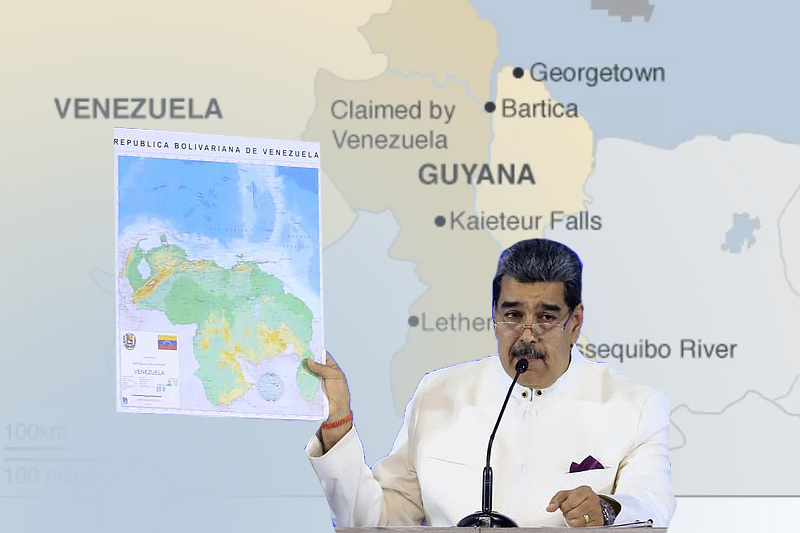
In a dramatic turn of events, President Maduro has issued orders for state companies to exploit contested oil and mineral deposits, accompanied by the redrawing of official maps. This aggressive stance comes on the heels of Maduro claiming an “overwhelming” mandate in a recent referendum. The disputed territory in question is the remote Essequibo area, constituting two-thirds of Guyana’s territory, along with a substantial offshore oilfield operated by ExxonMobil.
Guyana’s Response and Global Apprehension
Guyana’s President Irfaan Ali swiftly responded, expressing deep concern and placing the country’s defense force on high alert. The matter is set to be referred to the UN Security Council, with President Ali denouncing Venezuela as an “outlaw nation.” The specter of military action looms over the Essequibo area, raising fears of a potential conflict between two oil-rich nations.
For the Joe Biden administration, a conflict between Venezuela and Guyana poses a significant challenge. Having recently eased economic sanctions on Venezuela in the hope of encouraging democratic reforms, the administration now faces the specter of a military confrontation that could jeopardize stability in the region. The ongoing border dispute adds complexity to efforts to secure free and fair elections in Venezuela and stabilize global oil supplies.
Keep Reading
Assessing the Likelihood of Military Conflict
Despite Maduro’s bellicose rhetoric, experts suggest that an immediate military conflict is improbable. The referendum and aggressive posturing are viewed by some as a strategic move by Maduro to divert attention from domestic challenges, particularly his declining popularity and the rising support for the opposition candidate, María Corina Machado, in the upcoming presidential election.
Evan Ellis, a professor of Latin American studies at the US Army War College, perceives Maduro’s actions as potentially a bluff to distract from both internal and external pressures. The international community remains skeptical of the legitimacy of the referendum, questioning the reported 95% majorities in favor of key questions related to Essequibo.
Historical Context: A Disputed Legacy
The dispute over Essequibo traces its roots back to an international arbitration tribunal’s decision in 1899, awarding the territory to British Guiana (now Guyana). Venezuela has consistently contested this decision, and the discovery of significant oil reserves in the Essequibo coast by Exxon in 2015 reignited the historical dispute.
Response from the United States and Brazil
The US state department’s response to the referendum was cautious, urging both Venezuela and Guyana to seek a peaceful resolution. It emphasized that a referendum alone wouldn’t settle the matter. Brazil, sharing borders with both Venezuela and Guyana, deployed additional troops to the border region. President Luiz Inácio Lula da Silva expressed hope for common sense to prevail, underlining the delicate nature of the situation.
Venezuela’s Move
Venezuela’s recent actions include the construction of a military airstrip, a school, and a training ground near the Essequibo border. Social media posts from top government officials showcase symbolic gestures, such as lowering the Guyanese flag and raising the Venezuelan flag in Essequibo. These moves amplify concerns in Guyana, where citizens fear their country’s limited resources may render it vulnerable to an invasion.
As tensions escalate, the international community watches closely to see how the situation unfolds. Venezuela’s actions have broader implications, not just for the immediate neighbors but for global geopolitics. The delicate balance between diplomacy and the potential for conflict adds complexity to an already intricate geopolitical puzzle.
In conclusion, the Venezuela-Guyana border dispute has entered a critical phase with far-reaching consequences. The intricate history, regional dynamics, and global interests intertwine in a complex narrative. The path forward remains uncertain, and the resolution of this dispute will undoubtedly shape the geopolitical landscape of South America in the days to come.