

US Renews Visa Sanctions on Palestinian Officials Just Before UN Assembly
With the UN General Assembly’s opening days away, Washington has quietly reupped one of its longest-running diplomatic pressure tools: visa sanctions on officials tied to the Palestine Liberation Organization and the Palestinian Authority.
The State Department made the call in a September 16 notice to Congress, arguing that the PLO and PA still haven’t lived up to commitments they made decades ago as part of the peace process. It’s not a new fight this dispute goes back to two laws from the late twentieth and early twenty-first centuries, the PLO Commitments Compliance Act of 1989 and the Middle East Peace Commitments Act of 2002 but the timing, right before the world’s diplomats converge on New York, gives it fresh weight.
The State Department’s Case
Washington’s complaints aren’t new, but they’re specific. Officials pointed to Palestinian moves at international bodies that they say run counter to earlier commitments to UN Security Council Resolutions 242 and 338. They also flagged Palestinian engagement with the International Criminal Court and International Court of Justice, ongoing pushes for international recognition outside direct negotiations with Israel, and perennial sticking point payments to prisoners convicted of attacks on Israelis, along with what the US calls glorification of terrorism in official rhetoric and school curricula.
Under Section 604(a)(1) of the 2002 law, that assessment is enough to keep the visa restrictions in place. There is one carve-out, though: officials formally accredited to the PLO’s Observer Mission at the UN still get a waiver, so the mission itself can keep functioning even as the broader sanctions continue.
Why the Law Exists
The 2002 act was built around a simple idea: Congress wanted regular check-ins on whether the PLO and PA were actually holding up their end of the peace process. That meant recognizing Israel’s right to exist securely, accepting the two UN resolutions mentioned above, working out disputes through negotiation rather than unilateral action, and renouncing violence. Fall short, and the law gives the executive branch a mechanism to respond which is exactly what’s happening again this year.
Bad Timing for Abbas
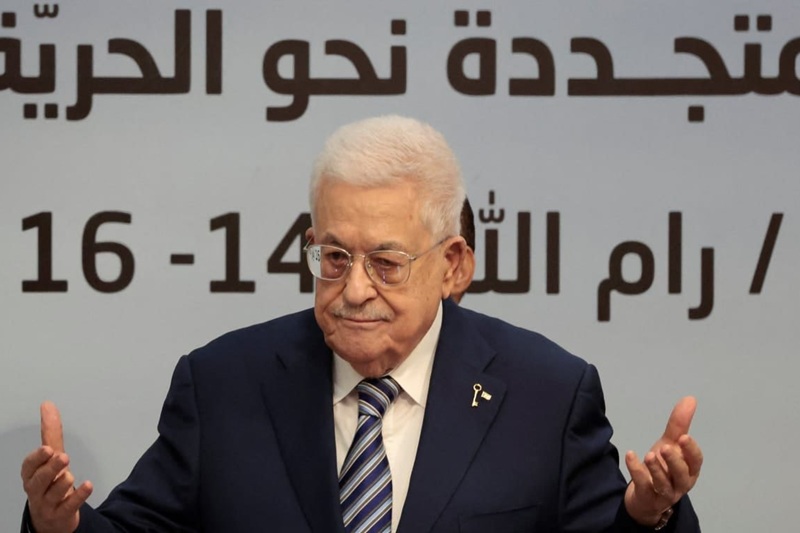
The renewal lands just before the UN’s 81st General Assembly session, where Palestinian representation is already shaping up to be a flashpoint. This isn’t the first time the visa issue has collided with the Assembly calendar. Last year brought a similar standoff, and PA President Mahmoud Abbas ended up addressing the gathering by video instead of showing up in person.
According to Reuters, Abbas has once again been denied a visa this year, and the UN is now looking at ways to let him take part remotely, much like in 2025. It’s worth remembering the PA holds only observer-state status at the UN, not full membership so it has no vote in the General Assembly regardless of who shows up in the room.
What’s Actually at Stake
On paper, the consequences are narrow: PLO and PA officials covered by the sanctions simply can’t get US visas. But the ripple effects reach further. Being locked out of Washington, even temporarily, makes it harder for Palestinian officials to do the kind of face-to-face diplomacy that often happens on the sidelines of UN meetings with American officials and with other governments who show up for the same week of meetings.
Underneath the visa question sits a much older argument. The US position leans on the idea that progress should come through negotiated commitments, the kind spelled out in those 1989 and 2002 laws. Palestinian officials, for their part, have long countered that decades of US-brokered talks haven’t ended the occupation or produced an independent state so why keep playing by rules that haven’t delivered results.
That’s really what makes this more than a paperwork story. It’s a proxy for a bigger disagreement: whether the path forward runs through bilateral negotiations, or whether international courts and diplomatic recognition should carry more weight than Washington wants them to.
What Comes Next
Expect this to stay in the headlines through the Assembly, especially if Palestinian officials look for workarounds to get their voice heard at the high-level sessions. The State Department has been clear that as long as it judges the PLO and PA to be falling short of their commitments, the restrictions aren’t going anywhere.
FAQ
Why sanction Palestinian officials at all?
The State Department says the PLO and PA haven’t met commitments under US law tied to the peace process citing international legal maneuvers, recognition efforts outside negotiations, and payments linked to attacks on Israelis.
Who’s covered?
PLO members and PA officials, minus a waiver for staff formally accredited to the PLO’s UN Observer Mission.
Can Abbas still speak at the UN?
Possibly remotely the UN is weighing the same kind of video arrangement used in 2025.
Does this hit all Palestinian travelers to the US?
No, this specific measure targets PLO and PA officials. Separate, broader restrictions apply to people traveling on PA-issued or endorsed documents.
Related Articles You May Find Interesting
Why Did Crypto Clarity Act Fail?
Check out the key reasons the cryptocurrency bill failed to advance in the US Senate.
Who Are Trump’s New Envoy Picks?
Find out about Wesley Hunt and Kimberly Greenwood’s new diplomatic appointments.
Why Did US Expand Iran Sanctions?
Uncover the networks targeted by the latest US sanctions over alleged support for Hezbollah and Iraqi militias.
How Could Financial Power Shape Markets?
Explore Scott Bessent’s views on using financial power as a foreign policy tool and its global impact.
What Happened in Turmus Ayya?
Dive into the US ambassador’s West Bank visit amid rising settler violence in Turmus Ayya.

