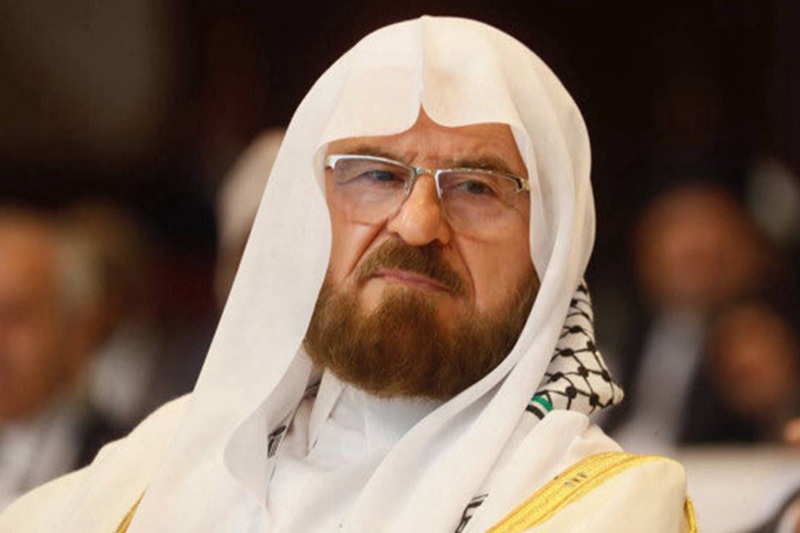
Ali Al-Qaradaghi Links October 7 Attack to Political Shifts in the US and Europe
The political shockwaves of the Oct. 7, 2023 Hamas attack continue to radiate far beyond the Middle East, with its reverberations now being felt in elections, public conversations and political movements across the U.S. and Europe.
A particularly straightforward reading of those developments is offered by Ali Al-Qaradaghi, president of the International Union of Muslim Scholars (IUMS). In comments allegedly made at a conference in Turkey in August, he described the political rise of New York City Mayor Zohran Mamdani and Michigan Senate candidate Abdulrahman El-Sayed as “blessings” of what Hamas calls the “Al-Aqsa Flood.” The comments were reported by the New York Post, citing a report by MEMRI TV.
A Global Interpretation of October 7
In the speech, Al-Qaradaghi said the political developments that are happening now in Europe and the United States would not have happened without the October 7 attack, the report said. So his comments are not only about the conflict itself. They offer a particular reading of how a violent episode in the Middle East may have shaped political attitudes and movements thousands of miles away. That difference matters. The cited comments are Al-Qaradaghi’s interpretation, not a causal explanation established independently for the political ascendance of Mamdani or El-Sayed. Al-Qaradaghi has been described as an Islamic jurisprudence scholar and professor and is identified by the International Union of Muslim Scholars as the group’s president.
From Gaza to Western Politics
The Council on Foreign Relations says the Oct. 7 attack killed more than 1,200 people in Israel and resulted in about 250 hostages being taken. The war in Gaza that followed has created a broad humanitarian and political crisis, reaching out to governments and public opinion far beyond the region. Three years later the issue is still deeply embedded in international politics. In Israel, for example, the October 7 attack continues to define the political debate in the run-up to the 2026 election as rival parties trade blows over security, government culpability and the aftermath of the war.
Meanwhile, the Gaza war has sparked debates in Europe and North America about foreign policy, protests, political representation, relations with Israel and the wider Israeli-Palestinian conflict. It is against this wider backdrop that Al-Qaradaghi connected the rise of Mamdani and El-Sayed to October 7.
Why the Remarks Matter Beyond the US
The meaning of the comments is not merely about two American politicians. They raise a broader question for societies around the world: How can a major international war transform domestic politics far from the front lines?
Mamdana’s political rise has made questions around Gaza, the Israeli-Palestinian conflict and Palestinian rights part of wider political debates in New York. Meanwhile, El-Sayed has emerged as a political figure in Michigan whose views on the Middle East have attracted notice. But politics is the product of many forces: the state of the domestic economy, what voters care about, how the political parties are organized, changes in the country’s demographics and the issues individual candidates choose to emphasize. The evidence for the causes of certain electoral developments would have to go beyond Al-Qaradaghi’s interpretation to demonstrate that October 7 was the cause.
A Debate With Global Consequences
What has drawn attention to Al-Qaradaghi’s remarks is that they explicitly link a terrorist attack and its aftermath to political gains perceived by some supporters of the Palestinian cause. At the same time, there has been controversy over the language, which describes political developments as “blessings” connected to an attack that resulted in mass civilian casualties and prompted a devastating regional war. The debate illustrates how the Oct. 7 legacy has gone global. What began as a violent attack in Israel has echoed through diplomacy, security policy, protests, elections and political arguments on multiple continents. As governments and voters wrestle with the consequences of the Gaza war, competing narratives about the October 7 attack will likely remain a part of the international political conversation.
Related Articles You May Find Interesting
Why Did Crypto Clarity Act Fail?
Check out the key reasons the cryptocurrency bill failed to advance in the US Senate.
Who Are Trump’s New Envoy Picks?
Find out about Wesley Hunt and Kimberly Greenwood’s new diplomatic appointments.
Why Did US Expand Iran Sanctions?
Uncover the networks targeted by the latest US sanctions over alleged support for Hezbollah and Iraqi militias.
How Could Financial Power Shape Markets?
Explore Scott Bessent’s views on using financial power as a foreign policy tool and its global impact.
What Happened in Turmus Ayya?
Dive into the US ambassador’s West Bank visit amid rising settler violence in Turmus Ayya.