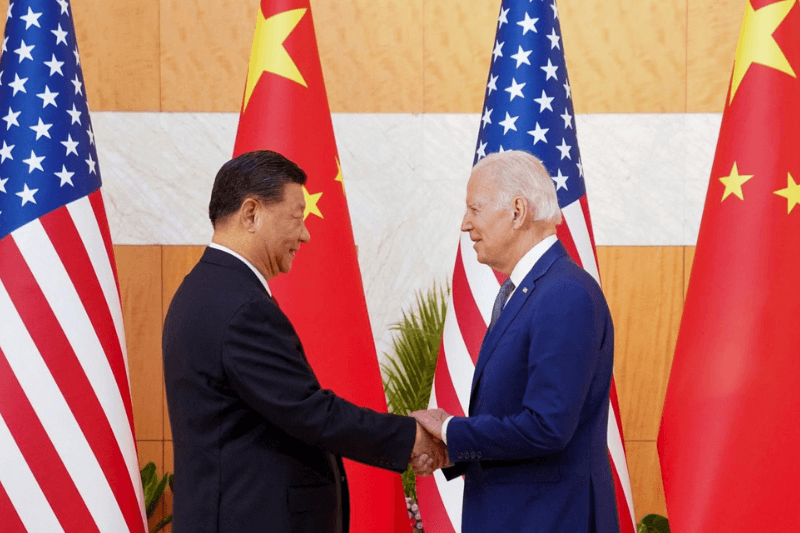
US-China Dynamics in the Middle East: Biden’s Approach
The handling of Saudi Crown Prince Mohammed Bin Salman (MBS) by President Joe Biden, which is to blame for the mounting friction between the US and Saudi Arabia, has changed the geopolitical landscape and led Saudi Arabia to ally more closely with China. This transformation was noticeable during Xi Jinping’s cordial welcome in Saudi Arabia, which led to important agreements and the first China-GCC Summit. Growing economic links between China and Saudi Arabia, including $23 billion in investment in 2021 and $87.3 billion in bilateral trade, indicate a deeper level of cooperation.
Saudi Arabia’s refusal to raise oil output as a result of tense ties between the US and Saudi Arabia has a significant impact on OPEC+’s decision to reduce oil production in order to maintain higher oil prices for crucial infrastructure projects. This action highlights Saudi Arabia’s diversification of relationships and the shifting power balances.
China’s growing influence in the area is amplified by the Saudi-Iran pact, which also highlights a perceived flaw in US foreign strategy. A declining role and rising assertiveness of China in the Middle East are indicated by the United States’ inability to influence this important regional accord.
Despite facing criticism on a number of fronts, President Biden’s Middle East strategy deviates from the tactics of his precursor by taking a nuanced and realistic approach. A tactful strategy to calm the region includes putting an emphasis on perfecting relations between Saudi Arabia and Israel as well as trying to defuse pressures with Iran and revitalize the Iran nuclear deal. A strategic balance in US tactfulness can be seen in the possibilities for Saudi- Israeli conciliation and the enhancement in US- Iran relations.
Recent events have also shown that, despite China’s growing influence in the Middle East, the United States continues to play a pivotal role in the region. The sophisticated strategy and involvement of the Biden administration with Iran emphasize the value of communication and tactfulness as a feasible volition to the former administration’s negative strategy.
Keep Reading
Eventually, given the shifting geopolitical situation in the Middle East, the Biden administration faces a delicate balancing act in maintaining US influence and interests in the region amidst the rise of China. In order to save indigenous stability and guarantee the US’s continued involvement in the Middle East, the US will need to cut this delicate terrain with skillful tactfulness and strategic alliances.