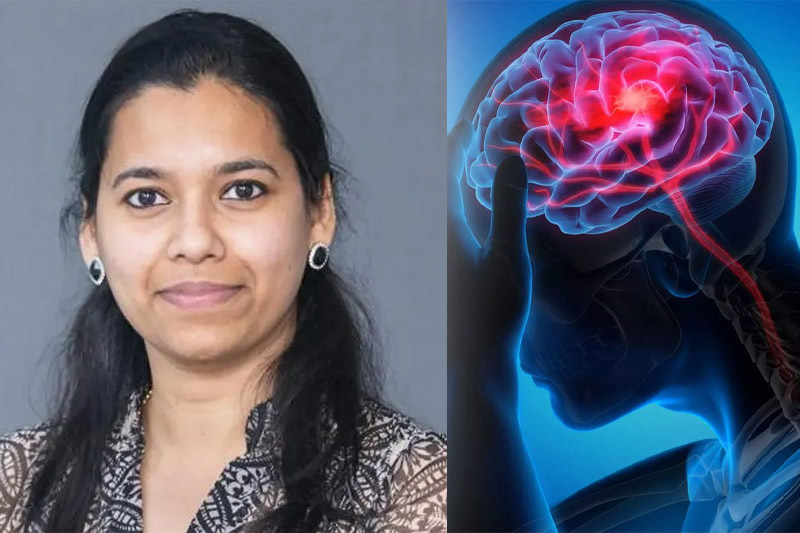
US-Based Indian Team Finds “Pathbreaking” Brain Cancer Treatment
The team, led by the Indian Saritha Krishna, discovered that a common anti-seizure medication was successful in lowering the hyperactivity of the tumor cells.
A group of researchers from the San Francisco Medical Centre, University of California, made a ground-breaking discovery that may fundamentally alter how cancerous brain tumors are treated. They found that the cancerous cells link up with healthy brain cells to become hyperactive and hasten patients’ cognitive decline and demise.
A commonly prescribed anti-seizure medication was successful in lowering the hyperactivity of the tumor cells and even stopping their growth, according to the team, which was led by Indian Saritha Krishna.
Researchers have discovered that it is possible to alter the communication between cancerous and healthy brain cells in order to slow or even stop the tumor’s growth.
According to the study, patients with glioblastoma, which is thought to be the most lethal among adult brain cancers, will benefit more from these findings.
When recording the brain activity of patients undergoing awake brain tumour surgery, Ms. Krishna and her colleague Shawn Hervey-Jumper found a previously unidentified mechanism by which brain tumours hijack and modify brain circuitry to cause a decline in cognitive activities in glioma patients.
Ms. Krishna, a Thiruvananthapuram, Kerala, native and the paper’s lead author, said in an interview with PTI that when patients underwent awake brain surgery were given language tasks, in addition to the brain’s well-known language regions, we also discovered activation in tumor-infiltrated brain regions that were remote and further from the language brain zones.
This startling discovery demonstrated how the lethal cancer cells can hijack and restructure connections in nearby brain tissue to make them hyperactive, hastening cognitive decline and reducing patient survival times.
Keep Reading
As a result, the researchers were compelled to thoroughly characterise the connected tumour cells biologically using brain organoids (tiny bundles of neurons derived from human stem cells) and mouse models that had been implanted with human glioblastoma cells.
The drug gabapentin, a popular anti-seizure drug, successfully reduced neuronal hyperexcitability and stopped further tumour growth, according to the study. “These experiments revealed a key role of a protein called ‘thrombospondin-1’ in this neuronal hyperexcitability,” it said.
The scientists noted that this finding might be very helpful in creating more potent therapies for a fatal illness like glioblastoma.
Along with its well-known anti-seizure properties, gabapentin also inhibits the growth of tumours in mouse models, indicating the possibility of repurposing this already-approved medication to target malignant glioma patients’ tumours, according to Saritha.
In addition, she continued, the important finding about how cancer cells hijack brain circuitry will spur the creation of medications and neuromodulation techniques that could cut off neuronal connections with cancerous brain cells and stop tumour growth.
Non-invasive brain modulation techniques, which have historically been used to control neuronal activity in conditions like epilepsy and psychiatric disorders, could now be used in clinical studies and tested on patients with brain cancer to reduce the activity of gliomas, according to Saritha.