

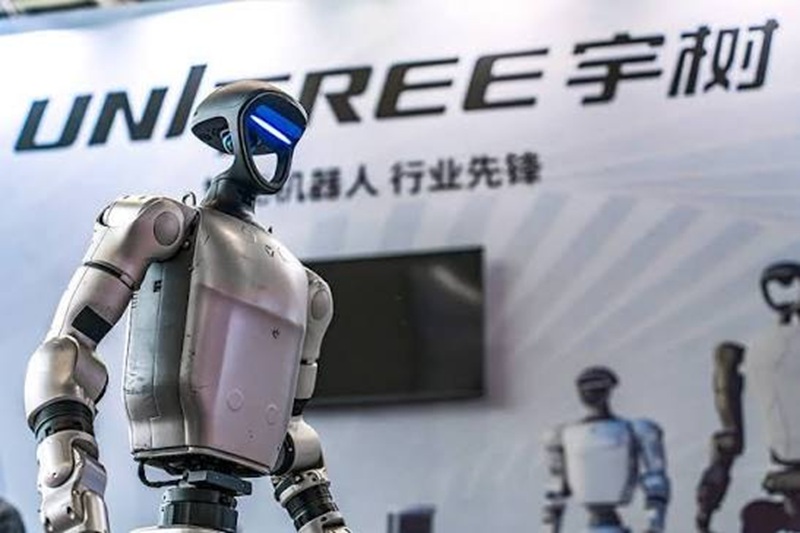
Unitree Shares Surge in Shanghai Debut as China’s Humanoid Robot Industry Takes Center Stage
If you wanted a snapshot of how hyped investors are about humanoid robots right now, you got it on Wednesday. Unitree Robotics the company famous for making robots that dance, backflip, and generally move in ways that unsettle people listed on Shanghai’s STAR Market, and its stock didn’t just rise. It exploded.
Shares priced at 150.80 yuan for the IPO. They opened trading at 1,100 yuan. That’s more than a sevenfold jump before the opening bell had even finished ringing. The stock cooled off as the day went on, eventually settling at 883.87 yuan, but even that pullback left it up hundreds of percent. At its peak, Unitree’s market value touched roughly $50 billion, a staggering number for a company that only a few years ago was mostly known in niche robotics circles.
The First of Its Kind
What makes this debut notable isn’t just the size of the pop, it’s that Unitree is the first major humanoid robotics company to go public on China’s domestic A-share market. The company sold about 40.45 million shares, roughly 10% of its expanded share capital, and the demand around that offering ended up dwarfing expectations built into the IPO price itself.
Why People Are So Excited About This
Unitree makes both humanoid and four-legged robots, plus the components and “embodied intelligence” software that let those machines walk, balance, and handle physically complex tasks. The viral videos are one thing, but the real story investors are betting on is where this technology could eventually end up: factories, warehouses, hospitals, delivery and logistics work, and further down the line ordinary homes.
The numbers in Unitree’s IPO filing help explain the enthusiasm. Between 2023 and 2025, the company sold more than 33,000 quadruped robots and around 5,600 humanoid units. Its 2025 revenue came in at nearly 1.7 billion yuan, with adjusted profit of about 590 million yuan solid figures for a company still this early in a young industry.
A Race That’s Just Getting Started
Unitree isn’t operating in a vacuum. China’s robotics sector is heating up fast, with a wave of other companies chasing funding and racing to scale up production as investors hunt for the next big AI-adjacent growth story. Analysts covering the space have generally framed it as still in its early commercial innings; the expectation is that industrial and business use cases will come first, with consumer adoption trailing well behind. That distinction matters more than it might seem. A robot that can nail a backflip on stage is one thing; a robot that’s affordable, reliable, safe around people, and durable enough for daily commercial use is a much harder problem. Battery life, cost, and software maturity are all still catching up to the flashier demonstrations.
Stay informed with these stories shaping global headlines and raising new questions.
Could Hormuz Tensions Trigger Wider Crisis?
Check out the latest developments surrounding the US naval blockade of Iran and rising Strait of Hormuz tensions.
What Happened to Italy’s Renaissance Treasures?
Uncover the shocking museum heist involving four priceless Renaissance masterpieces stolen from Italy.
Why Did Police Investigate Elderly Man?
Find the details behind the Singapore assault investigation following an elderly man’s interaction with a child.
Why Did Trump Cut Military Exercises?
Browse the latest developments after Trump ordered a substantial reduction in joint military exercises.
What Does France’s Muslim Brotherhood Report Reveal?
Explore France’s new report and the questions it raises about Islamist networks across Europe.
The Catch
Here’s the part worth sitting with: Unitree’s IPO priced at a price-to-earnings ratio of roughly 219 times far above what’s typical even within its own industry. In plain terms, investors aren’t paying for what Unitree earns today; they’re paying for what they believe it might become. That’s a bet that can pay off enormously or leave a lot of people overexposed if commercialization takes longer than hoped.
Still, symbolically, this listing is a big deal. For China, it signals that humanoid robotics has moved from research-lab curiosity to a genuine pillar of national tech and industrial strategy. And for the rest of the world’s robotics industry, it’s a pretty clear signal: the competition to build robots people will actually pay to use isn’t some far-off sci-fi milestone anymore. It’s already a live financial battleground.
FAQs
2. What does Unitree Robotics make?
Unitree develops humanoid and quadruped robots, robot components and embodied-intelligence technologies.
3. Why is Unitree’s IPO important?
It marked the debut of a major humanoid robotics company on China’s A-share market and provides a new valuation benchmark for the sector.

