

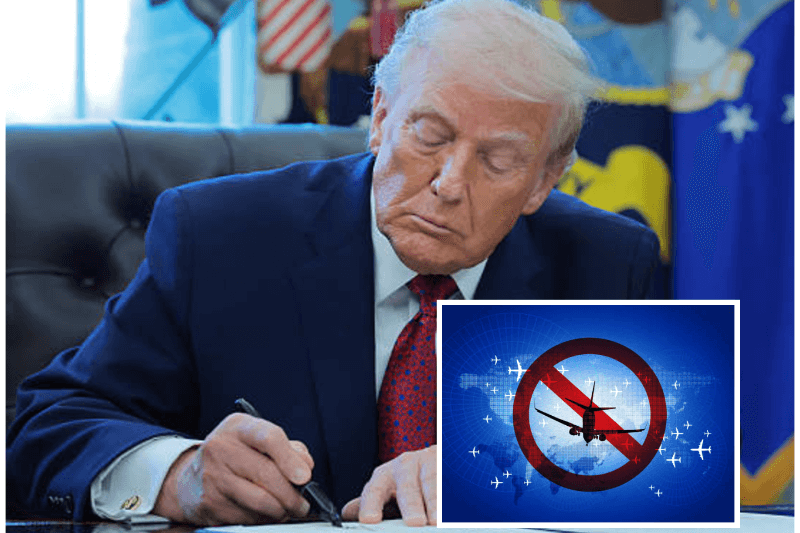
Trump Adds 20 Nations To Travel Ban: Burkina Faso, Syria Hit As Palestinian Docs Denied
Former U.S. President Donald Trump has notably increased his unpopular travel ban by adding 20 countries to it, a move that sparked worldwide panic. The list has also changed to include countries in Africa, Middle East and part of Asia such as Burkina Faso and Syria. In the meantime, even Palestinians with travel papers were not allowed in, further deteriorating the humanitarian and diplomatic split. This extension supports the fact that the administration still emphasized border control and national security at the expense of international diplomacy.
Expansion of the Travel Ban
The new travel bans are based on the original Trump executive order of 2017, which initially covered some of the countries that are dominated by Muslims. The widened suspension includes more African and Middle Eastern countries with the poorest security cooperation and vetting process being cited as the principal causes of inclusion. The detractors contend that vulnerable groups are disproportionately impacted by the policy, and it contributes to inequality, whereas its proponents believe that the policy strengthens U.S. sovereignty and national security.
Affected Nations and Global Reaction
Some of the new countries that have been included include Burkina Faso and Syria. They both are already struggling with internal instability and the ban only complicates matters of migration and asylum by their citizens. Human rights groups have decried the move noting that the restrictions help to curtail access to vital medical travel, education and family reunification. The world leaders, especially those of allied countries, demanded policy reevaluation, citing that such blanket restrictions endanger the further development of geopolitical distances.
Denial of Palestinian Travel Documents
To make the situation worse, the U.S was reportedly starting to deny entry to travelers who were carrying Palestinian Authority-issued documents. The action is taken against a background of heightened tension in the region, and is interpreted by most pundits as a political overture, killing chances of equitable diplomatic participation in the peace process in the Middle East.
Balancing Security and Diplomacy
As much as national security is a justifiable issue, the experts are emphatic on the need to balance protection with humanitarian interests. As global travel restrictions evolve, this latest expansion of the Trump travel ban reignites the debate between sovereignty and solidarity—two forces that continually shape international mobility.


