

Saudi Arabia, Turkey and Pakistan Sign Defence Pact as Middle East Power Balance Shifts
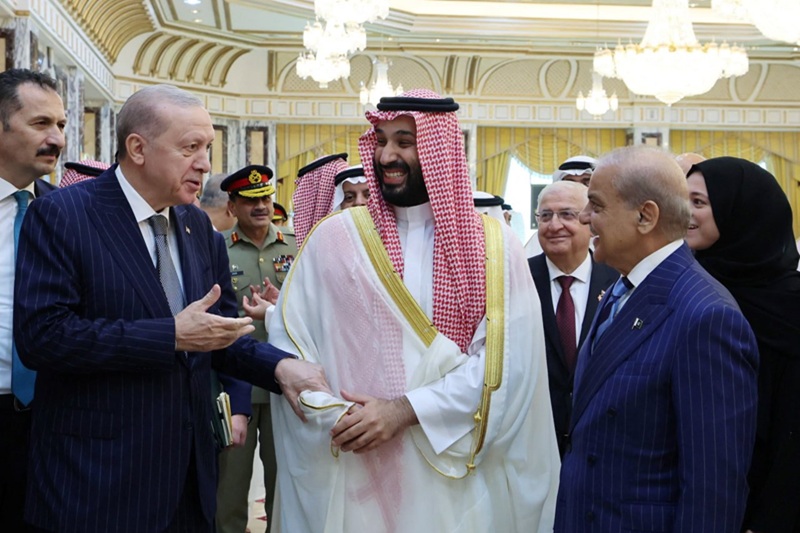
Something notable happened in the Middle East on August 7: the leaders of Saudi Arabia, Turkey and Pakistan sat down in Mecca and signed a mutual defense agreement. Crown Prince Mohammed bin Salman, President Erdoğan, and PM Shehbaz Sharif put their names on what’s being called the Mecca Joint Defence Agreement and the core idea is simple: if one of them gets attacked, the other two treat it as an attack on themselves too.
So what’s actually in it?
The mutual-defense clause is the headline, but there’s more underneath it plans for joint military exercises, closer coordination, and cooperation on defense tech. Turkish officials have hinted this could stretch across land, sea, air, cyber, drones, electronic warfare, and even AI-driven systems down the line.
One thing worth noting: this isn’t NATO’s Article 5. There’s no explicit commitment to automatic military intervention spelled out publicly, so how far the “an attack on one is an attack on all” language actually goes in practice is still an open question.
Why now?
Context matters here. The region’s been on edge tension with Iran, strikes hitting Gulf states, disruptions to shipping lanes that everyone relies on. For Saudi Arabia, this pact is really about hedging against missile and drone threats. Turkey brings a defense industry that’s been growing fast, especially in drones and electronic warfare. Pakistan brings decades of military experience and, notably, nuclear capability.
Put those three together and you get a coalition with real weight financial muscle, industrial capacity, and battle-tested manpower all in one bloc.
Is this an “Islamic NATO”?
That label’s already floating around, but it’s probably premature. All three governments have been careful to frame this as purely defensive, not aimed at any one country. That said, Turkey has floated the idea of expansion, and Egypt has reportedly come up as a possible future member.
Stay informed with these stories shaping global headlines and raising new questions.
Could Hormuz Tensions Trigger Wider Crisis?
Check out the latest developments surrounding the US naval blockade of Iran and rising Strait of Hormuz tensions.
What Happened to Italy’s Renaissance Treasures?
Uncover the shocking museum heist involving four priceless Renaissance masterpieces stolen from Italy.
Why Did Police Investigate Elderly Man?
Find the details behind the Singapore assault investigation following an elderly man’s interaction with a child.
Why Did Trump Cut Military Exercises?
Browse the latest developments after Trump ordered a substantial reduction in joint military exercises.
What Does France’s Muslim Brotherhood Report Reveal?
Explore France’s new report and the questions it raises about Islamist networks across Europe.
What could ripple out from this?
Honestly, the bigger impact might be political rather than military. This kind of pact tends to nudge other countries into rethinking their own alliances. It gives Saudi Arabia added deterrence, gives Turkey another lever of regional influence, and gives Pakistan a firmer foothold in Middle Eastern affairs. There’s also a real economic angle: more joint defense production and tech-sharing could follow. Not everyone’s thrilled, though Iran has already pushed back publicly, and Egypt seems to be weighing its options rather than jumping in.
What’s next?
The real proof will be in execution joint drills, actual defense-industry tie-ups, and whether the political coordination holds up under pressure. Right now it’s a strong signal that these three powers want more control over their own security rather than leaning on outside guarantees. Whether it becomes a lasting framework or just a symbolic gesture is something we’ll only know with time.
FAQs
1. What is the Saudi-Turkey-Pakistan defence pact?
It is the Mecca Joint Defence Agreement, signed on August 7, 2026, to strengthen collective security and defence cooperation among the three countries.
2. What happens if one member is attacked?
The agreement states that an armed attack against one of the three countries will be regarded as an attack against all three.
3. Is this an Islamic NATO?
The pact is sometimes described that way because of its collective-defence principle, but its members have not formally presented it as a NATO-style alliance.

