

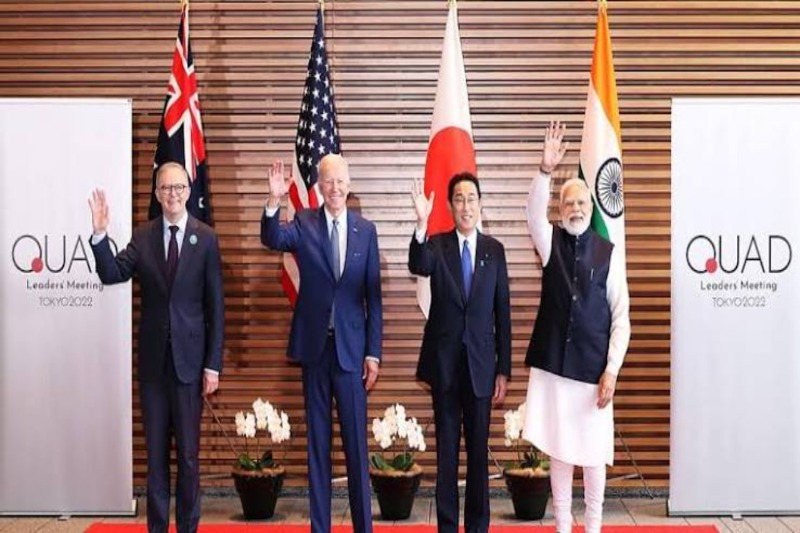
Why QUAD Plus Matters for FOIP and the Future of Indo-Pacific Security
Last updated on August 10th, 2026 at 12:48 pm
The Indo-Pacific isn’t just another region on the map anymore it’s becoming the region. Trade routes that keep economies running, supply chains that everyone depends on, and a slow but steady rise in military tension all pass through these waters. So it’s no surprise that people are paying closer attention to an idea called “QUAD Plus,” and what it might mean for the broader vision of a Free and Open Indo-Pacific, or FOIP. The Quad itself India, the US, Japan, and Australia has been around for a while. But lately, instead of sticking to a tight four-country club, it’s been reaching out to other regional players. That widening circle is what people mean when they say “QUAD Plus.”
So What Exactly Is QUAD Plus?
Here’s the thing: it’s not a formal alliance with a membership card. There’s no signup sheet. QUAD Plus is really just shorthand for the Quad teaming up with other countries or regional bodies, depending on the issue at hand. It makes sense when you think about it. Every Indo-Pacific country brings something different to the table. One might be strong on maritime intelligence, another on infrastructure, another on logistics or disaster relief, another on tech or capital. Instead of forcing everyone into one rigid structure, this looser model lets countries plug in wherever they’re useful, without signing up for something bigger than they’re ready for.
Why This Actually Matters for FOIP
FOIP has always been built on a few core ideas: freedom of navigation, respect for international law, resolving disputes without conflict, and keeping trade open. Nice principles but principles alone don’t stop illegal fishing or track a typhoon heading toward a coastline. That’s where QUAD Plus earns its keep. Better maritime surveillance means countries actually know what’s happening in their own waters which matters for catching illegal fishing, spotting maritime crime, or responding faster when disaster strikes. And on the economic side, cooperation on things like critical minerals and supply chains chips away at the kind of vulnerability that leaves a country exposed. Security today isn’t just about ships and missiles anymore; it’s also about who controls the semiconductors, the rare earths, and the trade routes everyone relies on.
The Quad Has Been Busy Lately
This isn’t just talk anymore there’s been real movement. Back in May 2026, Quad foreign ministers met in New Delhi and rolled out something called the Indo-Pacific Maritime Surveillance Collaboration initiative. The early focus is the Indian Ocean, with the goal of sharpening maritime awareness and getting countries to actually share information instead of sitting on it. They also pushed forward on critical minerals, tech, energy security, and disaster response. Then in July 2026, the ministers reconvened in Manila, this time putting real emphasis on ties with ASEAN. Australia’s foreign ministry confirmed a joint statement came out of that meeting specifically about working more closely with regional institutions, a signal that the Quad knows it can’t go it alone in this part of the world.
ASEAN Is the Piece That Can’t Be Skipped
If QUAD Plus starts to look like a project run by big powers for smaller ones, it’ll lose credibility fast. That’s exactly why ASEAN’s involvement isn’t optional, it’s central. ASEAN has its own framework here, the ASEAN Outlook on the Indo-Pacific, which leans heavily on dialogue, inclusiveness, and playing by international rules rather than power politics. ASEAN leaders have made it clear they’re open to more support for that vision from outside partners. The more the Quad aligns with what ASEAN is already trying to do, the more legitimacy FOIP gains across the region, not just among the four founding members.
What This Means on the Ground
The real strength of QUAD Plus is that it doesn’t force anyone to pick a side. Countries can cooperate where their interests genuinely overlap, without having to fully commit to one bloc or another. For everyday people, none of this will make headlines the way a military pact would but it might matter more. Safer shipping lanes keep trade moving. Sturdier supply chains soften the blow when something goes wrong elsewhere in the world. Better coordination on disaster response can be the difference between a fast recovery and a slow, costly one when a cyclone or earthquake hits. There’s also a quieter strategic point here: the more countries are woven into this kind of network, the harder it becomes for any single power to strong-arm the region. That said, the Quad has to walk a careful line. If it starts to look like a thinly veiled anti-China coalition, it risks losing the very trust it’s trying to build. Its credibility going forward will hinge on actually delivering results and doing it in a way that respects ASEAN’s central role and each country’s own sovereignty.
Where This Is Headed
FOIP’s future probably won’t be decided by one big treaty or a single dramatic alliance. It’s more likely to be shaped by a patchwork of overlapping partnerships on maritime security, technology, energy, infrastructure, trade all reinforcing each other over time. That’s the real promise of QUAD Plus. If it stays practical, stays inclusive, and earns the trust of the countries it’s meant to serve, it could end up being one of the sturdier foundations for a stable Indo-Pacific. At this point, another joint statement isn’t going to move the needle. The real question is whether these partnerships can actually deliver and whether they make the region safer without drawing new lines in the water.
FAQ
What is QUAD Plus?
A flexible way for the Quad (India, US, Japan, Australia) to team up with other regional partners on specific issues, not a formal alliance.
What does FOIP stand for?
Free and Open Indo-Pacific a vision for a peaceful, rules-based regional order.
Why does ASEAN matter so much here?
Because ASEAN sits geographically and economically at the heart of the Indo-Pacific, and its buy-in is what makes these initiatives feel regional rather than imposed from outside.
Explore the alliances reshaping the Indo-Pacific’s future.
Could QUAD Plus Reshape Regional Security?
Uncover how wider partnerships could strengthen FOIP and Indo-Pacific cooperation.
Why Does ASEAN Matter To QUAD?
Find out how ASEAN’s central role could shape regional security efforts.

