

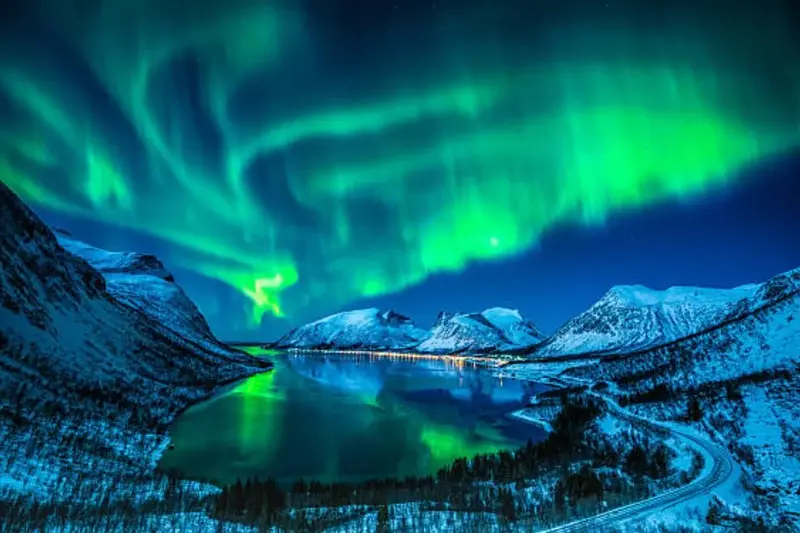
Northern Lights 2026: Where Americans Should Go to See the Aurora While the Sky Is Still This Active
You’re standing in the cold, a little unsure why you left a warm bed at midnight. Then a faint green smear overhead starts to move. Within minutes the whole sky is rippling. People who have seen it rarely stop talking about it. The good news is that the next two winters offer some of the best odds in years.
Why 2026–2027 Is Such a Good Window
The sun runs on a roughly 11-year cycle, and the current one hit its busiest phase in 2024. The peak in aurora activity actually comes a few years after solar maximum, which is why Norwegian solar physicist Pål Brekke has said the 2026–2027 season should be great for hunting the northern and southern lights. One reason is that Earth-directed coronal holes are common in the decaying phase. These produce fast solar wind that returns about every 27 days. That means a steady supply of moderate storms rather than an occasional enormous one. The window won’t last forever. NOAA says the next solar cycle is expected to begin sometime between January 2029 and December 2032.
Best Places to See the Aurora Borealis
One travel guide names Tromsø (Norway), Abisko (Sweden), Rovaniemi (Finland), Reykjavik (Iceland), Yellowknife (Canada), and Fairbanks (Alaska) as top destinations. Here’s how they work for U.S. travelers:
- Fairbanks, Alaska: No passport needed, and the aurora is reliable.
- Yellowknife, Canada: Famously clear skies and a short flight from major U.S. hubs.
- Iceland: Short flights from the East Coast, and easy to combine with a few days of sightseeing.
- Northern Norway, Sweden and Finland: Better for a longer trip, with options like Arctic cruises or glass-roofed cabins.
Practical Travel Tips for American Tourists
Time it right. September through October and February through March are strong windows, roughly 10 PM to 2 AM. A new moon helps, because bright moonlight washes out faint displays.
Give yourself time. Book at least three or four nights. Clouds can ruin any single evening.
Watch the forecast, not just the calendar. The forecast you check on the night matters more than the one for the decade. The NOAA Space Weather Prediction Center is a free place to start.
Dress like you mean it. Pack thermal layers, insulated boots, and a battery pack, because cold drains phone batteries fast. Passports are needed for every destination above except Alaska.
Why It Matters
Aurora tourism is a real economic engine for small Arctic towns, and operators are already marketing 2026–2027 packages, including Arctic Norway cruises running from September 2026 through December 2027. Expect busier tours and higher prices at peak times. The aurora is never guaranteed. Visibility still depends on cloud cover, darkness, and solar wind conditions. But with the sun still active, this is a good time to book that trip.
Discover Travel Trends, Global Perspectives, and Destinations Inspiring Americans to Explore Differently
Why Are Americans Choosing Road Trips Instead?
Explore why rising international vacation costs are encouraging more Americans to discover destinations closer to home in 2026.
What Makes the UAE’s Development Model Different?
Discover how the UAE’s approach to national values and development offers lessons for countries around the world.
What Should Americans Know About Europe’s New Borders?
Find out how Europe’s new digital border rules could affect American travelers planning trips across the continent.
Could Europe Become More Affordable for Americans?
Uncover how a weaker euro could influence accommodation, dining, shopping, and overall travel costs in 2026.
Which Asian Cities Should Americans Visit Next?
Browse seven Asian cities offering unforgettable cultural experiences, exciting food scenes, and adventures for American travelers in 2027.

