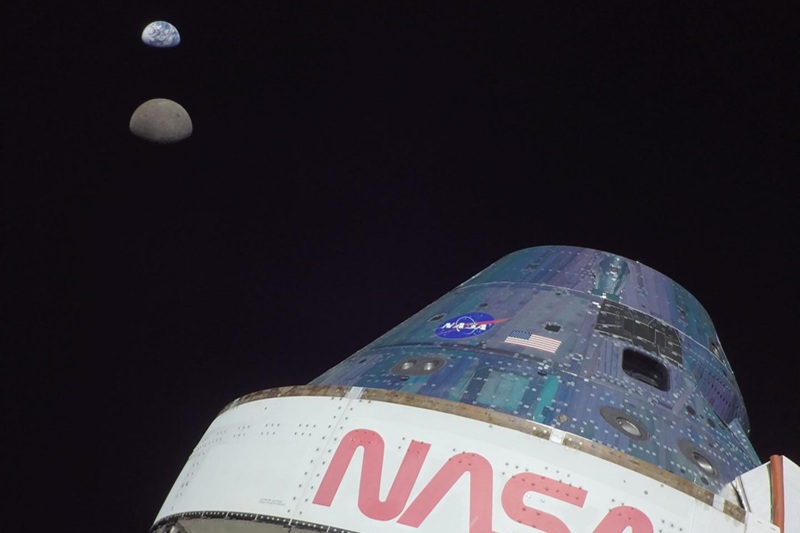
NASA’s Artemis II Mission: What the Moon Flight Could Reveal About the Universe
Fifty-three years after the last Apollo crew left the Moon, four people have flown around it again. NASA’s Artemis II mission lifted off on 1 April 2026 and splashed down in the Pacific Ocean on 10 April. On paper it was a test flight. In practice it answered a simple but serious question: can people safely travel far beyond Earth again? Reid Wiseman, Victor Glover, Christina Koch and Canadian astronaut Jeremy Hansen went farther from home than any humans before them. What they learned could shape how we study the Moon, Mars and the wider universe for decades to come.
How the Orion Spacecraft Proved Itself in Deep Space
The crew travelled in the Orion spacecraft, which had flown only once before, and without passengers. This time it carried people through deep space radiation, long communication distances and a hot, fast return to the atmosphere. Engineers watched the heat shield closely, because the uncrewed flight in 2022 left it cracked and worn. NASA changed the reentry angle to reduce that stress, and the crew came home in good shape.
The mission also tested the Deep Space Network, a worldwide chain of giant radio antennas that keeps contact with distant spacecraft. A flight director said it performed exceptionally. For mission planners, every system that worked is one fewer worry for the astronauts who follow, and that kind of confidence is hard to earn any other way.
What the Moon Could Teach Us About the Universe
The Moon works like a quiet record keeper. With no weather or oceans to wipe its surface clean, it holds traces of the early solar system, including how often space rocks struck Earth and the Moon billions of years ago. Those clues help scientists understand how our own planet became a place where life could grow.
Artemis II also placed a science team inside Mission Control for the first time. The astronauts described features they saw on the lunar surface, which helps NASA train future crews to spot areas worth a closer look. The next step is Artemis III, expected in 2027, when a new crew will test commercial Moon landers in Earth orbit. A crewed landing is planned for 2028, though space schedules often shift. What matters most is that people have shown they can go there and return safely, and that opens the door to questions robots alone cannot answer.
The protests and power struggles reshaping politics worldwide
Could student protests sway France’s election?
Find out how campus demonstrations are fuelling political tensions ahead of France’s presidential vote.
Why is Trump targeting campus protests?
See how Donald Trump’s remarks have intensified debate over anti-Israel protests at US colleges.
Can the Abraham Accords protect regional stability?
Explore why the future of Middle East stability may depend on preserving the accords.
What’s driving Serbia’s growing unrest?
Uncover how shootings, corruption and violence are stoking tensions across Serbia.
Why are Russians protesting Putin’s mobilisation?
Track down the reasons behind mass anti-war protests following Putin’s mobilisation declaration.