

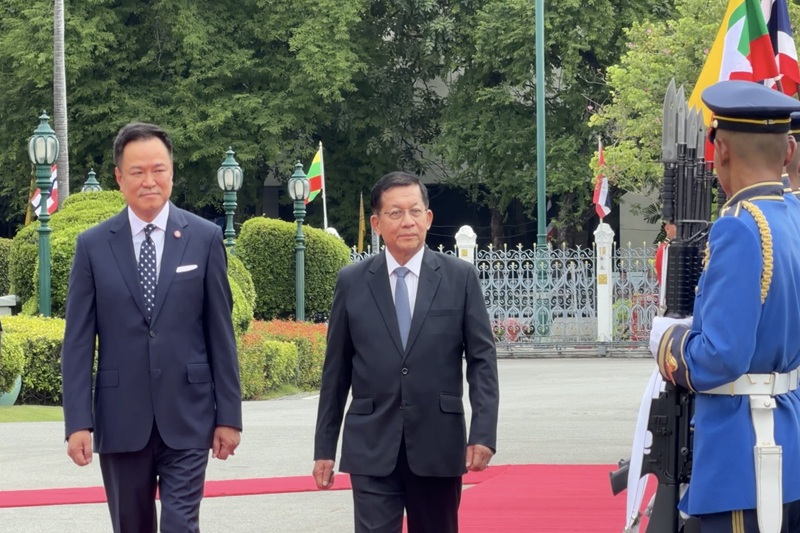
Myanmar Leader’s Thailand Visit: First Official Trip Since the 2021 Coup Explained
For the first time since Myanmar’s military grabbed power more than five years ago, its top general is making an official state visit to another country. Senior General Min Aung Hlaing has traveled to Thailand and while that might sound like a routine diplomatic trip, it’s actually a pretty big deal given everything that’s happened since 2021.
Why This Trip Is Turning Heads
Back in February 2021, Myanmar’s military ousted the elected government of Aung San Suu Kyi, claiming the 2020 election had been rigged. That move plunged the country into chaos, mass protests, a brutal crackdown, and eventually a nationwide armed resistance that’s still going strong today. In the years since, Myanmar has been hit with Western sanctions, frozen out of major regional summits, and generally treated as a diplomatic pariah. Min Aung Hlaing hasn’t been a total hermit; he’s shown up at gatherings in places like Russia and China. But this is different. This is his first official, bilateral visit, hosted by another government specifically to meet with him. That’s a much bigger statement. It also matters because of geography: Thailand and Myanmar share a border stretching about 2,400 kilometers. When there’s instability on one side, the other side feels it immediately which is a big reason Bangkok has kept the lines of communication open even as much of the world has pulled away.
What’s Actually on the Table
Officials from both countries are expected to talk through a handful of thorny issues:
- Security along their shared border
- The steady flow of refugees fleeing the fighting inside Myanmar
- Trade and economic ties
- Humanitarian aid
- Broader regional stability
None of this is abstract for Thailand. Waves of displaced people have crossed into Thai territory whenever fighting flares up, so Bangkok has very concrete, on-the-ground reasons to stay engaged with Myanmar’s military leadership, international criticism aside.
Why Thailand Keeps Talking to the Junta
Thailand has a long history of dealing with whoever happens to be in charge in Myanmar, regardless of how they got there. As the closest neighbor, it relies heavily on cross-border trade and migrant labor, and it has a direct stake in keeping the border calm.
Analysts describe Thailand’s stance as a balancing act not fully embracing the junta, but not shutting the door either, in hopes of easing tensions and keeping humanitarian channels open. Human rights groups see it differently, though. They argue that any high-level meeting with Myanmar’s military should come with real pressure for political dialogue and protection of civilians, not just quiet diplomacy.
More Stories You Shouldn’t Miss
Could Tom Holland’s Luxury Stay Surprise?
Discover the lavish details behind Tom Holland’s extravagant stay at Mumbai’s iconic Taj Mahal Palace.
What Makes India’s Brain Atlas Revolutionary?
Explore how Indian scientists are unlocking the mysteries of the human brain with cutting-edge 3D mapping.
Why Did US Seize Iranian Tanker?
Uncover the dramatic events behind the US Navy’s tanker seizure and its impact on India.
Why Reject Two Citizenship Offers?
Find out why Rashid Khan chose loyalty over offers from India and Australia.
How Did Vikram-1 Create History?
Check out how Skyroot’s Vikram-1 became a milestone for India’s private space ambitions.
Could This Change Anything Bigger?
This visit could shape how ASEAN handles Myanmar going forward. The regional bloc’s peace plan, the Five-Point Consensus, agreed to back in 2021 has largely stalled, so any renewed momentum here could matter beyond just the two countries involved. There’s also a practical upside: smoother relations could help keep border trade and infrastructure projects moving, and possibly make it easier to get aid to communities caught in the crossfire. That said, most experts are cautious about reading too much into a single trip. Myanmar’s crisis runs deep, and one visit however symbolically significant isn’t going to untangle it. Real progress would need much broader political dialogue involving far more than just two governments.
What to Watch For
The real question now is whether this visit leads to any concrete actual agreements on border management, aid, or diplomatic engagement or whether it ends up being mostly symbolic. Either way, it’s a notable moment, and a reminder of just how complicated the choices are for countries living next door to a prolonged crisis.
FAQ
Why does this visit matter so much?
It’s the first official bilateral visit by Myanmar’s military leader to another country since the 2021 coup, a real shift from years of near-total diplomatic isolation.
Who runs Myanmar right now?
The military junta, led by Senior General Min Aung Hlaing.
What sparked the 2021 coup?
The military alleged fraud in the 2020 election, though international observers didn’t find evidence of fraud significant enough to have changed the outcome.
What will they actually discuss?
Border security, refugee flows, trade, humanitarian aid, and regional stability are all expected to come up.
Could this affect the wider region?
Possibly it may influence how ASEAN approaches Myanmar and whether its stalled peace efforts get any new life.

