Why Laurence Olivier’s London Childhood Home Has Been Awarded a Prestigious Blue Plaque
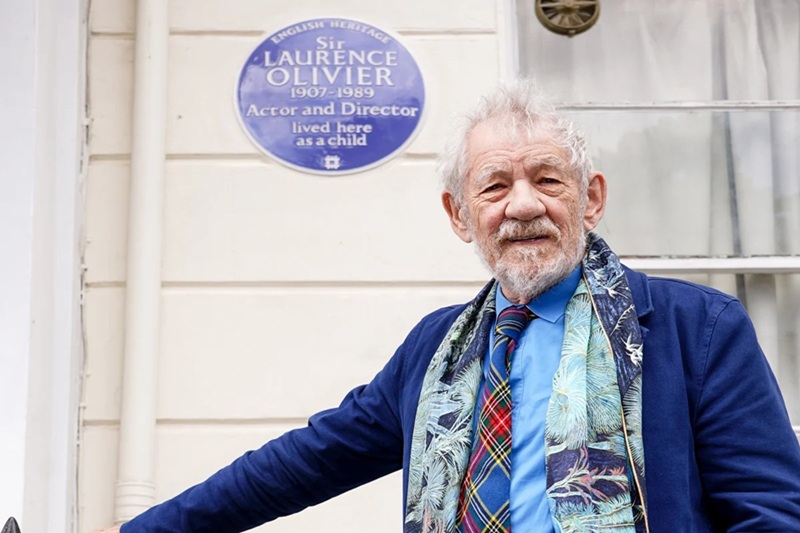
Long before he became one of the most celebrated actors in British history, Laurence Olivier was just a young boy with a vivid imagination and a love for performing. Now, the London house where his journey began has earned one of the city’s most esteemed historical honors. On June 10, Sir Ian McKellen unveiled a blue plaque at 22 Lupus Street in Pimlico. This plaque recognizes the childhood home where Olivier lived from ages six to eleven. The ceremony honored not only a major figure in British theatre and film but also the place where his remarkable career first developed.
A Childhood Home That Sparked a Legend
According to English Heritage, Olivier’s first experiences as a performer occurred in the small Pimlico home. Family stories describe the young boy turning a wooden box and a set of blue curtains into an improvised stage. He spent hours singing, dancing, and acting. Those childhood performances would later grow into a career that transformed modern acting. The home also played an important role in his family life. Olivier’s father worked as a curate at nearby St Saviour’s Church, where the future actor sang as a choirboy during his early years in London. English Heritage noted that this property is where “one of Britain’s greatest cultural figures first found his voice as an actor.”
Sir Ian McKellen Pays Tribute
Speaking at the unveiling ceremony, Sir Ian McKellen praised Olivier’s lasting influence on generations of performers. McKellen called him a “unique and legendary” figure whose impact is still felt in British theatre and cinema. He pointed out that Olivier’s legacy lives on through the actors inspired by his work and through audiences who were lucky enough to see his performances in person. The event highlighted Olivier’s lasting role in Britain’s cultural history, nearly four decades after his death in 1989.
What Is London’s Blue Plaque Scheme?
The blue plaque program is one of London’s most well-known heritage projects. It started over 150 years ago and honors people who made important contributions to society and who lived or worked in the city. To get a plaque, a person must have been dead for at least 20 years, have had a significant impact on their field, and be linked to a surviving building that still has much of its historical character. Olivier’s former home met all these criteria, making it a suitable addition to the city’s collection of historic markers.
The Significance of Olivier’s Childhood Home
While Laurence Olivier has a blue plaque at his birthplace in Dorking, Surrey, the Lupus Street residence has a different meaning. It marks the spot where his love for acting first developed. Historians and theatre fans view it as an important site in the story of one of the greatest performers of the 20th century. The plaque was one of several new honors announced by English Heritage earlier this year to celebrate important figures from Britain’s history.