

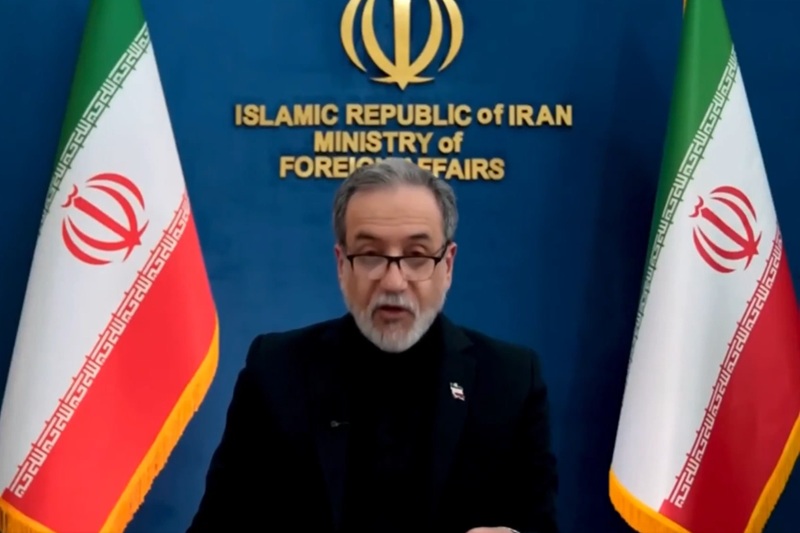
Iran Says Strait of Hormuz Agreement With Oman Is in Final Stages: Latest Updates
There’s some big news brewing in one of the world’s most important shipping lanes. Iran says it’s closing in on a deal with Oman over how ships navigate through the Strait of Hormuz and if it goes through, it could matter to just about anyone who fills up a gas tank.
So what exactly did Iran say?
Iran’s Foreign Ministry spokesperson, Esmaeil Baghaei, confirmed that Tehran and Muscat have agreed on the geographic coordinates for a proposed shipping route through the strait. Both sides are now going over the final draft of the agreement. Baghaei was careful to add a caveat, though: as long as “third parties” don’t get in the way, an official announcement could come soon. He also made a point of noting that a deal between just Iran and Oman wouldn’t, by itself, guarantee security in such a sensitive stretch of water.
Why does everyone care so much about this one strip of ocean?
If you’re not familiar with it, the Strait of Hormuz is the narrow channel linking the Persian Gulf to the Gulf of Oman and the Arabian Sea. It sounds like a small detail on a map, but it’s actually one of the most consequential chokepoints in global trade. Roughly a fifth of the world’s oil moves through there every single day, along with a huge share of the world’s liquefied natural gas. Any hiccup in that flow, a blockage, an attack, even just heightened tension tends to send oil prices jumping and rattles shipping and financial markets almost immediately. Countries that import most of their energy, like India, China, Japan, and South Korea, watch this waterway especially closely, since their economies are more exposed to whatever happens there.
What might actually be in this agreement?
The full text hasn’t been made public, but reporting suggests the deal would set up agreed-upon shipping lanes through the strait. From what’s being described, Iran would essentially manage inbound traffic, while Oman would take the lead on ships heading out. The emphasis, at least publicly, seems to be on maritime safety and smoother operations not on either country claiming control over international shipping. That said, several details are apparently still being hashed out, so the final version could look somewhat different.
More Stories You Shouldn’t Miss
Could Tom Holland’s Luxury Stay Surprise?
Discover the lavish details behind Tom Holland’s extravagant stay at Mumbai’s iconic Taj Mahal Palace.
What Makes India’s Brain Atlas Revolutionary?
Explore how Indian scientists are unlocking the mysteries of the human brain with cutting-edge 3D mapping.
Why Did US Seize Iranian Tanker?
Uncover the dramatic events behind the US Navy’s tanker seizure and its impact on India.
Why Reject Two Citizenship Offers?
Find out why Rashid Khan chose loyalty over offers from India and Australia.
How Did Vikram-1 Create History?
Check out how Skyroot’s Vikram-1 became a milestone for India’s private space ambitions.
Why this matters right now
This isn’t happening in a vacuum. The talks follow months of regional tension that disrupted commercial shipping and stirred fears of a wider conflict breaking out in the Middle East. If the two countries actually pull off a workable agreement, it could go a long way toward calming nerves in the shipping industry, potentially lowering insurance costs for vessels and adding some much-needed stability to energy markets that have been anything but stable lately. Still, plenty of analysts are cautious. Reaching an agreement on paper is one thing; actually implementing it smoothly, especially in a region with this much history and mistrust, is another challenge entirely.
How could this ripple through the global economy?
Energy traders are watching every headline coming out of these talks. The logic is fairly simple: more predictable shipping through Hormuz could help stabilize oil prices, which in turn eases inflation pressure in countries that rely heavily on imported fuel. Shipping, logistics, and manufacturing businesses could also see reduced risk and lower costs. But nothing is locked in yet the agreement still hasn’t been signed, and the broader tensions in the region haven’t disappeared. So while there’s reason for cautious optimism, it’s still very much a “wait and see” situation.
FAQ
What is the Strait of Hormuz?
A narrow but critical waterway linking the Persian Gulf to the Gulf of Oman, through which about a fifth of the world’s oil supply passes.
What did Iran actually announce?
That its talks with Oman over navigation through the strait have reached the final stage, with a joint statement expected soon.
Why is Oman part of this?
Oman shares a border along the strait with Iran and has long served as a go-between in regional diplomacy.
Could this affect oil prices?
Potentially, yes a successful deal could reduce uncertainty and help stabilize both oil prices and shipping costs.
Has anything been signed yet?
Not yet. Iran says things are in the final stages, but there’s no official signed agreement so far.

