

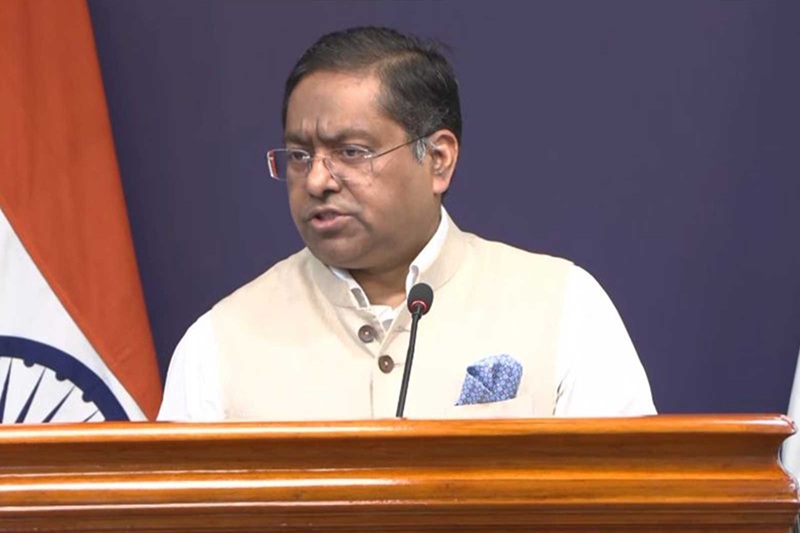
India-US Interim Trade Agreement: What the MEA Said About Ongoing Negotiations
India and the United States appear to be making real progress on their long-awaited interim trade agreement, though officials on both sides say a few sticking points still need to be ironed out. After the latest round of talks, the Ministry of External Affairs called the discussions “positive and constructive” diplomatic language that signals both countries are still serious about getting a deal done. The conversations covered a lot of ground: market access, customs rules, non-tariff barriers, investment promotion, and even cooperation on economic security. These talks came on the heels of meetings between Indian negotiators and a visiting delegation from the US Trade Representative’s office, continuing the momentum that’s been building since the two countries agreed on a broad framework for the interim pact earlier this year.
So what exactly is this “interim” deal?
Think of it as a stepping stone. Rather than making both countries wait years for a full-blown Bilateral Trade Agreement, the idea is to lock in some early wins first things like smoother market access, fewer trade barriers, quicker customs clearance, and stronger investment ties. The bigger, more comprehensive agreement would follow later and expand into additional sectors.
Why anyone outside a trade ministry should care
India and the US are already huge trading partners, and a solid interim agreement could ripple out in a lot of directions. Indian exporters would likely find it easier to sell into the American market, and US companies could get more room to operate in India. Simpler rules and fewer regulatory headaches benefit businesses on both ends. Everyday consumers might feel it too, eventually think more product choices and, potentially, better prices as trade barriers ease. There’s also the possibility of it giving investment and manufacturing a nudge, which usually means more jobs.
It’s not all smooth sailing, though
Some of the toughest conversations are still unresolved. Agriculture, tariffs, and how to protect sensitive domestic industries remain sticking points. India has been clear that it won’t sign off on anything that doesn’t safeguard its own interests while still being fair to both sides. There’s also the backdrop of shifting US tariff policy, which both governments have had to navigate carefully to keep the talks on track.
More Stories You Shouldn’t Miss
Could Tom Holland’s Luxury Stay Surprise?
Discover the lavish details behind Tom Holland’s extravagant stay at Mumbai’s iconic Taj Mahal Palace.
What Makes India’s Brain Atlas Revolutionary?
Explore how Indian scientists are unlocking the mysteries of the human brain with cutting-edge 3D mapping.
Why Did US Seize Iranian Tanker?
Uncover the dramatic events behind the US Navy’s tanker seizure and its impact on India.
Why Reject Two Citizenship Offers?
Find out why Rashid Khan chose loyalty over offers from India and Australia.
How Did Vikram-1 Create History?
Check out how Skyroot’s Vikram-1 became a milestone for India’s private space ambitions.
More than just a trade story
Beyond economics, analysts see this as part of a bigger picture: global supply chains reshuffling, and India-US ties becoming more important for manufacturing, tech, pharma, clean energy, and digital trade. A completed interim deal could also reassure global investors that India remains a solid bet for manufacturing and investment. That said, don’t expect either side to rush it. Experts think both governments would rather take the time to get it right than push through a deal with loose ends.
What’s next
Technical and ministerial talks are expected to continue over the coming weeks. India has repeated that it’s after a balanced deal, one that helps both economies without sacrificing its own priority sectors. For now, businesses and markets alike are watching for the next signal on where things go from here.
FAQ
What is the India-US Interim Trade Agreement?
A preliminary trade arrangement meant to settle key issues before the larger Bilateral Trade Agreement is finalized.
What did the MEA actually say?
That talks were “positive and constructive” and that both sides remain committed to moving the agreement forward.
What’s actually being negotiated?
Market access, customs procedures, non-tariff measures, investment promotion, trade facilitation, and economic security cooperation.
Why does this matter?
It could boost trade volumes, attract investment, strengthen supply chains, and support growth in both countries.
Is it done yet?
No talks are ongoing, with both sides still working toward a mutually acceptable deal.

