Google Fitbit Air Review: Can a $99 Screenless Fitness Tracker Really Replace Your Smartwatch?
For years, wearable technology has followed the same trend: bigger displays, more notifications, and increasingly complicated features. This time, Google is taking the complete opposite approach by introducing Fitbit Air, a screen-less fitness tracker that is meant for individuals who need health information without any disturbance.
The officially announced Fitbit Air comes with a price tag of $99.99 and was unveiled to the public on May 7, 2026. There’s no display, no buzzing alerts, and no endless scrolling through menus. Instead, Google is betting that many users are ready for a quieter and less intrusive fitness experience. And judging by the early reaction online, the company may be onto something.
A Different Kind of Fitness Tracker
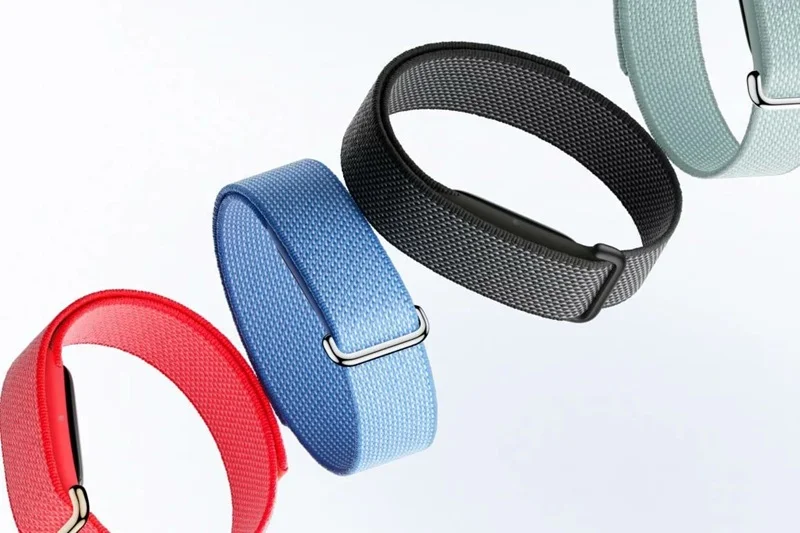
The Fitbit Air looks more like a lightweight fabric wristband than a traditional smartwatch. Buried within the wristband is a detachable tracking device that silently captures all your activities, sleep patterns, heart rate, and general health details throughout the day. Everything syncs directly to the Google Health app on Android and iPhone, where users can review detailed metrics and health insights. The idea behind the Fitbit Air is surprisingly simple: track your health in the background without constantly pulling your attention toward another screen. For people tired of smartwatch notifications interrupting workouts, meetings, or sleep, that minimalist approach could be the device’s biggest selling point.
Fitbit Air Price and Availability
Google has priced the Fitbit Air aggressively compared to competitors in the growing screenless wearable market. The standard Fitbit Air costs $99.99, while the Stephen Curry Special Edition is available for $129.99. Pre-orders opened on May 7, 2026, and the device officially began shipping on May 26. The pre-order window remains open until May 25. The Fitbit Air will launch in 20 countries, including the United States, Canada, the United Kingdom, Australia, and Japan.
Fitbit Air Features
Although it skips traditional smartwatch features, the Fitbit Air still includes most of the health-tracking tools people actually use every day. The wearable supports: Sleep tracking, Daily activity monitoring, Heart-rate tracking, Wellness, insights through the Google Health app, Android and iOS compatibility, and Optional AI-powered health coaching. Google has not yet confirmed the exact battery life, though the company says the device is designed for continuous all-day tracking. One interesting feature is the interchangeable band system. Users can swap the sensor module into different bands, including a silicone Active Band designed for workouts and exercise sessions.
The Real Story Behind Google’s AI Drive
Moving past the technology itself, it seems that Google is working hard to integrate AI for health monitoring. Fitbit Air users who subscribe to Google Health Premium gain access to Gemini AI-powered coaching tools that provide personalized fitness guidance, sleep analysis, recovery recommendations, and science-backed wellness insights. The service normally costs around $10 per month, though some pre-order offers include credits that offset the subscription cost. Google clearly sees AI as the future of wearable health technology, not just collecting data, but helping users actually understand it. Whether consumers fully embrace AI-generated wellness advice remains to be seen, but the Fitbit Air gives Google a much more affordable way to introduce users to that ecosystem.
Fitbit Air Pre-Order Deals
Google and retail partners are offering several launch promotions ahead of the May 25 pre-order deadline. Customers ordering through the Google Store receive a $35 Google Store credit, which can be applied toward accessories or Google Health Premium. Meanwhile, Amazon and Best Buy are including a free silicone Active Band with eligible pre-orders, giving users an alternative option for workouts and sports activities. In parts of Europe, including Ireland, some customers can also receive up to €45 in Google credit with qualifying purchases.
For a device already priced under $100, those launch bonuses make the Fitbit Air feel even more competitive.
How Fitbit Air Compares to Oura Ring and Whoop
The Fitbit Air enters a market currently dominated by premium wellness brands like Oura and Whoop. What makes Google’s device stand out immediately is the pricing model. Unlike several competitors that require expensive subscriptions or higher upfront hardware costs, the Fitbit Air keeps the entry price relatively low and does not force users into a monthly membership. That alone could make the device appealing to younger buyers and budget-conscious fitness users who want advanced tracking without committing to another recurring bill. The lack of a screen also places it directly in competition with wellness-first devices rather than traditional smartwatches like the Pixel Watch or Apple Watch.
Don’t Miss These Trending Stories
Explore Who Rules The Boys Finale?
Discover the shocking deaths, survivors, and final ruler revealed in The Boys Season 5 ending.
Check Realme 16T 5G Features?
Explore the massive battery, launch details, and standout specs of the upcoming Realme smartphone.
Discover Trending Thriller Series Worldwide?
Check the highest-rated global thrillers currently dominating streaming platforms this weekend.
Explore Best 2026 Camera Flagship?
Discover which flagship phone leads the battle in battery life and camera performance.
Check What Caused Jet Collision?
Explore the viral crash video and the safety concerns raised after the Idaho air show incident.
Is a Screenless Tracker Actually Worth It?
That depends entirely on what kind of wearable user you are. If you rely on notifications, on-wrist apps, or checking workout stats in real time, the Fitbit Air may feel too limited. Since there’s no display, all detailed information lives inside the companion smartphone app. But for users actively trying to reduce screen time or digital distractions, the experience could feel refreshingly simple. The Fitbit Air quietly handles health tracking while letting users stay present during workouts, workdays, and sleep. Ironically, removing the screen may be exactly what helps the device stand out in an increasingly crowded wearable market.
FAQs
1. When does the Fitbit Air ship?
The FitBit Air ships on May 26, 2026. Pre-orders are open from May 7 to May 25, 2026.
2. Do I need a subscription to use Fitbit Air?
No. You don’t require a subscription to use Fitbit Air. Google Health Premium, costing $10 per month, offers additional functionalities through AI coaching, but its usage is not mandatory.
3. Is the Fitbit Air iPhone compatible?
Yes. FitBit Air supports iPhone, in addition to Android.
4. What’s included with pre-order?
Google Store pre-orders include a $35 credit. Amazon and Best Buy include a free silicone Active Band.
5. How is the Fitbit Air different from regular Fitbits?
The Fitbit Air is screenless and has a low-profile fabric design, unlike traditional Fitbits with displays.