

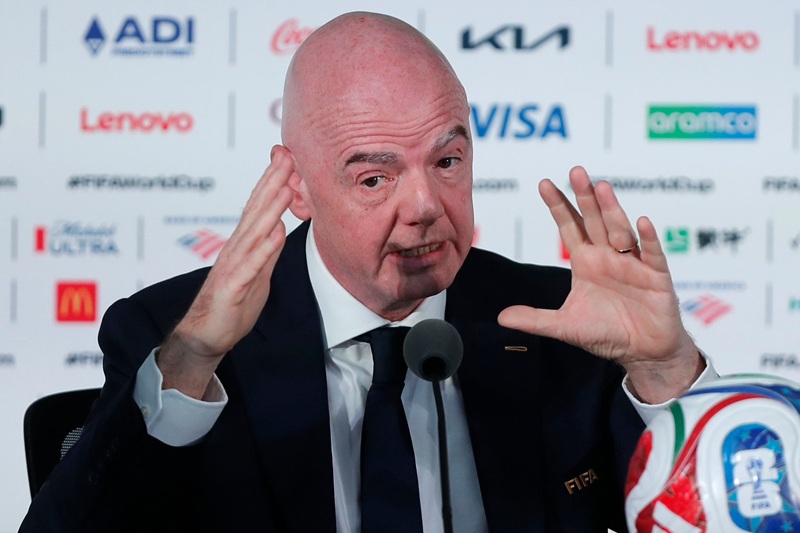
Why FIFA President Gianni Infantino Scrapped the FIFA World Cup Private Investment Plan
For a while there, it looked like FIFA was about to do what half the sports world has already done: sell a piece of itself to private investors. The World Cup is the single biggest cash machine in sports, pulling in billions from broadcast deals, sponsorships, and commercial tie-ins. So when word got out that FIFA was in talks to let outside investment firms buy into future tournament revenues, people paid attention. That plan is now dead. Gianni Infantino has reportedly pulled the plug on it, closing the book on months of speculation about private money finding its way into football’s crown jewel.
What Was Actually on the Table
The pitch was fairly straightforward, at least in structure: investment firms would put up capital now in exchange for a cut of revenue from future World Cups. FIFA would get an immediate injection of cash it could pour into things like stadium and infrastructure projects, grassroots development, and expansion efforts across its member federations. It’s not a wild idea in isolation; private equity has been flooding into European and North American sports for years, buying stakes in leagues and clubs left and right. FIFA was essentially asking whether that same playbook could work at the international level.
So Why Did Infantino Kill It?
From what’s being reported, it came down to a fairly simple calculation: FIFA decided that keeping full control of its own money was worth more, long-term, than the upfront cash an investment deal would have brought in. A few things seem to have driven that call.
Control was the big one. Once you sell off a slice of future revenue, you’ve given up some say in how that money gets used and how commercial decisions get made down the line. FIFA apparently wasn’t willing to trade that flexibility away.
Then there’s the governance angle. Bringing private investors into the tent tends to invite questions about who’s really steering the ship. There were reportedly concerns internally that outside investors would eventually want more input into commercial strategy and that this could put profit motives at odds with football’s actual interests.
And frankly, FIFA doesn’t need the money right now. The organization is sitting on healthy reserves from past tournaments, and the expanded 2026 World Cup 48 teams instead of 32 is expected to bring in serious revenue on its own. There just wasn’t much urgency to go looking for outside cash.
Why This Actually Matters
Nothing changes for fans in the immediate sense; the matches, the broadcasts, the tournament format, all of that stays exactly as planned. But the decision says something bigger about where FIFA sees itself heading. By holding onto every dollar of World Cup revenue, FIFA keeps its ability to fund things directly: youth programs, women’s football, grassroots development, infrastructure across all 211 member associations. None of that money gets diverted toward paying back investors. It’s also a bit of a statement piece. FIFA is essentially betting that it can keep growing commercially without needing to hand over equity to anyone, a stance that runs counter to where a lot of sports businesses have been heading lately.
Stay Ahead with Today’s Biggest Global Stories
Can Gaza Peace Finally Last?
Explore how Hamas accepted a ceasefire roadmap featuring complete disarmament and what it means for the region.
Who Made Algeria’s Political History?
Discover how Khalida Boufedeche became Algeria’s first woman parliamentary speaker and why it matters.
Why Are Copper Prices Dropping?
Check what caused copper prices to fall before the Fed’s rate decision and how global supply influenced markets.
How Is Europe Supporting Ukraine?
Explore how the European Commission’s €3.47 billion package will strengthen Ukraine’s defence capabilities.
What Did Zendaya Reveal Recently?
Discover what Zendaya shared about working with Tom Holland and their friendship on the Spider-Man set.
The Reaction Has Been Mixed
Not everyone’s convinced this was the right call. Some people in the sports finance world think FIFA left money on the table capital that could have accelerated football development projects globally. Others see it the opposite way: that FIFA dodged a long-term risk by not mortgaging its most valuable asset for short-term funding. For a lot of traditionalists, though, the takeaway is simple: the World Cup stays in football’s hands, not an investment firm’s spreadsheet.
What Happens Now
This doesn’t mean FIFA is done growing its commercial side. Sponsorships, broadcast deals, digital partnerships all of that keeps expanding as usual. It’s just that, for now, private equity isn’t going to be part of the mix. Whether this comes back up in a few years is anyone’s guess. But for the moment, FIFA has picked keeping the World Cup entirely under its own roof over cashing in with outside partners.
FAQ
Does this affect the 2026 World Cup?
No, nothing about scheduling, teams, or broadcasting changes.
Could FIFA revisit this later?
Possibly. The current deal is dead, but circumstances could change.
Why didn’t FIFA need the money?
Strong reserves plus expected 2026 revenue made the timing feel unnecessary.

