Gaza Peace Talks Enter Critical Phase as US Pushes for Breakthrough Between Israel and Hamas
The latest round of Gaza ceasefire negotiations hasn’t produced the breakthrough everyone’s hoping for, but it hasn’t collapsed either. Right now it’s stuck in that frustrating middle zone: real engagement, real pressure, no deal.
Jared Kushner, serving as Trump’s envoy, spent two days shuttling between Israeli Prime Minister Benjamin Netanyahu and Hamas negotiators, trying to find some common ground. He met Hamas political leader Khalil al-Hayya in Egypt first, then flew to Israel for talks with Netanyahu. Egypt, Qatar, and Turkey are all involved as go-betweens, which gives you a sense of how many moving parts this negotiation has. What’s notable here isn’t just the shuttle diplomacy, it’s that the US is talking to Hamas directly. That’s not something that happens often, and it says a lot about how much pressure is building around this conflict.
So what’s actually holding things up?
It’s not that Israel and Hamas disagree on the destination; both sides have, at least nominally, signed onto the idea of a 15-point roadmap that ends the war, gets Hamas to disarm, brings Israeli troops home, and clears the way for rebuilding Gaza under some new form of governance. The fight is over the order of operations.
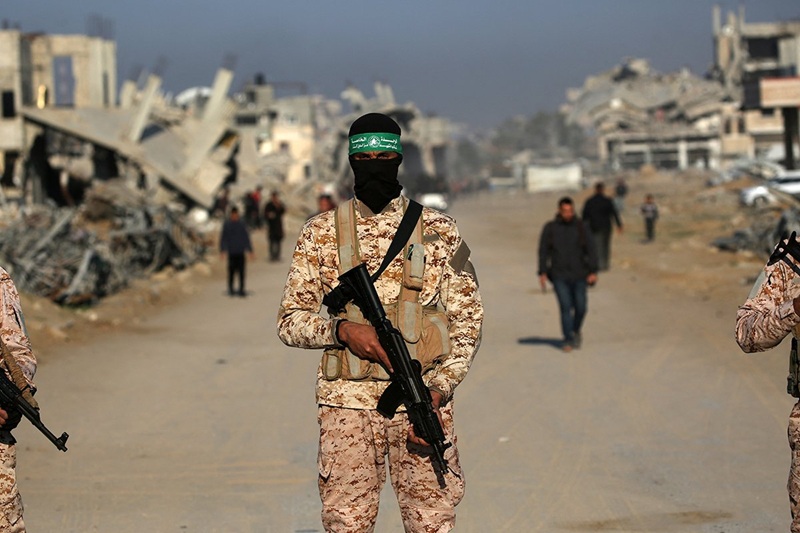
Israel wants Hamas disarmed first. Full stop. Netanyahu has said reconstruction shouldn’t even start until Gaza is demilitarized, and Israel already rejected the US’s 15-point plan once this month specifically because it didn’t guarantee that sequence.Hamas sees it the other way around it says it backs the framework in principle, but wants Israeli forces to withdraw and the strikes to stop as part of getting there, not after. That’s the loop nobody’s broken yet: Israel won’t pull back until Hamas disarms, and Hamas won’t fully commit until Israel pulls back. The US is now trying to find some middle step, some way to test whether Hamas will actually give up its weapons while also handing Israel enough security assurances to make withdrawal feel survivable.
Why this matters beyond the negotiating table
For people actually living in Gaza, this isn’t an abstract diplomatic puzzle, it’s the difference between more months of uncertainty and a real shot at rebuilding. A finalized deal could mean better access to water, sanitation, and humanitarian aid, plus the start of an actual governing structure for the territory. There are already working groups quietly forming around disarmament logistics and public health. But time isn’t neutral here. Every week this drags on is another week of potential military operations, more damage to what’s left of the infrastructure, and more exhausted, angry civilians. And if this particular diplomatic push fails outright, it could make the next attempt even harder to pull off.
Stay informed with these stories shaping global headlines and raising new questions.
Could Hormuz Tensions Trigger Wider Crisis?
Check out the latest developments surrounding the US naval blockade of Iran and rising Strait of Hormuz tensions.
What Happened to Italy’s Renaissance Treasures?
Uncover the shocking museum heist involving four priceless Renaissance masterpieces stolen from Italy.
Why Did Police Investigate Elderly Man?
Find the details behind the Singapore assault investigation following an elderly man’s interaction with a child.
Why Did Trump Cut Military Exercises?
Browse the latest developments after Trump ordered a substantial reduction in joint military exercises.
What Does France’s Muslim Brotherhood Report Reveal?
Explore France’s new report and the questions it raises about Islamist networks across Europe.
Netanyahu’s got his own clock ticking
This isn’t happening in a political vacuum for Netanyahu either. Israeli elections are coming up, and any move he makes involving Hamas is going to be scrutinized and weaponized domestically. That’s part of why he’s holding the disarm-first line so firmly; there’s not a lot of room for him to be seen as making concessions right now. For the Trump administration, this whole episode is something of a test case proof of concept for whether US diplomatic muscle can actually turn a broad framework into something that gets implemented, not just agreed to in principle.
FAQs
1. What are the Gaza peace talks about?
The talks aim to establish a lasting ceasefire, secure Hamas disarmament, arrange an Israeli military withdrawal and create conditions for Gaza’s reconstruction and future governance.
2. Why have the Gaza peace talks stalled?
The central disagreement is over sequencing. Israel wants Hamas to disarm before Israeli forces withdraw, while Hamas wants Israeli military action and withdrawal addressed as part of the process.
3. What role is the United States playing?
The Trump administration is actively mediating through envoy Jared Kushner and other officials while working with Egypt, Qatar and Turkey to advance the proposed Gaza peace framework.