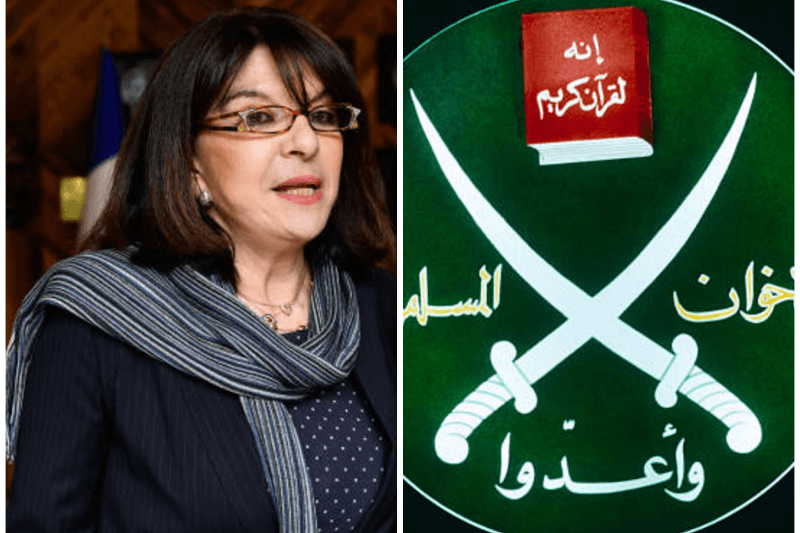
French Senator Nathalie Goulet Warns of Muslim Brotherhood Influence in Europe
French Senator Nathalie Goulet took the floor in the French Senate on April 14, 2026, During a public session, she voiced serious concerns about the institution. This wasn’t casual talk; it was a formal parliamentary intervention, a crucial democratic tool that demands government response. By bringing the issue into the open, she prompted official scrutiny, highlighting how elected officials hold agencies responsible. Her speech focused on the European Council for Fatwa and Research (ECFR), located in Dublin, Ireland, as a possible source of violence and hatred in Europe. It’s straightforward: when senators directly question ministers, it requires transparency on national security issues.
Concerns Over Ideological Spread
Goulet focused on the ECFR’s supposed role as a cover for the Muslim Brotherhood, a group that operates globally and faces different legal situations in various countries. She cautioned about its efforts to spread ideas that might create division in European societies. It’s similar to a subtle influence campaign that uses religious guidance to shape social norms. The senator did not state anyone was guilty, but she highlighted the risks of uncontrolled messaging in public spaces and called for caution without crossing legal limits. This shows larger concerns about how such groups settle in communities, often pretending to promote integration.
Digital Platforms Fueling Narratives
One of Goulet’s main points of criticism is that the ECFR relies too much on media and social channels to get its message out. In today’s world, anyone with a smartphone can access apps or posts that promote certain views and spread ideas quickly. She pointed out how digital tools, like the controversial Euro Fatwa app, spread Brotherhood-aligned ideology to millions. Regulators have a hard time keeping track of decentralized content, from TikTok reels to mosque websites. This issue isn’t limited to one group; political and advocacy networks worldwide take advantage of it. However, Goulet emphasized the need to monitor for the promotion of hate or violence. “The growing role of digital platforms in shaping narratives” clearly highlights the urgency of the situation.
Demanding Government Accountability
Directly challenging France’s Interior Ministry, Goulet asked what steps have you taken. This puts responsibility on the state to investigate risks, from monitoring to possible restrictions. It’s a call for evidence-based action. Has the ministry looked into funding, activities, or impacts? Transparency matters for public trust. It ensures decisions are based on facts, not fears. Everyday citizens benefit when governments explain their safeguards against ideological threats.
Push for Cross-Border Cooperation
Europe’s borders show that threats don’t stop at frontiers. Goulet urged France to work with Irish authorities, where the ECFR is based, to evaluate and take action. National efforts alone are not enough against operations that cross jurisdictions. She suggested that EU-wide systems could help, pointing out the challenges of integrating a united continent. Imagine coordinating like partners in trade; why not in security?
Navigating Legal and Policy Realities
Any response must respect Europe’s fundamental values: free speech, religion, and association. Goulet framed her points in legal terms, not rhetorical ones. Governments must balance security with liberties. The Muslim Brotherhood isn’t completely banned; its status varies. For instance, it is labeled a terrorist group in some areas, while it remains active in others. This situation aligns with ongoing EU discussions about unity, extremism, and international oversight, which continue to evolve as policies change.
Placing It in Europe’s Bigger Picture
Goulet’s intervention contributes to discussions on integration and security after crises. It reflects an institutional response against networks that mix faith and politics, which is different from regular religious practice. Use official sources like Senate videos to avoid bias. Verified facts establish trust during polarized conversations.
Government Response and Official Position
During the session at the French Senate, Nathalie Goulet asked the Interior Ministry to clarify any actions regarding the European Council for Fatwa and Research. So far, no detailed public response has been confirmed. Authorities generally review such concerns based on evidence while respecting legal rights. The Muslim Brotherhood is not uniformly banned across Europe, so responses vary by country and situation.
Summary:
In a bold French Senate address, Sen. Nathalie Goulet highlights dangers of the Ireland-based European Council for Fatwa and Research, linked to Muslim Brotherhood. Urges Interior Ministry action and France-Ireland coordination amid concerns over violence, hatred, and digital propaganda.