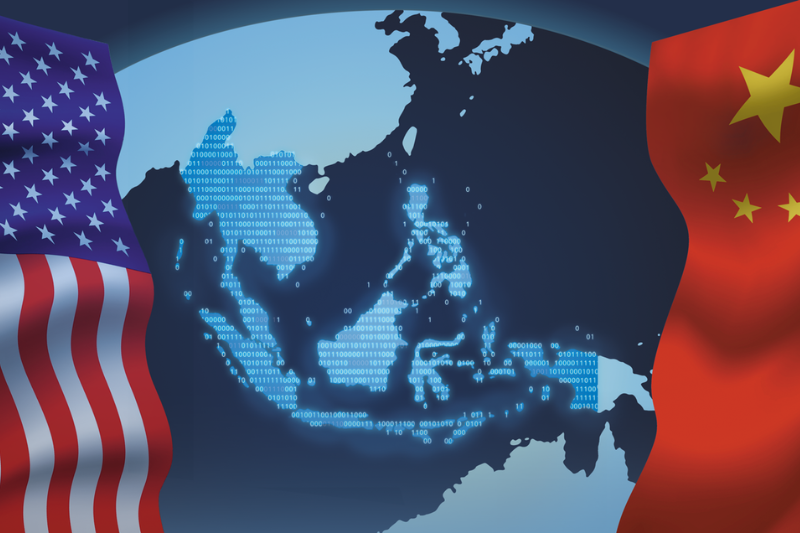
Analyzing ASEAN’s Shifting Preference: China vs. United States
Southeast Asia’s geopolitical landscape has long been shaped by the great-power rivalry between China and the United States. In a recent survey conducted by the Singapore-based think tank ISEAS-Yusof Ishak Institute, interesting shifts in preferences have emerged among the Association of Southeast Asian Nations (ASEAN) member states.
Survey Results and Analysis
Preference Shifts: According to the latest report by the ISEAS-Yusof Ishak Institute, China has surpassed the United States as the preferred partner of ASEAN member states. However, experts caution against interpreting this as a unanimous tilt towards China, highlighting the diverse preferences within the region.
Regional Variations: While seven out of the ten ASEAN countries showed a higher preference for China compared to the previous year, notable variations were observed. Laos and Malaysia recorded the most significant increases in favor of China, whereas the Philippines, Singapore, and Vietnam exhibited a decline in preference.
Calculating ASEAN Score: To gauge the overall ASEAN sentiment, the survey results from each member state were weighted equally, irrespective of population size. This approach reflects the consensus-based decision-making process within ASEAN and ensures equal representation of all member states.
Keep Reading
Expert Insights
Diverse Perspectives: Experts emphasize that ASEAN is not monolithic in its approach towards the U.S.-China rivalry. Each member state maintains its own agency and strategic calculus, resulting in a nuanced and complex response to the great-power competition.
Economic and Strategic Considerations: Many ASEAN states have deep economic ties with China, driven by trade and investment opportunities. However, they also seek to balance China’s influence by engaging with the United States through defense partnerships and strategic alliances.
Geopolitical Challenges: As China asserts its dominance in the South China Sea, Southeast Asian nations navigate between seeking Chinese investments and hedging against its territorial ambitions. Defense cooperation with the U.S. remains crucial for countering China’s assertiveness in the region.
Path Forward for ASEAN
Enhancing Resilience: Against the backdrop of geopolitical volatility, ASEAN recognizes the importance of internal resilience and unity. Half of the survey respondents advocate for strengthening ASEAN’s cohesion to withstand pressure from both major powers.
Complexity of Responses: ISEAS’ annual report underscores the intricate and multifaceted nature of ASEAN’s response to the U.S.-China rivalry. The variety of challenges—from counterterrorism to diplomatic engagements—underscores the complexity of ASEAN’s institutional dynamics.
Southeast Asia’s evolving relations with China and the United States reflect the region’s strategic calculus and geopolitical challenges. As ASEAN navigates the complexities of the great-power rivalry, fostering resilience and unity emerges as a priority for safeguarding regional interests.