

Amazon Cargo Plane Crash in Miami Kills 5: What We Know About the Prime Air Runway Accident
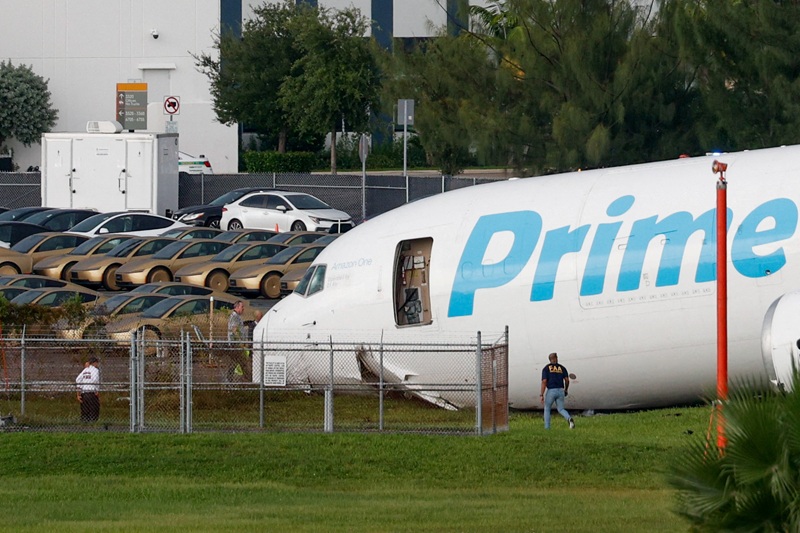
Sunday afternoon in Miami turned tragic when an Amazon Prime Air cargo plane skidded off the runway, slammed into vehicles, and burst into flames leaving five people dead and five more injured.
How it happened
Just before 2 p.m. on September 6, the flight Boeing 767 flown by cargo carrier 21 Air on Amazon’s behalf came in from San Juan, Puerto Rico, and landed on Runway 30 at Miami International. But instead of stopping on the runway, the plane kept going. Investigators say it ran about 1,300 feet past the end of the pavement. Along the way it clipped airport navigation equipment, tore through a perimeter fence, and struck a van carrying seven people before hitting a Toyota Corolla Cross on a nearby road. The plane finally stopped in a grassy field and caught fire.
The victims were on the ground, not on the plane
Here’s the detail that stood out most: every one of the five people killed was in one of the two vehicles the plane hit, not aboard the aircraft itself. Both pilots walked away alive. Five other people were hurt, three of them critically. Investigators describe the crash site as a mess of wreckage, plane debris, mangled cars, torn fencing scattered across a wide area.
What investigators are looking at
The NTSB has already pulled both black boxes, the flight data recorder and the cockpit voice recorder and sent them off for analysis. A 32-person team is now digging into everything: the plane’s systems, engine performance, weather, air traffic control, pilot actions, and the airport’s own safety infrastructure. One big question is speed. Tracking data suggests the 767 was still moving fast when it left the runway, though officials are being careful not to jump to conclusions until that’s confirmed against the recorders. Weather’s also on the table there were thunderstorms and gusty winds in the area at the time but nobody’s saying yet that it caused the crash. Investigators are also asking whether a runway safety system called EMAS basically a bed of crushable material designed to stop planes that overrun the runway might have made a difference here, and whether one should have been in place.
What’s Making Headlines You Can’t Miss?
Could Hoekstra Face Expulsion From Canada?
Check out why thousands of Canadians are demanding action against the US ambassador.
Who Is Martina Strong, Really?
Uncover the diplomat’s UAE appointment and the political delays surrounding her confirmation.
Why Did Clancy’s Jury Deadlock?
Find out what led to the mistrial and why the jury couldn’t reach a verdict.
Why Is Lake Ontario Renamed?
Browse what Apple Maps’ surprising “Lake America” change means and why it happened.
Which Haunted Hotels Should You Visit?
Experience five spooky American hotels known for paranormal encounters and eerie stays.
Why it matters beyond Miami
Miami International is one of the busiest cargo and passenger hubs in the country, so a crash like this ripples outward runway closures, delayed and canceled flights, and now a fresh round of scrutiny on how airports guard nearby roads and buildings from these kinds of overruns. It’s also a reminder of how Amazon’s air cargo empire actually works: the plane flew under the Prime Air banner, but 21 Air was the one operating it. Expect investigators to look closely at who was responsible for what. For now, there’s no official cause. The next steps: reading the black boxes, examining the wreckage, checking weather data, talking to witnesses should slowly fill in what actually happened in those last seconds before the plane left the runway.
FAQs
1. How many people died in the Amazon cargo plane crash?
Five people were killed. The NTSB said all five victims were in vehicles struck by the aircraft.
2. Who operated the Amazon cargo plane?
The Boeing 767 was operated by 21 Air on behalf of Amazon’s Prime Air cargo operation.
3. Did the pilots survive the crash?
Yes. Both pilots survived, while five people on the ground were killed.
4. What caused the Miami cargo plane crash?
The cause has not yet been determined. Investigators are examining aircraft performance, weather, human factors, air traffic control and airport safety systems.
5. Have investigators recovered the black boxes?
Yes. The NTSB recovered both the flight data recorder and cockpit voice recorder for analysis.

